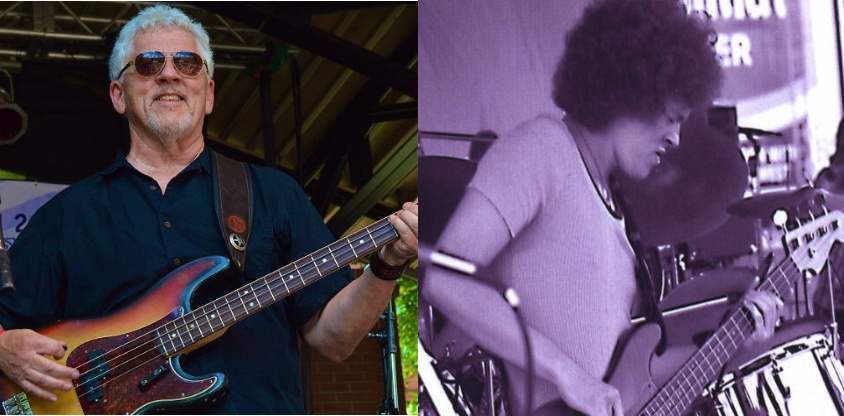
Courtesy of Glen McCready FB
Timing in life is everything…
You know Glenn from his appearance in Know Your Bass Player Season Deux: His episode “Any Fool Can Play Guitar” https://youtu.be/hfqDIlybG9A is testimony to his stance as a “rock and roll lifer.”
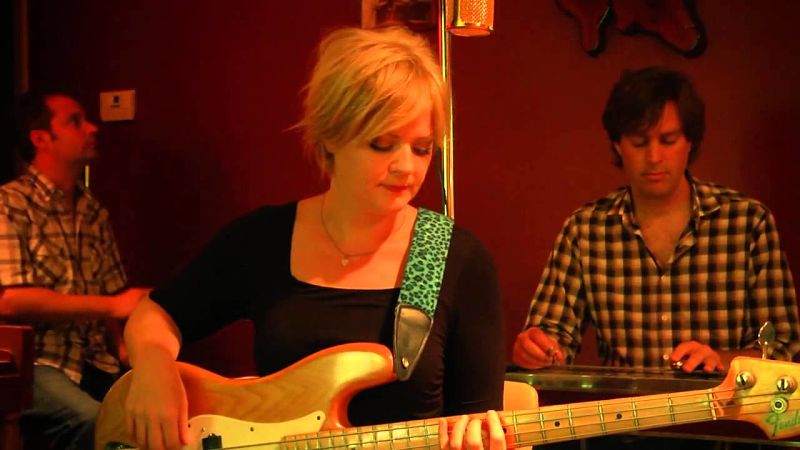
He is player borne of the rock and roll trenches: working the clubs, the cafés, the social gatherings, public events, music venues large and small, among other gigs. McCready is a songwriter, singer, multi-instrumentalist, producer, engineer, and bassist. Glenn interprets the work of the masters in his band of grizzled veterans, Hell Or High Water. He waxes slabs under his own name too, featuring compositions that recall the golden Laurel Canyon era.
McCready’s latest effort I Hear Your Voice arrives under the moniker Bringing Down the House – a collaborative effort with Michael Sakoulas.
Says Glenn in the liner notes / press release: Broken hearts and broken lives, hope for the future and questions about the past. This is a lot of what Bringing Down The House is about. We took a different route this time, going for a quieter overall sound. Most of the songs are acoustic based and use percussion in lieu of a full kit on almost all of the songs. We tried to do some different things, from Michael’s bouzouki on the title track, to the walking bass line and unison vocal/guitar riff in, “Another Morning.”
A lot of the songs are pretty personal; as for the writing, we like to say the wand chooses the wizard. “Once In A Lifetime,” pretty much happened exactly as written, and was one of the few that started with the bass line. And, (before time) Takes It All Away” started out as a song about caring for people with dementia, and ended up being about me caring for my mom before I realized it… the wand chooses the wizard. There are the eternal questions about choices we make, “What Were (we doing)” and “Memories” letting someone know you wouldn’t want to be anywhere else after all these years, “Our Lives” and even some hope for society, “Voices Back.”
It’s been said that Bringing Down The House hearkens back to the old, “coffee-house” days of stories and songs. That sums it up pretty well. Just songs we hope everyone can relate to.
Timing in life is everything. Due to the pandemic we are denied the opportunity to hear BDTH live, which to my ears, is Glenn’s natural habitat. The stage and its intangibles, the dynamic of a performance, the high-wire is the “elan vital” of all rock and roll lifers.
Until the plague lifts we are all in lockdown – here’s the lowdown on Glenn and Bringing Down the House…

What have you been doing musically in the lockdown?
Actually, more writing than I’ve done in a long time!
Why a “mostly acoustic” album?
Michael and I love that whole, “singer/songwriter” and “Laurel Canyon” style, and I think we wanted to see if we could do a whole album in that style. And we wanted to be a little more… I guess thoughtful, both with subject matter and the lyrics themselves. What was really fun about this was deciding what to put where, instead of the usual bass, drums, electric guitar…etc. Michael got to play his bouzouki on one track, and mark my words, we’ll find more ways to work that in! I think one song has a “flute” solo. And all except one are just hand percussion instead of a kit.
It’s funny, when we were planning this, Michael referred to it as our, Rubber Soul. I sure hope so, because then I think came Revolver and Sgt. Pepper. That’s not a bad goal to shoot at.
Once again, what role does the song-cycle (aka “album”) play in a world of streaming, song-lists, and Tic-Tockery?
I’m not sure there’s a real pattern all the way through to be honest. I know we wanted to end with something a little more hopeful than usual – “Voices back.” I know there is a mix of subjects, from saying goodbye to a loved one, before time to the, “what if?” questions we all have, “What Were we Doing.”
Did you work the songs out on stage before committing them to (metaphorical) wax?
A couple of them had been part of our live set, but we wanted to have a studio version, especially since Michael is such a better rhythm player than I am. He makes all of this stuff sound so much better. I think rhythm guitar is as underrated a skill as bass playing is, probably because it’s almost looked on as a support role. Some of the other songs were actually written during the recording process, so they’ve not had a chance to be road tested. I’m looking forward to playing some of these out.
Talk about your relationship with Michael – what makes your partnership click? Explain the yin-yang of Bringing Down the House?
First, we’ve been friends for forty plus years, so there’s no nonsense, we both know each other far too well. As far as the yin/yang… the best way I can explain it is that from the moment he picked up a guitar, I was there! All he ever wanted to do was play rhythm guitar. He’s the embodiment of, “Guitar George” from “Sultans of Swing” whereas I am a bass player first and foremost, but I play all the other instruments you hear on the record. Some better than others of course. I’m a little more open personality wise. Not that Michael isn’t, he’s actually one of the funniest guys I know, he’s just not as out there. And he’s absolutely more sensible than I am.
Not to dwell on doom and gloom, but a cure-all vaccine is the only way to return to gatherings as we know it in the performing arts – is there life after gigs? Can you adapt to a remote music career with videos and recording taking the place of live performance?
I think one of the good things about, “BDTH” is that we are actually built for small gatherings. The name came as a play on the whole, “Concerts In Your House” idea. The recordings are good because, hopefully it gives our audience the material we’re going to play out. Could we go remote? I suppose, but we’d rather not. And I can say that I am far better with an audience than not.
Bass players in quarantine / shelter tend to salivate over instruments during their isolation – what are some of your latest bass obsessions?
I have to say, I am loving my two P-Basses, the “Players” model and The Sting model, basically a ’51 so really, I’m good I admit I have been missing my Epiphone EB-3 lately, mainly for the humbucker for recording. And they’re cool looking as hell!
Also thinking about an acoustic, I’d love to do the whole campfire thing with Michael… and Tom Wipf…I’m hoping the third time will be the charm.
How can we hear I Hear Your Voice – list all streaming, hard copy options…
We have the old school CDs for now. I’m waiting for the word that it’s up in all of the usual outlets. Unfortunately, one aspect of this stuff that I’m really not very good at is the business/promotional end. But for now, you can email us at bringingdownthehouse9@gmail.com and we can send one.
What is on Glenn’s playlist nowadays?
Obviously the “Canyon” and singer/songwriter stuff is always there, also lots of 60’s stuff. The Association is always somewhere nearby Also have rediscovered a bunch of albums, Odyssey and Oracle is criminally unknown here…
Glenn’s future – plans Hell High Water, Bringing Down the House, solo…
HoHW is doing a livestream in November 1st. We have played the NYC Marathon for the past dozen or so years, and even though there’s no marathon this year, we’re still playing. As far as solo, I think those days might be gone. Playing with Michael the way “BDTH” does, is really… truly… my favorite way of doing this. We’ve been friends for so long, and even back then, this is what I wanted… just two guys, guitars… and some songs and stories. I can’t imagine anything better.


Courtesy of Kevin Scott Music Com
There are bass players who realize their dreams….and there are the cats who anchor the legends.
Enter Kevin Scott – who has achieved both goals and more in his remarkable career.
Kevin’s musical journey commenced while he was in his teens, as a bassist in his dad’s bluegrass band. Then this Dothan, Alabama native heard Colonel Bruce Hampton and his life changed. He migrated to Atlanta where Hampton resided, and worked his way into the guitar legend’s band.
Touring and recording with Hampton raised Scott’s profile. He found himself on the bandstand with another legend, drummer Bernard Purdie for the ATL Collective’s yearly “James Brown’s Funky Christmas” wherein Scott serves as musical director. And yet more legends – guitarists Jimmy Herring, and Wayne Krantz have enlisted Kevin for recording and touring.
Scott established himself as a first call bassist in Atlanta, anchoring such ensembles as; Ruby Velle & The Soulphonics, Russell Gunn and Elektrik Butterfly, Whitney Tai, King Baby, Grant Green Jr., Mindi Abair, Fergie, FORQ, Wale, Monica, and Big Shanty, among others.
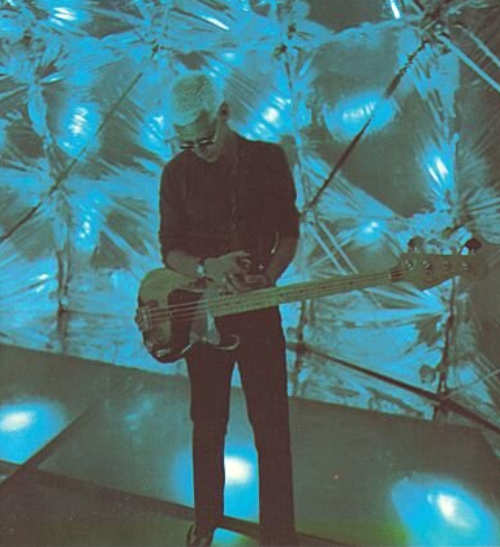
A finger / plectrum player, among Kevin’s primary weapons of choice is a weathered vintage Fender Precision. Scott’s funky disposition serves the singer and the song – he’s also a prolific soloist. Keep up with Kevin Scott at www.KevinScottMusic.com
KYBP hat tip to Scott Gordon: Says SG “Kevin Scott is one of the baddest bass dudes out there! He’s my favorite young gun…at 35 he is the most versatile bassist …and a super humble guy to top it off. Jesse from St Paul and the Broken Bones has taken a few lessons with Kev and even bought most of the gear that Kev uses!”
Check out Kevin Scott’s KnowYourBassPlayer Spotify Playlist….
Kevin Scott Sound & Vision…
Bruce Hampton: Live https://youtu.be/_C73ELythTs
Wayne Krantz: Under Cover Pop Tour https://youtu.be/ornbl4lqBQ4
ATL Collective Live with Nigel Hall https://youtu.be/E_v1R8CciUE
Ruby Velle “It’s About That Time” https://youtu.be/oTR_ls5a4MQ
Elektrik Butterfly “War Pigs” https://youtu.be/sJI9lgu1sDM
Wale “Ambition” (Kevin served as co-writer on this #1 hit) https://youtu.be/O7ZbM7ak8uw

Photo by Drew Burke – Courtesy of Kevin Scott Music Com!

Courtesy of St. Paul & The Broken Bones Com
It’s all about the pocket!
Born into a musical family in British Columbia, Canada, Jesse Phillips studied music at Loyola University in New Orleans. His original goal was to be a music teacher, however fate intervened…
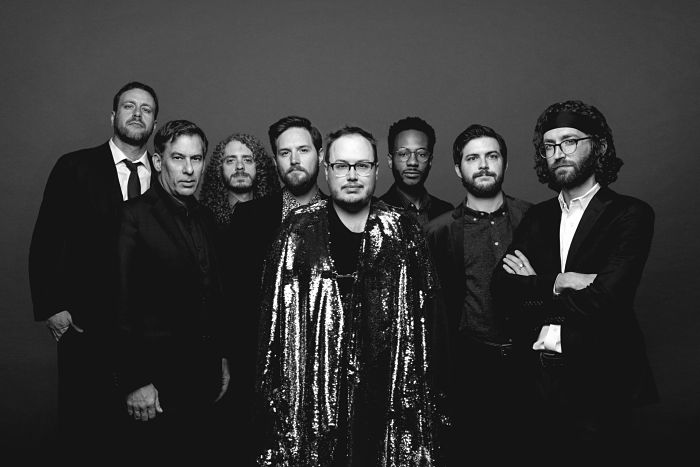
Collaborating with singer Paul Janey, Jesse co-founded an “alternative soul” outfit which they dubbed The Secret Dangers. Switching their moniker to St. Paul & The Broken Bones, the duo waxed an EP before they hit the stage. Enlisting simpatico musicians, SP&TBB cut their first indie album which garnered attention aplenty in the major rock rags including Rolling Stone, and Paste, among others.
Their first national TV appearance on CBS This Morning put them on the map commercially. In 2015 the Rolling Stones chose them as their support act on several shows.
Drawing influence from the elite Stax, Motown, Muscle Shoals, TSOP players – Phillips is a master of the pocket….outlining the changes with grace notes and harmonic extensions which reach out of the bass cabinets and grab the listener!
Phillips’ main weapon of choices are Fender Jazz and Precision, and Reverend basses.
Jesse Phillips Sound & Vision…
Live on CBS This Morning “Flow With It” https://youtu.be/JOtMs1FzWN8
“Call Me” https://youtu.be/z7s9A3s8iv8
“Apollo” https://youtu.be/mHEPoG11EtE
“Grass Is Greener” https://youtu.be/pb8yga8kygU
“I’ll Be Your Woman” https://youtu.be/rrFmJik2cVg


Courtesy Drive By Truckers Com
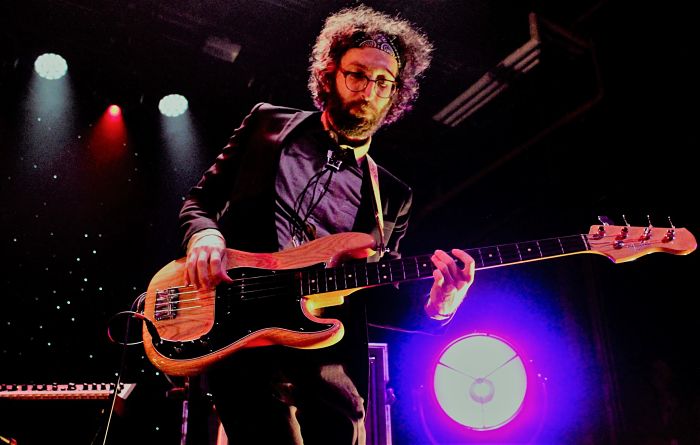
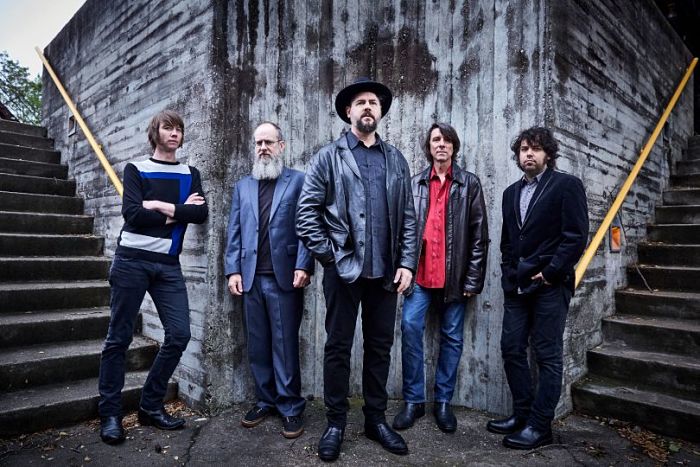
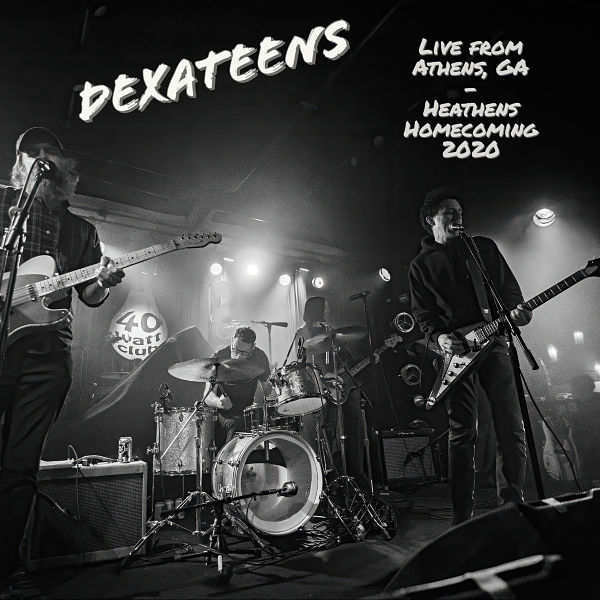
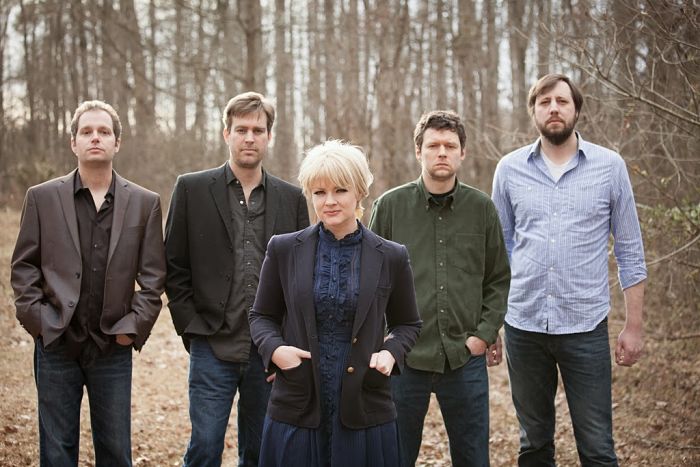
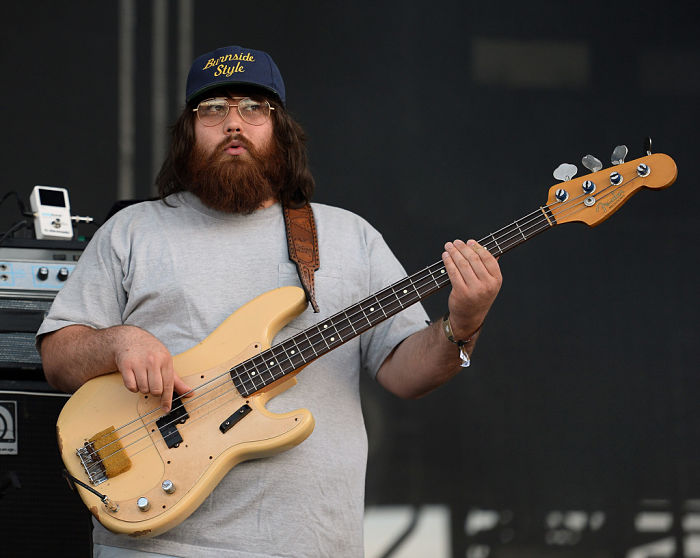
A producer, indie label and studio owner (Dial Back Sound), bassist with the garage rock quartet The Dexateens, and current bassist with Drive-By Truckers, Matt Patton plies his craft with time tested pocket grooves and an occasional melodic flourish amid the sonic din of his bandmates.
Matt’s weapons of choice include Fender Precision and Danelectro basses.
Check out Dial Back Sound: http://www.dialbacksound.com/
Matt Patton Sound & Vision….
The Dexateens
“Makers Mound” https://youtu.be/JYg0WPcZ7zc
“Naked Ground” https://youtu.be/dFdhBGiByLM
“Take Me to the Speedway” https://youtu.be/A6N1ctwRIeE
Drive-By Truckers
“Thoughts and Prayers” https://youtu.be/tkD4xSqNVII
“What It Means” https://youtu.be/mY0qOCUy27Q


Bassist, singer, songwriter, multi-instrumentalist, recording artist, Shonna Tucker was raised near Muscle Shoals, Alabama on a steady musical diet of soul and country!
During her eight-year tenure in the Drive-By Truckers, Tucker afforded the alt-rockers a decidedly rhythm and blues underpinning.
Tucker peppers her pocket grooves with funky grace notes, tasteful rapid fire riffage, and slippery harmonic extensions – all in the service of the song.
As an electric – upright session player / collaborator, Tucker has waxed sides with Booker T., Betty LaVette, Son on Shade with Alabama Shakes Heath Fogg, Pegi Young and the Survivors, and Billy Ray Cyrus to site a few. She cut her sole solo slab today under the moniker Shonna Tucker and Eye Candy featuring tracks aplenty with pop overtures. Her latest EP is entitled Dreams of Mine.
Shonna’s weapon of choice is a vintage Fender Precision.
Shonna Tucker Sound & Vision…
Drive By Truckers: “Used to Be a Cop” https://youtu.be/kvJ-lWOZMYg
Booker T. “Potato Hole” https://youtu.be/CjA0YJPmLQ0
Son on Shade “Tell Me How Long” https://youtu.be/7BOhfgJ9j6g
Betty LaVette “Before The Money Came” https://youtu.be/SBhKZtyIMNI
Pegi Young “You Won’t Take My Laugh Away From Me” https://youtu.be/wQYAvi5NTgk
Shonna Tucker & Eye Candy: “Since Jimmy Came” https://youtu.be/55nw-oeObPs


Courtesy of Alabama Shakes Com
Give thanks to the great state of Alabama, home to such music legends as Hank Williams, Wilson Pickett, Tammy Wynette, Percy Sledge, Lionel Ritchie, Candi Staton, Chuck Leavall (Allman Bros., Rolling Stones) Odetta, Sun Ra, and Nat “King” Cole to cite a select few.
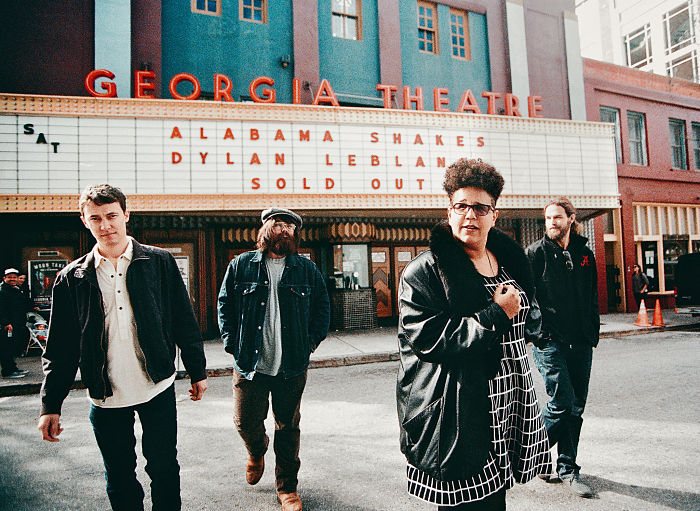
In a few years we may add the name Alabama Shakes to that esteemed list. While a high-school student in Athens, Zac Cockrell approahed singer Brittany Howard about making music together. Recalls Howard “I just knew that he played bass and wore shirts with cool bands on them that nobody had heard of…”
Rather than cover artists that inspired him such as David Bowie and assorted prog-rockers, Zac, Brittney, guitarist Heath Fogg, and drummer Steve Johnson began to compose as a team. After paying their dues working clubs throughout the south, they scored a record deal and the rest, as they say is history.
In addition to their sold-out gigs and nearly two million platters sold, Alabama Shakes has garnered four Grammy Awards, along with several NME, Brit Award, and Q Award nominations.
Their meld of southern rock, blues, and soul is most representative of the state they call home.
Cockrell works the pocket akin to his Alabama Muscle Shoals ancestors, sticking close to the root notes with harmonic extensions that embellish the singer and the songs. His weapon of choice, as you would expect is a vintage Fender Precision, LaBella flatwounds, and a waddafoam at the bridge!
Zac Cockrell Sound & Vision…
“Hold On” https://youtu.be/nin-fiNz50M
“Don’t Wanna Fight” https://youtu.be/nin-fiNz50M
“Future People” https://youtu.be/JbR999N5MiA


Courtesy of Oteil Burbridge Com
He is a virtuoso of the instrument, and among of the elite players in the jam band / improvisational fusion (jazz / funk / world) sub-genres. Oteil Burbridge started off as so many bass player do, on drums!
Recognizing his multi-faceted musical talents, Oteil’s mom encouraged her son (whose name translates as “explorer”) to investigate additional instruments including violin and trumpet. Honing his chops in his native Washington D.C. club circuit, Burbridge garnered national attention aplenty as the anchor of the experimental Aquarium Rescue Unit – an ensemble which featured members of jam-band giants Phish, Phil Lesh & Friends, and Blues Traveler among others.
Burbridge took over the Allmans bass chair in 1997 following the departure of Allen Woody. He waxed the band’s final studio slab – the underrated Hittin’ the Note (2003) wherein he worked the five string and appeared and numerous live sets. To my ears, Burbridge’s work with the Brothers echoed Berry Oakley as Oteil was given to working the pocket which occasional upper register flourishes. Burbridge also took an occasional lead vocal with the band.
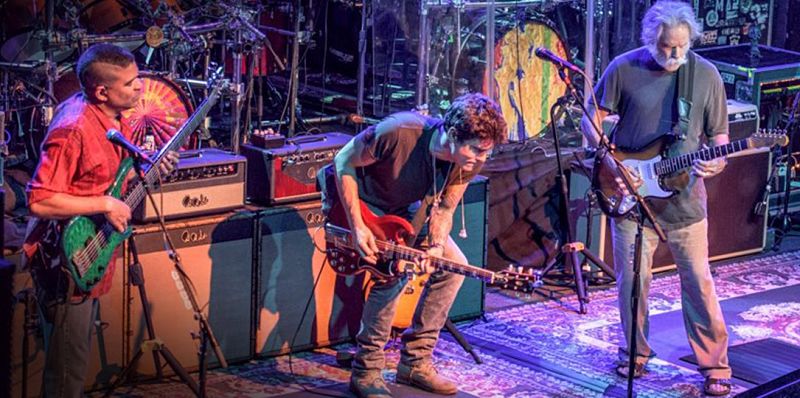
Among Oteil’s high-profile collaborations included Dead & Company helmed with Grateful alumnae Bob Weir, Billy Bill Kreutzmann, and Mickey Hart along with John Mayer. He also joined founding drummers Butch Trucks and Jai Johnny Johnson in Les Brers. Burbridge also served as the harmonic and rhythmic anchor of the Tedeschi Trucks band – which garnered a Grammy as for Best Blues Album in in 2012 for Revelator.
Burbridge has recorded under his own name and as a bandleader – Oteil Burbridge and The Peacemakers. Among his notable session credits include Gregg Allman, Warren Hayes, Herbie Hancock, and The Zac Brown Band.
Oteil has been cited by this writer in Huffington Post for his tenure in the final incarnations of the Allman Bros. Band as deserving of Rock and Roll Hall of Fame honors with Lamar Williams, David Goldflies, and Allen Woody. 11 More Bass Players Who Belong in the Rock and Roll Hall of Fame (2016) Link: https://bit.ly/2EZx1Lf
A truly diverse and prolific cat – keep up with Oteil at www.OteilBurbridge.com – gear heads be advised to check out OB’s extensive collection of basses – ranging from the trad-for to the six string…
Oteil Burbridge Sound & Vision…
Aquarium Rescue Unit: Live at the Jacksonville Jazz Festival 1996: https://youtu.be/lzxVxC5kLMQ
Allman Brothers: “Instrumental Illness” https://youtu.be/Z1_6HPpTuuU
Dead & Company “Comes a Time” with Oteil on lead vocal https://youtu.be/-zHpenigs3k
Tedeschi Trucks Band “Midnight in Harlem” https://youtu.be/K1J04ugcdi8
Les Brers “Every Hungry Woman” https://youtu.be/zOhYD5TfUrM
Oteil & The Peacemakers “Subterranea” https://youtu.be/zOhYD5TfUrM


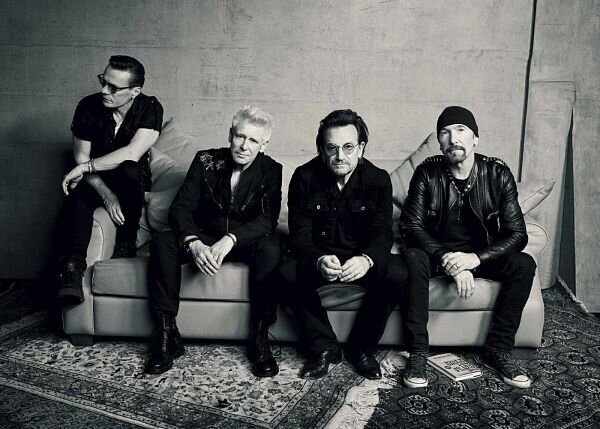
Given the high profile of his band, and the even higher profile of the singer and guitarist he so ably serves, he is probably the least recognized of his profession among the iconic collectives in the history of rock music. In fact, he may be more recognized for dating super-models! Nice work if you can get it…
Working a Fender Precision or Fender Jazz or permutations thereof, Adam Charles Clayton possesses an instinctive grasp of rhythm and space. His phrasing is fueled by dub, soul, and reggae influences- and he expresses more in three cyclic notes than many of his peers whose fingers fly up and down the neck of their instrument.
As U2 have evolved over the years, so too has Adam’s artistry with regard to melody, rhythm, and harmony.
Adam Clayton Sound & Vision:
“New Year’s Day” (Inspired by the Polish solidarity movement, this monster bass passage commenced as Clayton’s botched attempt to decipher the chord changes to Visage’s synth-pop hit “Fade to Grey.”) https://youtu.be/f8BtB4C3Vi8
“You’re The Best Thing About Me” https://youtu.be/nd_EYo96lmo
“Staring at the Sun” https://youtu.be/q4Gr8Lf2Bzo
“Gone” https://youtu.be/2Dc3sbCVgXY
“Get On Your Boots” https://youtu.be/JcDNilZbZg8
“I’ll Go Crazy” https://youtu.be/4q_AHAMVQ9c
“Mysterious Ways” https://youtu.be/TxcDTUMLQJI

Courtesy U2 Com

By Thomas Semioli
Would Jimi have been better off with…Jack Casady? John Entwistle? Sir Paul? Nope…read on!
Noel Redding occupies a unique place in electric bass history. Akin to many early practitioners of the instrument in the 1960s, Redding became a bassist out of necessity – or happenstance, depending on your interpretation of history.
Born in Folkstone, Kent, Redding’s first forays into music included violin and mandolin studies. He gravitated towards guitar at the age of 14. By his late teens Noel was playing lead, gigging, and recording in local bands including The Strangers, The Lonely Ones, and The Loving Kind which released a few minor singles.
While attending an audition for Eric Burdon’s New Animals, fate intervened as Redding encountered an unknown American whiz kid guitar player who had just migrated to London a week earlier.
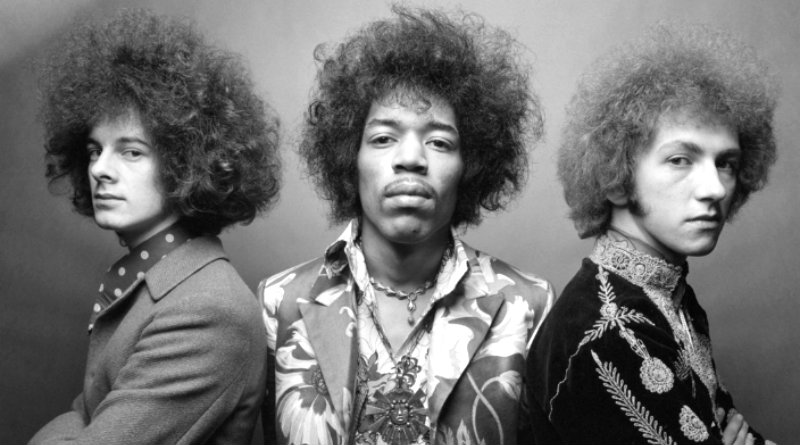
Noel was exclusively a guitarist (and vocalist) at the time of his September 30, 1966 introduction to Jimi Hendrix via manager and former Animals bassist Chas Chandler. They were duly impressed by Redding’s chic Afro-hairstyle which Hendrix and drummer Mitch Mitchell soon adopted, and the young musician’s musical tastes and attitude. Noel Redding’s professional life as a bass player began on the day of his first jam with Jimi and Mitch.
Securing the bass chair in the newly formed Jimi Hendrix Experience, the trio quickly cut two massively popular singles “Hey Joe” and “Purple Haze” and the rest as they say, is history.
Noel anchored the Experience on their three watershed studio sides Are You Experienced (1967), Axis Bold as Love (1967), and Electric Ladyland (1969).
Note that Ladyland also featured Jefferson Airplane bassist Jack Casady (“Voodoo Chile”) – who was considered a possible successor to Redding. Jimi cut bass passages to several tracks on the acclaimed twofer as well, including the massive hit “All Along the Watchtower.” ( For the record, the additional Jimi bass tracks were “Have You Ever Been (To Electric Ladyland),” “Long Hot Summer Night,” “Gypsy Eyes,” “1983,” and “House Burning Down.”)
As a player with Jimi, Noel was strictly in supportive mode, outlining the changes with occasional grace notes and melodic fills whilst Hendrix stretched the sonic and harmonic boundaries of the artform that is rock and roll music.
Using a Fender Jazz with a plectrum, Redding’s tone was sharp enough to be heard, yet filled the bottom as was needed. Also note that the Experience played at ear-splitting volume, hence the practicality for Noel’s basic bass approach.
Much has been speculated over the years (and probably back then) whether Jimi would have significantly benefited from a more adventurous bassist ala John Entwistle, Paul McCartney, or Jack Casady.
Not to my ears. The Experience was a showcase for Jimi. Given Mitchell’s polyrhythmic disposition, and Hendrix’s playing decidedly outside the box – Redding rendered exactly what was needed.
As The Ox and Casady were players who mostly ventured into solo bass territory, a coupling with Jimi, especially in a live setting would have likely resulted in (needless) noodling / one upmanship, and cacophony.
Following his tenure with Jimi, Redding worked in several ensembles with varying degrees of artistic and commercial success. In the collectives where he served as a bassist, Redding was a fine player – harmonically and rhythmically.
Sadly Redding battled addiction and lawsuits with the Hendrix estate for the remainder of his life after splitting from the Experience in 1969. Noel was forced to sell the Fender Jazz bass that he waxed Hendrix sides with to make ends meet. He passed at 57 in 2003.
Coda: In addition to his backing vocals, Noel sang lead on two JHE tracks which he composed “She’s So Fine,” and “Little Miss Strange.” Though they were not the mind-bending psychedelic anthems Hendrix fans expected – and oft times demanded, Redding’s breezy / trippy pop tunes were an enjoyable digression from the heavyweight Hendrix slant.
On a personal note, I prefer Jimi’s work with Billy Cox in Band of Gypsys. However that trio, with pocket drummer / vocalist Buddy Miles, was an entirely different tactic from the Hendrix Experience as Jimi forged an overtly rhythm and blues / soul vibe.
When the Experience “reunited” with Cox replacing Redding and Mitchell back in the drum chair, my feeling is that Billy was out of his area of expertise. Though with additional time in such a configuration, it’s probable that Cox could have assimilated his heavy groove playing to a hard rock context or even forged a unique hybrid between the two genres as did Jimmy Page and John Paul Jones in Led Zeppelin.
We’ll never know…
Noel Redding Sound & Vision as a Bassist…
Jimi Hendrix Experience
“Hey Joe” and “Purple Haze” Live at the Marquee 1967 https://youtu.be/sgBZo-nIlFo
BBC Sessions overview https://youtu.be/wNjD4y4MQS0
“Foxy Lady” Miami Pop Festival 1968 https://youtu.be/_PVjcIO4MT4
“Little Miss Strange” https://youtu.be/PYPsvpxbNuU
“She’s So Fine” https://youtu.be/a29Yqi6gjH0
Noel Redding Band: “Cloanakilty Cowboys” https://youtu.be/zOhhIQRO_4Y
Noel Redding & Road “I’m Trying” https://youtu.be/ZXR1o6s9UY4


By Joe Gagliardo
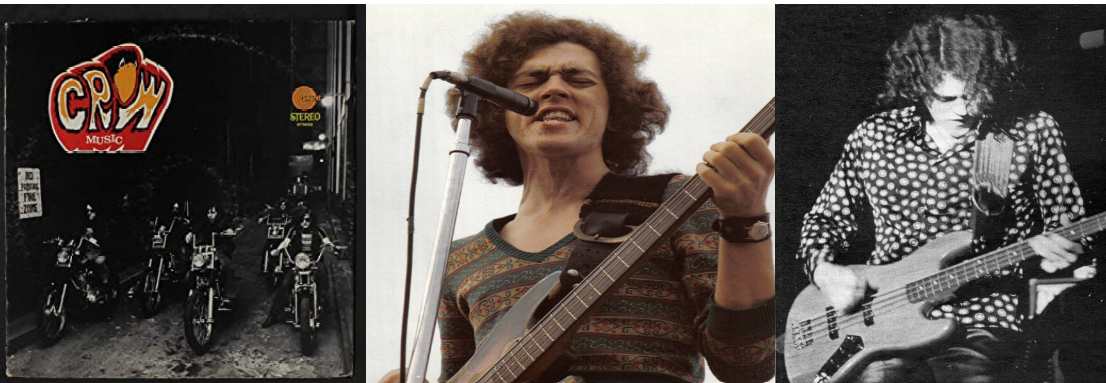
Back in the 60’s there were two highly revered bands originally from Minneapolis that ended up being based out of Chicago—Crow and The Litter. Larry Wiegand has a history with both bands.
Larry grew up in a family where his mom, grandfather, and older brother Dick played music. Larry started out playing guitar and drums but switched to the bass in 1962 at his brother’s suggestion.
In 1962, Larry and Dick started playing music with other guys who were friends from the neighborhood. The band was originally called The Knights, and later the Rave-Ons, and ran from ’63-’67. They started out playing the instrumental music they loved – Ventures, Chet Atkins, Duane Eddy, Lonnie Mack, and Booker T & the MG’s.
In 1967, Larry and Dick got together with some of the members of another local band called the Jokers Wild and formed South 40. The band covered a lot of the soul music of the mid-sixties – Wilson Pickett, the Rascals, Mitch Ryder and the Detroit Wheels, and Otis Redding. In 1968, South 40 recorded a live album called Live at Someplace Else, which gave the band some regional success.
In 1969 they added Denny Craswell (Castaways) on drums/vocals, changed their band name to Crow, and released the album “Crow Music” on the Amaret label. Legendary Dunwich Productions movers and shakers, Bob Monaco, Bill Traut and Jim Golden were responsible for Crow’s record deal.
Crow had a number of Top – 40 hits from 1969 to 1972, including “Evil Woman”, which was co-written by Larry, “Slow Down”, (Don’t Try To Lay No Boogie-Woogie on the) “King OF Rock n’ Roll” and “Cottage Cheese”, among others, and released two more LPs, “Crow By Crow” and “Mosaic.” “Evil Woman” has been covered by many artists, including Black Sabbath on its English debut LP, and Ike and Tina Turner, on their Come Together album. Ike and Tina changed the title to “Evil Man” to make it work with Tina as the singer.
Many of Crow’s songs have prominent driving bass lines, starting with “Evil Woman.” Larry’s aggressive pick playing propels that song. Another favorite is “Cottage Cheese.” The band needed a song that would feature drummer, Denny Craswell doing a drum solo. So, Larry and Dick came up with a riff and the band all started working on it at rehearsal. While intended as a showcase for the drummer, the middle of the song has funky call and response riffs between the bass and guitar, including a killer unison run up the neck which still shakes the floors when played at the proper volume—LOUD!
Crow toured extensively, playing many major festivals, including in Toronto, Denver, Miami, Vancouver and Seattle, among others; toured with Janis Joplin; and played on big bills, including with Jimi Hendrix, Chicago, Grand Funk Railroad, Fleetwood Mac, Steppenwolf, Muddy Waters, Howlin Wolf, War, Blood, Sweat & Tears, Three Dog Night, Grateful Dead, Canned Heat, and Spirit. They even had an up and coming ZZ Top open for them.
Crow disbanded in 1972, and Larry moved to Los Angeles. He was a staff bass player for RCA records, from ’73-’77. During that time, he played bass on a number of the label’s demos, and also spent a few years as part of Pacific Gas & Electric, which previously had chart success with the single “Are You Ready.”
Heading back home to Minnesota, he toured the U.S. and Canada with Bobby Vee from the late ‘70s into the ‘80s, before joining the band Double Nickels, which he played with from ‘82-’86. After playing thousands of gigs with Double Nickels, he took time off to start a family.
Crow was reformed in 1988, and Larry has played with the band continuously since then. In addition to Crow, Larry has kept busy with other projects. He released his own “Sessions” CD in 2016, performing with various artists, including one of his heroes, Nokie Edwards of the Ventures. Larry is also active with blues man Doug Maynard, and the Lisa Wenger Band, who both also appear on the Sessions CD.
The Litter is another band that appears on Sessions. The Litter is a garage rock band, formed in 1966 in Minneapolis, Minnesota. They are best remembered for their 1967 debut single, “Action Woman”. The band recorded two classic garage LPs, Distortions and 100 Fine, on local labels, before their third album, “Emerge,” which was released on ABC’s Probe label. Although the group subsequently disbanded, it has re-united in various configurations, including the 1998 release of a new studio album Re-Emerge consisting of both old and new material, as well as old and new members, including Larry Wiegand on bass.
In 2019, Tom Murray, the original drummer of The Litter, released a new Litter LP, Future of the Past, which again includes Larry on bass, as well as original Litter guitarist, Zippy Caplan, and Dez Dickerson, the original guitarist in the Revolution.
This LP is hard-rocking and consists of several songs based on unreleased and/or unfinished material from the early ‘70s. According to Tom Murray, while there are new guys, it is heavily based on what the band was doing back then.
Based on Larry’s extensive career, he was inducted with Crow into the Minnesota Rock n Roll Hall of Fame in 2005, Iowa Rock n Roll Music Hall of Fame in 2009, and the South Dakota Rock n Roll Music Hall of Fame in 2016. He was also inducted into the Minnesota Blues Society Hall of Fame in 2018.
His influences include Nokie Edwards, who originally played bass with the Ventures before taking over their lead guitar duties, James Jamerson, Chuck Rainey, Paul McCartney and Paul Samwell-Smith of the Yardbirds.
Larry’s go-to basses back in the day were a 1962 Fender Precision Bass and a ’63 Fender Precision bass, that was used on a lot of Crow’s records. These days, he plays a ‘71 Fender P bass on stage, and he also uses a ’95 Fender Jazz bass modified with DiMarzio pickups. His rigs have gone from a Fender Bassman, to Fender Dual Showman, to Vox Super Beatle, Ampeg SVT and Acoustic 360. He currently uses a GK 800RB head with a 400 watt 1×15 cabinet.
Larry Weigand Sound & Vision…
Crow:
“Evil Woman” https://youtu.be/dz7-Sq1CDH8
“Cottage Cheese” https://youtu.be/cxhxqNkIzaw
Larry Wiegand and Nokie Edwards “After You’ve Gone: https://youtu.be/aPNvX8ZsK4w
Larry Wiegand and Jeff Christensen “One Moment” https://youtu.be/LOvc4dLLG_U