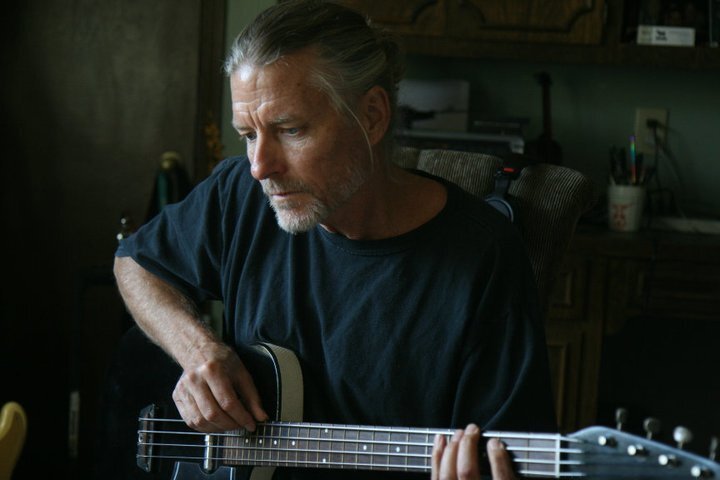
Courtesy of Herbie Flowers Com
“Being a bass-player is like being a truck driver… you’re paid to arrive on time and safely at your destination!” – Brian Keith “Herbie” Flowers
Just another day on the job? Probably! In a career that has spanned over a half century, Herbie Flowers is not only among the instrument’s preeminent players, and most prolific studio cats – he created two of rock’s most mind-blowing bass passages, all in a successful effort to earn double wages!
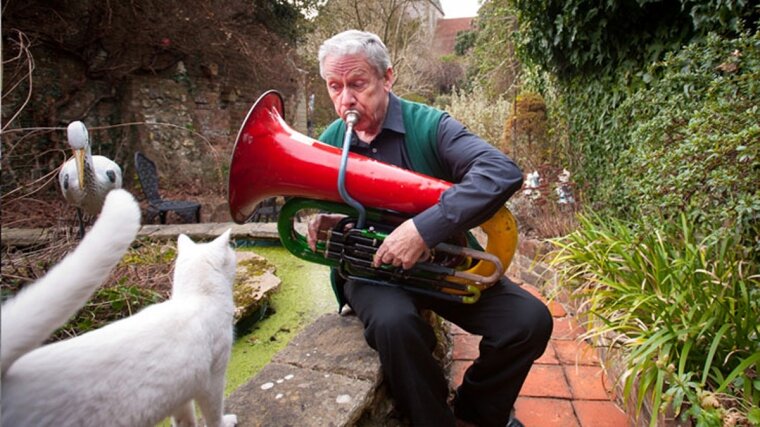
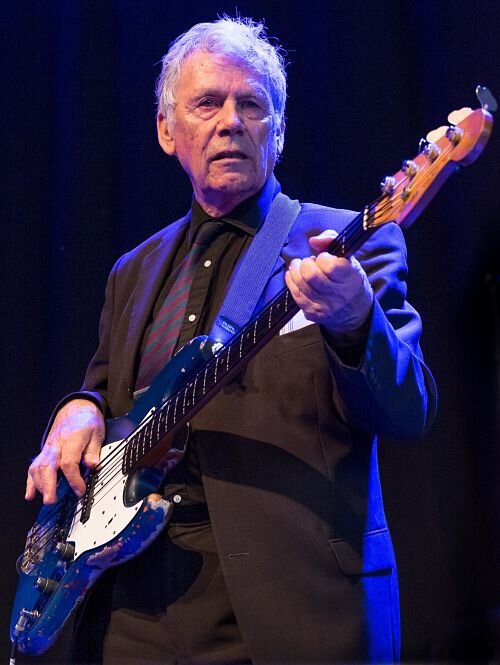
With a blue Fender Jazz he purchased from Manny’s in New York City for $79.00, this Isleworth Middlesex protégé helped to establish the electric bass on stage and in the studio by way of his instantly recognizable tone which he augments with a plectrum, coupled with his adventurous phrasing and melodic instinct. On every track Flowers has waxed, he melds his classical and jazz pedigree with a profound love of soul and blues.
An upright / electric and tuba player, Flowers’ resume is a study in 20th Century pop music history: Serge Gainesbourg, Harry Nilsson, Roger Daltrey, Brian Ferry, Henry Mancini (“Pink Panther”), Frank Sinatra, Cat Stevens, Sky, Bing Crosby, Elton John, David Bowie, Melanie, Al Kooper, David Essex, Marc Bolan, and Paul McCartney, along with numerous sides produced by Mickie Most, Richard Perry, Gus Dudgeon, Shel Talmy, and Tony Visconti simply skim the surface of his extraordinary body of work. Flowers also did a stint in the London Symphony Orchestra and has anchored scores of film and television scores and theater performances.
A witty scribe (read his blogs), solo recording artist, composer, university educator, and engaging stage performer – to list Flowers’ pop / classical / jazz / credits would break the internet, so we advise you to explore www.HerbieFlowers.Com if you need to know exactly what he played on, what he wrote, which bands he led, along with humorous anecdotes regarding his childhood, military service, and observations of the human condition.
If it were only for his contributions to Lou Reed’s “Walk on the Wild Side,” and “Rock On” by David Essex – Flowers would still be legend.
Herbie’s repetitive, major 10th interval glissando from the I to the IV chord, doubled with an upper register contrapuntal melody afforded Lou the radio (and career defining) hit he so desperately needed. It’s that rare groove that grabs you in the first few bars.
Lou Reed “Walk on the Wild Side” https://youtu.be/oG6fayQBm9w
Herbie takes a walk on the financial side: https://youtu.be/7AwFq1u6gzU
Herbie explains the passage in musical terms: https://youtu.be/XBXUP5GqYJs
Once again, Flowers blew minds (and home audio speakers) on David Essex smash hit “Rock On” (1973). Akin to his ingenious plot to earn twice his pay for Lou’s signature song, Herbie double-tracked his part. Significantly detuning the E string which was further enhanced with a wobbly delay effect, Flowers upped his remuneration for the day’s work from £12 to £24! An astonishing passage – it sounds like nothing before it, and nothing has sounded like it since
“Rock On” https://bit.ly/2RUebt9

Herbie Flowers Sound & Vision…
David’s “Space Oddity” https://youtu.be/5PgdZDXg0z0
Sir Elton’s “Country Comfort” https://youtu.be/0MxT31Nqysw
Harry’s “Jump Into the Fire” https://youtu.be/CfjNpgZ4C5Q
Der Bingle “Beautiful Memories” https://youtu.be/O-EVdjlUCCA
Marc Bolan “Dandy In the Underworld” https://youtu.be/82FB5OC-AOo
Watch Herbie guffawing aplenty with Blue Mink “ The Banner Man” https://youtu.be/x66xQ1rK2q0
Sir Paul “No More Lonely Nights” https://youtu.be/rlplvX07Li0
Chris Spedding “Hurt By Love” https://youtu.be/3xIrw3Nitjg
David Bowie “Rebel Rebel” https://youtu.be/8jxhpOYNcDY
With Melanie “Lay Down Stay Down – Candles in the Rain” https://youtu.be/MaiT8gATzxc
Watch Herbie on Top of the Pops with Sky “Tocatta” https://youtu.be/GX1elWIvP58
Dig video of Marc Bolan’s funky remake / remodel of “Jeepster” with Herbie outfitted in overalls! https://youtu.be/mcLT7Ubz7H0
Herbie anchors Ziggy Souldust – From David Live “Watch That Man” https://youtu.be/S_ho5el2_7o
Courtesy of Herbie Flowers Com
Photo courtesy of Bass Centre – Norman Watt-Roy Signature Bass
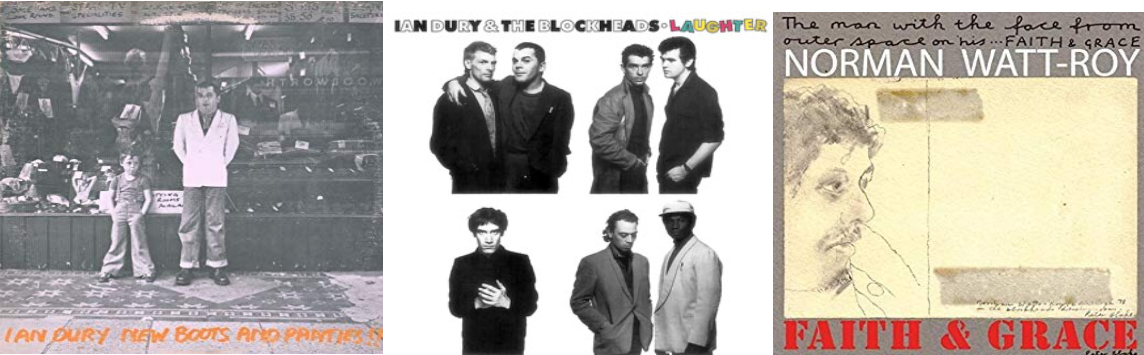
At the height of the punk era, a time wherein musical skill and instrumental prowess were frowned upon, therein emerged England’s most cherished cadre of musical misfits who played their respective arses off: Ian Dury and the Blockheads – anchored by Norman Watt-Roy – who steered the ensemble as they seamlessly fusing jazz, music hall, funk, and traditional rock ‘n’ roll.
Profoundly inspired by Jaco (note Watt-Roy’s use of a signature Pastorius motif in “Hit Me With Your Rhythm Stick” https://youtu.be/0WGVgfjnLqc Norman Watt-Roy’s bass-lines danced amid Mr. Dury’s wicked cockney word-play, hysterical character sketches, and farcical sexual humor which were rooted in Lord Upminster’s astute observations of everyday British life.
Producers often called upon Norman to contribute his multi-genre expertise – Clash fans note that it was Norman who rendered the fantastic dub reggae bass parts on Sandinista (1980).
Norman recorded and toured for thirty plus years with guitar icon Wilko Johnson and worked extensively with the surviving Blockheads in the UK pubs, keeping the waggish flame of the dearly departed Ian Dury burning into the 21st Century. Norman’s bass artistry can also be heard with Frankie Goes to Hollywood (“Relax”), Wreckless Eric, Nick Cave, and Roger Daltrey, among others, including Wilko and Roger’s collaborative Going Back Home (2014).
Bringing his contemporary jazz yearnings to the forefront, Mr. Watt-Roy waxed his first solo album in 2013 entitled Faith & Grace (Ian’s nickname for Norman).
Faith & Grace: “He’s the man with the face, from outer space, on his faith and grace” bellowed the late, truly great Ian Dury of his virtuoso bassist Norman Watt-Roy. Behold this fascinating glimpse into the madcap musical mind of Mr. Watt-Roy – the anchor of the aforementioned cockney bard’s iconic Blockheads, UK studio ace, and Wilko Johnson’s go-to player for the past few decades and counting.
On his lone solo slab, revel as Norman references his signature passages among the ten tracks, including a swingin’ rendition of his celebrated “Hit Me With Your Rhythm Stick” which provides the foundation for “Save It” featuring Sara Gillespie, along with new twists on the magnificent motifs to “Magnificent 7” and Frankie Goes to Hollywood’s “Relax” as found on “Norman! Norman!” http://bit.ly/2DV6vxp
Flexing his jazz funk punk soul pedigree – and wicked sense of humor as evidenced in various vocal vignettes by his fallen bandleader – the incomparable Norman Watt-Roy tributes his idol Jaco on “John and Mary” and “Papa Chu Pap,” and waxes autobiographical in “Me, My Bass and I.”
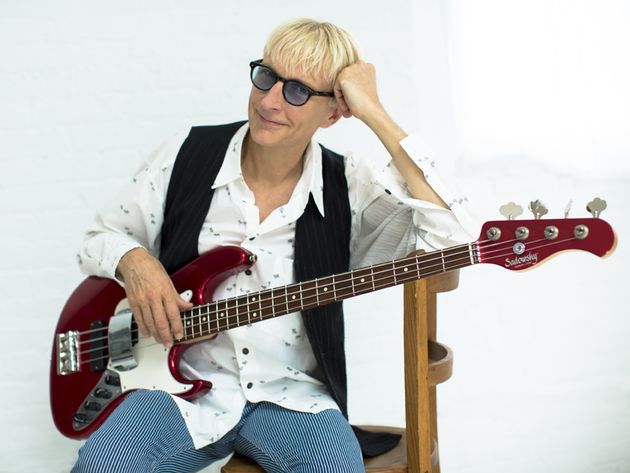
The Bass Centre has honored Norman with a signature “Blockhead Bass” which is among its most popular models!
Norman Watt- Roy Sound & Vision…
With Ian Dury:
Live 1977 https://youtu.be/yVYkR4SB2R8
Live 1999 Ronnie Scott’s https://youtu.be/_sNykJnVqcA
Sex & Drugs & Rock ‘n’ Roll: https://youtu.be/BCaPTNhwK-4
With The Clash:
“Magnificent Seven” https://youtu.be/dj1Nf850Lys
With Wiko Johnson & Roger Daltrey: https://youtu.be/LeoKCJNI-k4?si=nJBJKyGGddumP3_W


By Joe Gagliardo
What do Canned Heat, Spirit, Jo Jo Gunne, Heart, Chris Hillman, Firefall, Dan Fogelberg, Stevie Nicks, Joe Walsh, Kelly Willis, Ian McLagan (and so many more bands and recording artists) have in common? A secret weapon—bassist Mark Andes!
Mark Andes was born in Philadelphia and grew up in the San Fernando Valley. Mark’s dad was Keith Andes, an film actor who co-starred with Marilyn Monroe, and Loretta Young, among others. Though Mark grew up in the glow of Hollywood … he made his own way as an artist and musician.
Mark grew up surrounded by music in his house. Both his parents were musical, as were their friends who would regularly visit the house. Mark and his brother Matt, “Irish Twins”—not quite a year apart, took piano lessons early on, eventually dropping the piano for guitars.
In addition to a family friend who helped out on lessons, Mark also had the benefit of older friends who were knowledgeable about rock and roll who shared their knowledge. He especially loved the energy of early rock and roll—Ritchie Valens, Little Richard, Eddie Cochran, The Fireballs and doo wop.
Mark was ten years old in ‘58, the year Link Wray’s “Rumble” was released. It was an eye-opener for Mark. The frenetic energy and ominous sound of Link Wray’s guitar captured his imagination. The sound was powerful, menacing and it was easy to play – and it was the first song a young Mark Andes mastered.
As time went on, Mark and Matt taught each other to play the songs of the day, focusing on surf instrumentals-Astronauts, Dick Dale, Surfaris, Chantays, and similar artists. By high school circa 1963-65 they worked in some of the most popular bands in the San Fernando Valley. Mark switched to bass after a personnel change in one of the ensembles. Andes’ influences include Willie Dixon, James Jamerson, Paul McCartney, Duck Dunn, and Jimmy Garrison.
The band’s first recording experience were in the legendary Gold Star Studios in Los Angeles, recording a song about the Berlin Wall. The record was produced by Keith Andes, and was never released, however Mark was impressed with the sound of the band on the acetate. It made him believe anything was possible musically. That belief was further fueled by what he saw and heard with The Beatles, The Byrds, and all the groundbreaking music that was exploding around him in LA.
Mark and Matt also had some involvement with Bobby “Boris” Pickett of “Monster Mash” fame. Bobby was an actor and Keith Andes was directing him in a play. Mark and Matt were grips, and they ended up playing with him under the name “The Rolling Bones.”
Mark and Jay Ferguson first met in junior high. By the time of their graduation they made the commitment to work together. Jay had a brother, Tom, who was also playing music. Tom Ferguson went off to a folk camp and returned raving about a young guitar player named Randy Wolfe. Mark and Jay checked Randy out, and they decided to play together. Randy recommended his stepdad, Ed Cassady (“Cass”), on drums, and the band was rounded out by Mike Fondelier. By then, Matt Andes had gone off to art school.
Soon after, Cass, who was a jazz drummer, was offered an opportunity to play jazz in New York. Taking the opportunity meant that he, Randy and the family had to move to New York, which they did. It was while Randy was working at famed Manny’s Music that Jimi Hendrix, then Jimmy James, asked Randy to join his band, The Blue Flames. Because there were two Randys in the band, Jimi christened Randy Wolfe-Randy California, and the name stuck.
Mark’s next stop was as the original bass player in Canned Heat. Barry Hansen, better known as Dr. Demento, got him that gig fresh out of high school when he was seventeen years old. Recalls Mark “Barry, Henry Vestine, and Bob Hite had extensive blues record collections and we played very traditional arrangements. I learned so much in a relatively short time, and got to play fun gigs at the Avalon Ballroom, Fillmore and be-ins.”
With Canned Heat on the verge of being signed, Jay Ferguson told Mark that Randy was back in LA, and suggested that they play together again. “I thought we would form a powerhouse blues/rock group. Randy was playing with Cass and John Locke on keys in a jazz quartet when Jay and I caught up with him. He was agreeable to form a band with us, but was adamant about playing with John and Cass in our new project. The chance to play with Randy was so compelling, I was willing to let go of my desire of a blues/rock format and it opened up to what would be the eclectic sound of Spirit. Randy was the catalyst.”
The new band was called Spirits Rebellious. The band started playing what would have otherwise been dark Monday nights at the Ash Grove, a folk and blues coffee house in West Hollywood. Within a matter of weeks, the band was attracting big crowds, which included an associate of Lou Adler. Soon after they were signed to Lou’s Ode record label. The band name was changed to Spirit, and the first single was “Mechanical World,” written by Mark.
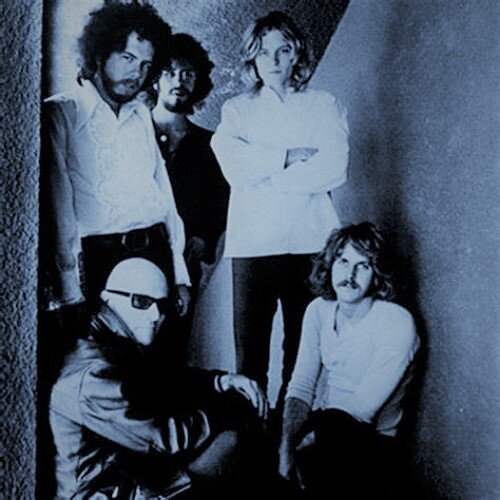
Spirit are among the first bands to meld jazz inflected rock with folk lyrics. According to Mark, the band’s influences included Bob Dylan, The Beatles, John Coltrane, Bill Evans, Mance Lipscomb, Muddy Waters, and the Jim Kweskin Jug Band.
In terms of Mark’s position within the band, he says “I was the resident rocker. I really had to apply myself to get comfortable with the jazz material. John and Cass helped me by introducing me to Coltrane, Miles, Sonny Rollins, and Bill Evans among others. I had to do my homework. Spirit was and still is a life lesson for me.” According to Mark, Spirit was the best band he was ever in–the most rewarding and the most fun.”
Spirit’s first four albums (Spirit, The Family That Plays Together, Clear, and The Twelve Dreams of Dr. Sardonicus released from 1967-1970) all are propelled by the dynamic rhythm section of Mark Andes and Cass. Those records produced many radio favorites including “I Got A Line On You,” “Nature’s Way,” “Fresh Garbage,” “Mr. Skin,” and many other memorable songs. Randy California hit his stride on Twelve Dreams… considered a classic from beginning to end.
Based on the band’s success, Spirit played shows with top bands of the era including Led Zeppelin, Jimi Hendrix, The Rolling Stones, Jefferson Airplane, The Byrds, Steppenwolf, and Janis Joplin.
Spirit began to unravel. On the night before a headlining tour of Japan, Randy decided he did not want to go. Mark and Jay Ferguson decided to work on a rock project. “We both wanted a rockin’, unpretentious band. We lobbied for my brother Matt to join us. He was attending the Chouinard Art Institute in LA and it took a lot of persuading to get him on board. Matt’s style of guitar determined the sound of Jo Jo Gunne. Fluent in acoustic, slide and electric blues guitar, he sent us in a musical direction. Matt had been hanging with members of Little Feat while at art school, and you can hear the slide guitar and piano influences of Little Feat in Jo Jo Gunne’s music.”
Mark continues “the idea was to form a compact, energetic, and undeniable rock band. It took us almost a year to find Curly Smith, the perfect drummer. He moved out from Texas and lived at my house in Topanga. We rehearsed at my place and took our time putting it together.”
They were the first band to sign with David Geffen’s burgeoning Asylum records, and had a Top 40 smash right out of the box, with “Run, Run, Run.” {Writer’s note: If you hear that song in the car, once the drum roll intro of that song hits it gives you the urge to turn the radio up full blast, open the windows and hit the highway so you can drive fast!)
In Firefall, Mark and drummer Michael Clarke (formerly of The Byrds and Flying Burrito Brothers) created a solid rhythm section, along with Joe LaLa (Blues Image) on percussion. Michael’s straight-ahead drumming allowed Mark more space to play progressive and melodic bass lines. Mark left Firefall in 1981, and rejoined the band in January 2014, where he is still an active member.
Recently Firefall recorded their own interpretation of “Nature’s Way.” “We perform that song in concert and it always receives a wonderful response. To make things more interesting, our dear friends Timothy B. Schmit, of Eagles fame (on vocals) and John McFee, of Doobie Brothers fame (pedal steel, twelve string and mandolin) are guesting. It winds up being a way to honor my friend, Randy California, and share his beautiful song at a time we all need to hear it.”
For Andes, Heart followed Firefall. In 1982, Mark was back in LA in a studio when he saw someone wheeling a road case with the name of Howard Leese and the Heart logo. Mark knew Howard from previous tours from the Spirit days, and, after confirming the gear did belong to Howard, he gave the fellow a note with his name and telephone number and asked that Howard give him a call. A few months later, Howard called Mark and asked him if he was interested in playing with Heart. When Mark agreed, Howard told him to grab a bass and come to a recording studio where Howard and Nancy Wilson were completing some tracks. When Mark got there, rather than playing a song together, Nancy suggested that Mark just plug in.
According to Mark, she said very sweetly, “Okay, play something,” so I did, auditioning, I guess.” Mark played some melodic chordal lines, and Nancy Wilson responded “wow, that was nice. You’re in.’ And that was it.” Mark anchored Heart from 1982-1992 and co-wrote their return-to-radio hit “How Can I Refuse” in 1983.
In Heart, Mark, along with drummer Dennis Carmassi (Montrose, Sammy Hagar), provided a formidable platform for the band’s music. After the band moved to Capitol Records in 1985, they made the album simply entitled Heart. That album reached Number One, sold five million copies and launched four Top Ten hit songs: “What About Love” (#10), “Never” (#4), “These Dreams” (#1) and “Nothin’ At All” (#10). A fifth single, “If Looks Could Kill” also charted making five hit singles from the same album. Mark’s ten-year stint with Heart was filled with multi-platinum albums, No. 1 chart topping hit singles, award winning videos and non-stop arena headlining tours worldwide.
Mark barely skipped a beat with his departure from Heart before he joined Stevie Nicks on the road in 1992. Not long after, when Timothy B. Schmit was leaving Peoria Illinois’ native son, Dan Fogelberg, to join the Eagles’ “Hell Freezes Over Tour,” Mark joined his Boulder buddy and he toured and recorded with Fogelberg over a ten-year period.
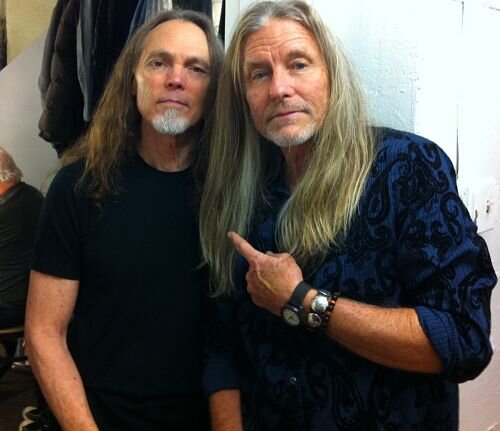
In the latter ‘90s, Mark moved to Austin, Texas which opened up many new opportunities. “What I really love about Austin is its sense of community. Austin gives me the chance to play with wonderful artists and that’s what I do best.”
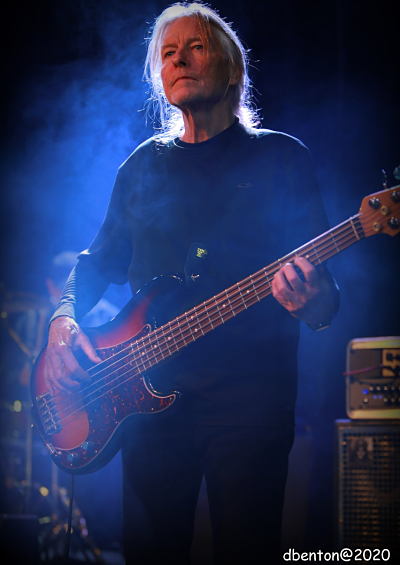
Mark became the bass player of choice, collaborating with Eliza Gilkyson, Kelly Willis, Iain Matthews, Jon Dee Graham, Alejandro Escovedo, Jo Carol Pierce, and 3 Balls of Fire. Mark spent six years with legendary former Small Faces/Faces keyboardist, Ian McLagan & The Bump Band.
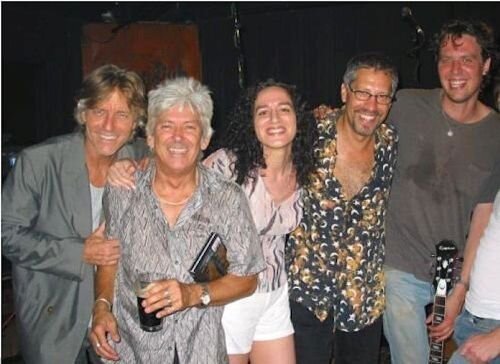
After Austin, Mark moved to an area outside of Houston, where, in addition to working with Firefall, he has done a tremendous amount of studio work, including with Kenny Cordray who wrote ZZ Top’s “Francine.”
Although Mark does not consider himself a songwriter, he and Eliza Gilkyson co-wrote, “Beauty Way,” which was a turning point for Gilkyson’s career. His other songs include Spirit’s “Mechanical World,” Firefall’s “Anymore,” Heart’s “How Can I Refuse?” and “Take Your Place” on Alejandro Escovedo’s The Boxing Mirror.
As to Mark’s playing style, he says “the bass is the backdrop behind everything. I used to play guitar, and I still compose on the guitar, but I’ve always loved the bass. It’s the connecting bridge between the drums and the melodic instruments. The bass literally moves you. I’m not a virtuoso; I just like to keep it simple. I really enjoy playing parts that happen to be accessible. I don’t like overplaying. I don’t like to take solos.”
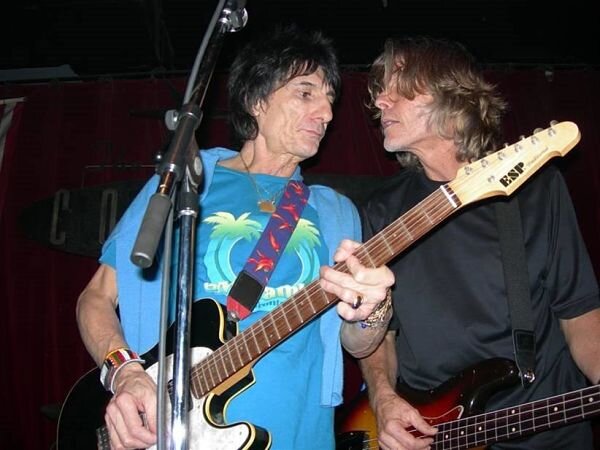
Mark’s first bass was a St. George bass. Mark notes “the first professional bass I got for myself was a ’64 Precision; I put a ’57 Precision neck on it when I was in Spirit, and that’s the instrument I used for years; I still have it. Originally it was a three-tone sunburst; at one point I stripped the finish off of it, then sometime later I got a guy in Nashville to put a two-tone finish on it, and I put a gold anodized pickguard on it as well; so these days it looks pretty much like a ’57.” That bass was used on the Spirit and Jo Jo Gunne records. His arsenal also includes a ’61 Fender Jazz bass, and a Fender five-string Precision. While his rigs have varied over the years, his go to rig is an Ampeg 8×10 SVT.
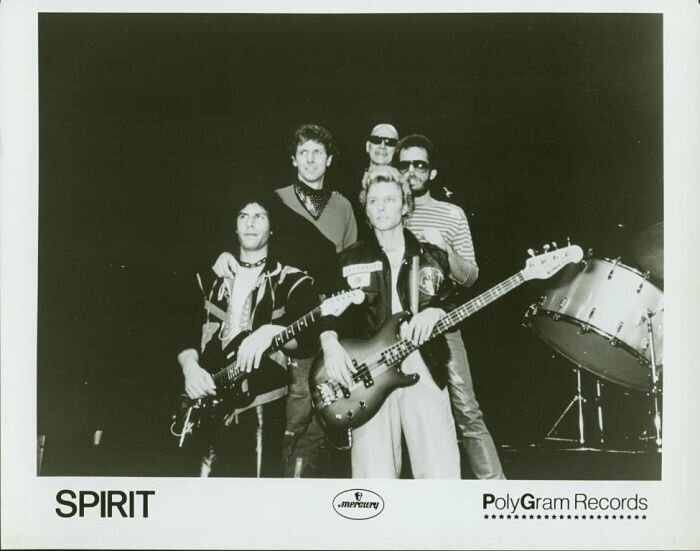
Spirit “Nature’s Way” https://youtu.be/qvQa04JP73o
Spirit “When I Touch You” https:// youtu.be/KGtTFOUwQZ8
Spirit I Got A Line On You https://youtu.be/mzoQvuCfin4
Jo Jo Gunne “Academy Award” https://youtu.be/LZNfCL0VfIA
Jo Jo Gunne “Run Run Run” https://youtu.be/cOi0Iv5J45c
Heart “Never” https://youtu.be/zWzy5q_M5Ho
Mark live with Ian McLagan The Bump Band https://youtu.be/AeJqok1H_X4
Jon Dee Graham “One Moment” https://youtu.be/6BsW3s_uCV8
Firefall “Nature’s Way” https://youtu.be/ivvQJoF54Kw
“Real World Magic” title track from Mark’s instrumental album: https://youtu.be/L9ZJkY0MA70
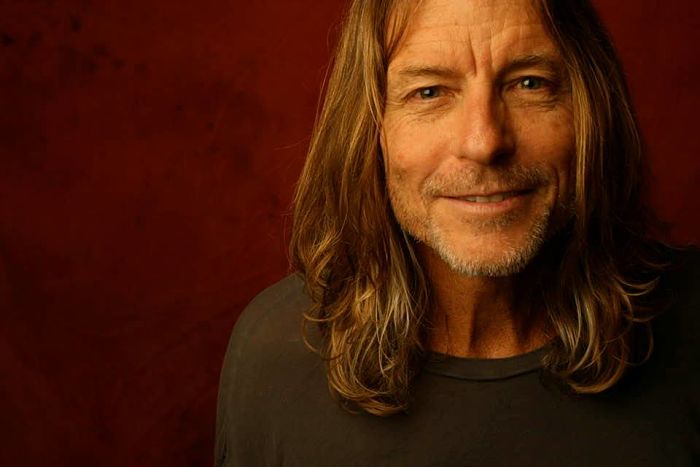
Will Lee: Huffington Post / Tom Semioli- Eleven Bass Players Who Belong in the Rock and Roll Hall of Fame https://bit.ly/38WUMh2
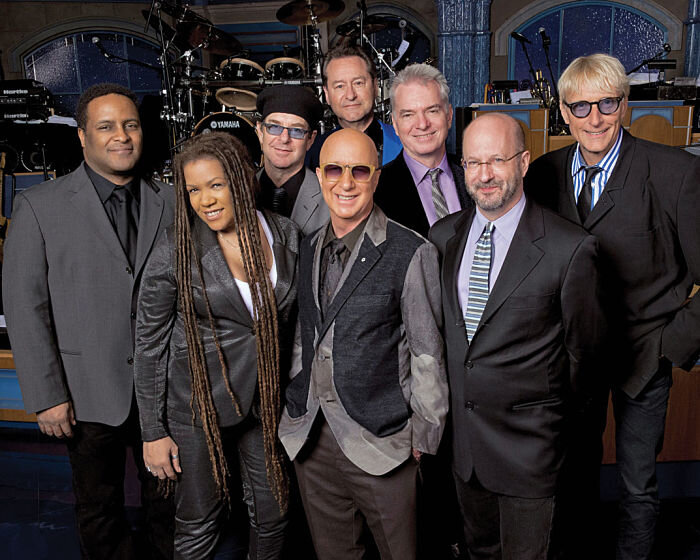
As the work of late night talk show host David Letterman is now written into media history, we cite the immeasurable contribution to American culture and the arts by Dave’s unwavering musical stalwarts for his entire thirty-three year career on late night television: bandleader Paul Shaffer and bassist Will Lee.
Assuming the mantle created by Doc Severinsen’s legendary NBC Orchestra as heard on The Tonight Show Starring Johnny Carson – Paul and Will’s groundbreaking tenure in the World’s Most Dangerous Band (with guitarists Hiram Bullock and Sid McGinnis, drummers Anton Fig and Steve Jordan) and later, The CBS Orchestra (with additional members Felicia Collins, Bones Malone, and Frank Greene among others) brought the language of rock, blues, soul, folk, country, jazz fusion, and funk to the great American Songbook.
I’ve witnessed Will on scores of club dates since the 80s. Not only is he the consummate sideman – his stage demeanor and boundless enthusiasm – regardless of how many people are in the venue is a declaration of the reverence he has for his audience, his craft, and the music.
Will’s formal music education commenced at the University of Miami (his dad would later become Dean of the School of Music) wherein he switched from French horn to electric bass. Inspired by The Beatles, Motown, Will quickly developed a reputation as a first call session player in New York City during its studio golden era of the 1970s / 80s. He toured and/ or waxed sides with artists spanning B.J.Thomas, Horace Silver, Bette Midler, Barry Manilow, The Brecker Brothers, Herbie Mann, David Sanborn, Boz Scaggs Diane Schuur, Herbie Hancock, Lyle Lovett, Oz Noy, Tom Scott, Neil Sedaka, Carly Simon, Frank Sinatra, Phoebe Snow, Ronnie Spector, The Spinners, Spyro Gyra, Ringo Starr, Steely Dan, Cat Stevens and Barbra Streisand to cite a very, very select few.
In addition to his matchless work as a sideman (and vocalist), Will also waxes sides under his own name and you can catch him on the bandstand with The Blue Birds of Paradise and The Fab Faux.
Will Lee Sound & Vision…
Letterman Jam segment “Dance to the Music” https://youtu.be/NhjBDiMckwU
Keith Emerson with The World’s Most Dangerous Band https://youtu.be/mqC-Ne88gWA
Brecker Bros. “If You Want to Boogie” https://youtu.be/m0kZg5oV1mg
24th Street Band “Pocket Change” https://youtu.be/6sJioYef510
Will solo “Fooled Him” https://youtu.be/zSXwLv0vt3Q


He anchored one of the most successful ensembles in the history of popular music – and one which furthered the careers of several iconic songwriters including Elton John and Bernie Taupin, Laura Nyro, Paul Williams, Harry Nilsson, Hoyt Axton, and Randy Newman – to cite a very select few.
We all know Jeremiah was a bullfrog, however if you came within earshot of an AM radio in the late ‘60’s – early 70s you also know the work of late Joe Schermie by way of “One,” “Easy To Be Hard,” “Eli’s Comin” “Celebrate,” “Mama Told Me Not to Come,” “Joy to the World,” “Liar,” “Old Fashioned Love Song,” “Never Been To Spain,” and “Black & White” among others.
Three Dog Night was America’s premier pop singles band of the era, knocking out 21 Top 40 hits between ‘69 and ’75.
Founding bassist Joe Schermie (nee Shermeltzer) was their soul-inspired harmonic bedrock: always in the pocket, rendering all the right notes with a diversity of rhythmic variations, and allowing space within the songs for their remarkable triumvirate of singers to shine. Joe was a true finesse player with a rock ‘n’ roll edge. Schermie’s weapon of choice was the Fender Jazz, which he customized, and affixed a fuzzy Troll doll to the headstock which he never explained!
A powerhouse live ensemble, Three Dog Night’s album tracks where equally as engaging as their singles – dig their rendition of a Beatles track which was never officially released by the Fab Four “It’s For You” from Captured Live at the LA Forum https://youtu.be/PFaIwt6nfdU
Following his dismissal from the band in ‘73 – for reasons unknown, Joe later emerged in the ensemble S.S. Fools featuring Bobby Kimball who would go on to front Toto, along with former TDN members Mike Allsup and Floyd Sneed, who were also axed, again, for reasons unknown. They waxed one slab which sank in the marketplace which was now focused on punk, disco, and hard rock.
In his later years, Joe worked in various ensembles – some with Floyd Sneed, which featured his former band’s hits, and new material. Schermie passed at age 56 in 2002 shortly after the filming of the aforementioned television show.
Joe Schermie Sound & Vision….

Three Dog Night:
BBC In Concert 1972 https://youtu.be/6SBd9ZfzzMA
“My Impersonal Life” https://youtu.be/U6IjeTXHKU8
“Eli’s Coming” https://youtu.be/K8SRD0FK2EE
“Try a Little Tenderness” https://youtu.be/eyNRMkrfyFk
Tony Senatore’s rendition of “One” https://youtu.be/JIQWQlTfDok
S.S. Fools:
American Bandstand: https://youtu.be/xAovwsPiReQ
“Whatever Happened to America” https://youtu.be/BHhQfO7pz9Y
Dig Joe and Floyd cooking fried chicken on an independent TV program entitled Food Rules https://youtu.be/yf051qxnnZ4
Bassist Fran Festa with his Joe Schermie Tribute Bass.
Check out Fran’s Joe Schermie Fans Facebook Page! (12) Joe Schermie Fans | Facebook

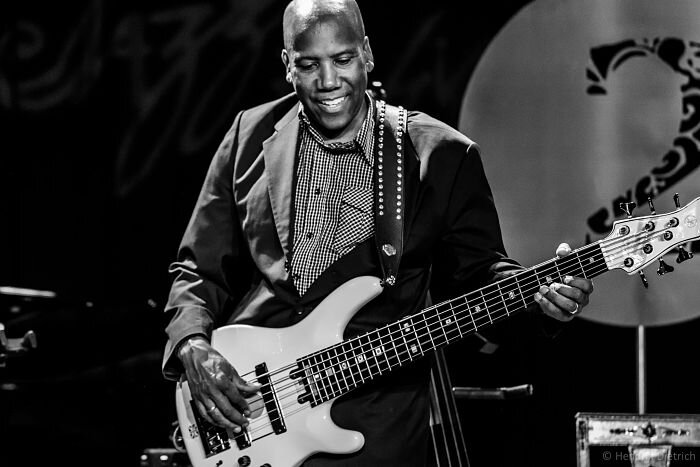
Photo courtesy of Nathan East Com

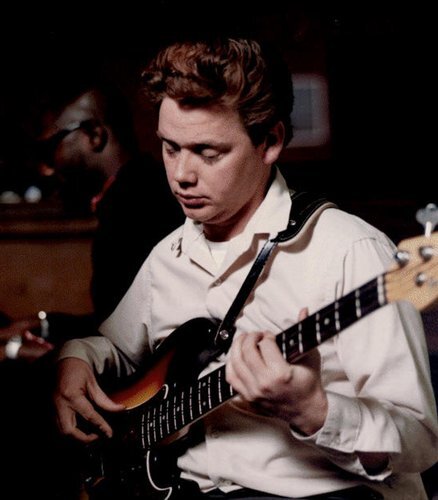
Courtesy of Duck Dunn Remembered Com
“I listen to the first playback, then go back into the studio and play half of what I did!” Donald “Duck” Dunn
Along with James Jamerson Jr., Carol Kaye, and many of the Wrecking Crew players of the early 1960s, Duck established the electric bass as the bedrock of popular music by way of his work in Booker T. and the MG’s and as an in-demand A list studio player.
Dunn’s style is a master course in the use of rhythm and space. Play through his transcriptions and you discover not a superfluous fill, grace note, nor rapid-fire motif. Duck let the music breathe, and by doing so you can hear the song within his bass passages.
A player whose influence is incalculable, Duck’s legendary weapon of choice was the Fender Precision outfitted with heavy gauge LaBella’s akin to his peer Jamerson – which he amplified with various Ampeg rigs, most notably the B-15, again akin to the aforementioned Motown icon.
So what Donald “Duck” Dunn done? Booker T. & the MGs, Ray Charles, The Blues Brothers, Roy Buchanan, Eric Clapton, Bob Dylan, Isaac Hayes, Albert King, Ritchie Havens, Wilson Pickett, Otis Redding, Elvis Presley, Diana Ross, Muddy Waters, Bill Withers, Neil Young, The Manhattan Transfer, The Staples Singers, Boz Scaggs, Tom Petty, Stevie Nicks, Freddie King, Crosby Stills Nash & Young, Jerry Lee Lewis…to name a scant few.
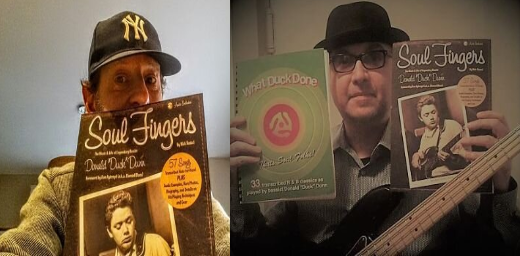
Nick Rosaci’s transcription book Soul Fingers: The Music & Life of Legendary Bassist Donald “Duck” Dunn – is essential reading for all bassists who work in a pop, rhythm and blues, soul, funk, rock context.
Every track Duck cut is worthy of exploration – so rather than choose one of his more popular passages, dig this somewhat obscure Slowhand recording “The Shape You’re In” https://youtu.be/yFVXxxvkFiU
Tony Senatore’s Booker T. medley with some of Duck’s classic passages: https://youtu.be/6KdK2KyZlAg

Kenny Aaronson, Tom Semioli in the Duck Dunn shed!

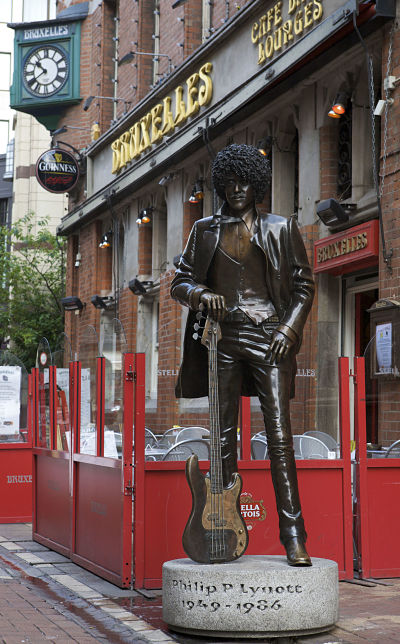
Courtesy of Thin Lizzy Co UK
There is no Rock ‘n’ Roll Hall of Fame vast enough to accommodate the legacy of the late, great Philip Parris Lynott. The creative genius behind Thin Lizzy and one of the most influential rock artists of all time, Phil is beloved, revered, and emulated by indie and alternative rockers, punks, folkies, and metal heads alike.
Pounding out root note passages on top of the beat with his instrument positioned ergonomically chest high, this Dublin by-way-of Birmingham working-class poet bared his restless romantic soul in compositions and performances that were reflective, cocksure, cavalier … and jubilant – all in the span of a five minute pop song.
Detailing the blue-collar blues (and triumphs) of the proletariat and its fringe characters, Phil’s artistry evokes comparison to such acknowledged poets including Bob Dylan, Bruce Springsteen, Van Morrison, Patti Smith, Leonard Cohen, and Joni Mitchell. His unique style of conversational vocal phrasing – half sung / half spoken – afforded his witty libretto a cinematic quality.
Phil’s weapons of choice included his signature black Fender Precision bass, Rickenbacker, and in his later years, an Ibanez Roadster.
Phil Lynott Sound & Vision …
“Sarah” https://youtu.be/sEmkIxOolxc
“The Boys Are Back in Town” https://youtu.be/SGZqDzb__bw
“Whisky In the Jar” https://youtu.be/6WDSY8Kaf6o
“Bad Reputation” https://youtu.be/gqSzDJGFCgI
“Jailbreak” https://youtu.be/dMko8DlY9IA
“Cowboy Song” https://youtu.be/fMdmjoAB-5Q
“Old Town” https://youtu.be/d2OcIqwmSaY


By Thomas Semioli
“I’m not a star. I’ll never be a Frank Sinatra or Elvis Presley or a Ray Charles. I’m just an imitator, man. I’m doing a very bad imitation on the bass of Jerry Jemmott, Bernard Odum, Jim Fielder, Jimmy Blanton, Igor Stravinsky, Jimi Hendrix, John Coltrane, James Brown, Charlie Parker… the cats, man. I’m just backing up the cats…” Jaco Pastorius
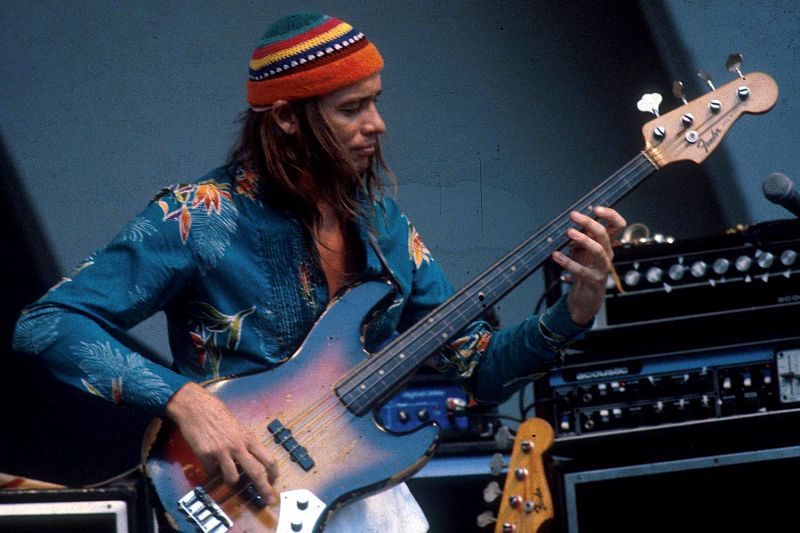
You can divide the history of the bass into two categories: Before Jaco. After Jaco. As a student at the University of Miami in the late 1970s – a time when the electric bass was not considered a legitimate instrument by the jazz establishment (aka “the jazz police”), in the many instances when we were confronted by such ignorance – we simple responded to the misbegotten taunts with one word, one name: Jaco!
Jaco’s influence is, in a word, incalculable. Drawing on his deep reference for Cuban music (especially percussionists), jazz, rhythm & blues, Frank Sinatra, big-band, funk, rock, pop, soul, and every permutation thereof, Jaco brought an exciting, fresh voice to the instrument akin to his artistic peers Jimi Hendrix and Charlie Parker, to reference two.
On the technical side, Jaco’s virtuoso application of harmonics, chords, advanced harmonies, and lyrical improvisations all coaxed from a battered fretless Fender Jazz – known as the “Bass of Doom,” shook the foundation of popular music. His unique tone shattered the long-held tenets of what a bass should sound like. The full possibilities of the electric bass which Jaco pioneered are still being explored today by players of all generations. On stage, he was a master showman.
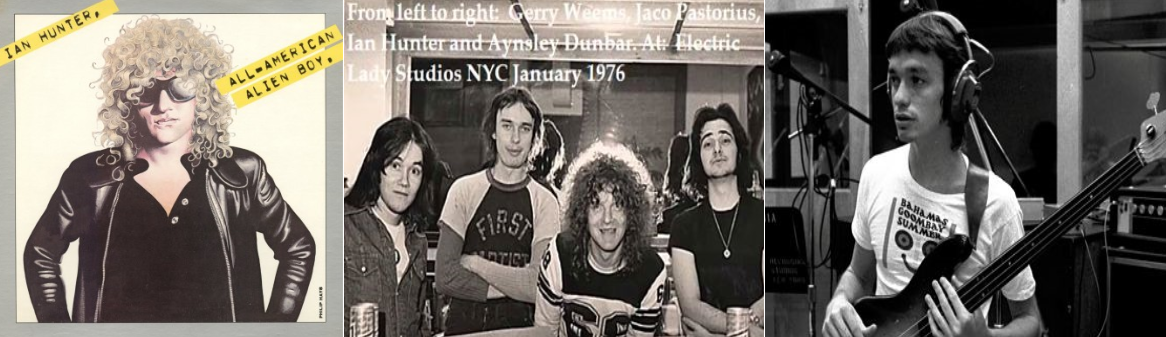
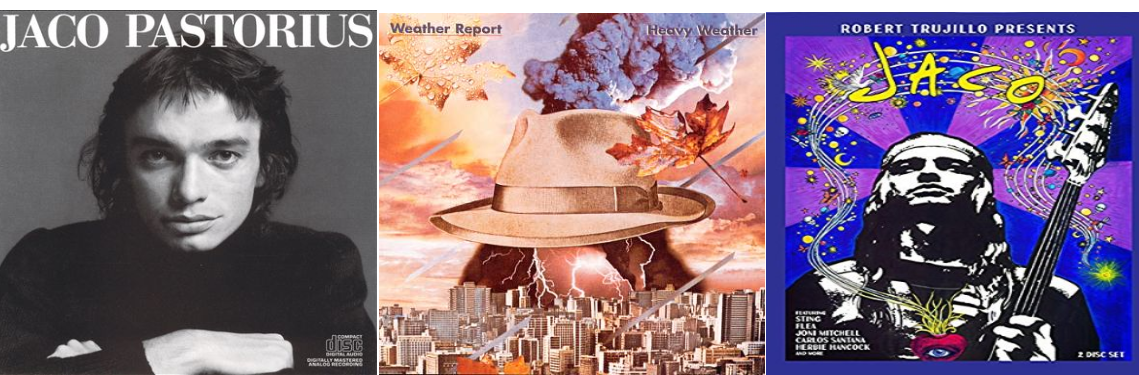
Jaco’s work with Weather Report, Joni Mitchell, Ian Hunter, and as a solo artist and collaborator remains watershed, and continues to inspire scores of players.
Kudos to film makers Paul Marchand, Stephen Kijak and Metallica bassist Robert Trujillo for telling Jaco’s story with the grace, dignity, and respect he so richly deserves: Jaco – Passion Pictures / 2014.
Jaco Pastorius Sound & Vision…
Jaco and Joni: “Shadows & Light” https://youtu.be/bLKb9Ms68ME
Ian Hunter “All American Alien Boy” https://youtu.be/i9y7IIjS3Kk
From Rock ‘n’ Roll Sweepstakes: Ian Hunter – The Authorized Biography Volume Two by Campbell Devine (Omnibus Press). Tom Semioli, who runs the US website KNOW YOUR BASS PLAYER describes the record that introduced (Jaco) Pastorius to rock audiences as “…an overlooked masterpiece. Jaco’s bold motifs beautified Hunter’s intense, introspective, observational verses and melodies. Unlike his time with Joni, Jaco didn’t dare outmaneuver Hunter. An undeniably captivating marriage of jazz, rock and poetry, no album (All American Alien Boy / 1976 / Columbia Records) sounded like this before, and no album has sounded like it since….”

Weather Report:
“Teen Town” https://youtu.be/a3113eNj4IA
“Birdland” https://youtu.be/SvhmaNlLgRM
Jaco:
“Donna Lee” https://youtu.be/dGbCxcuNjBU
“Portrait of Tracy” https://youtu.be/IqndXUPBjIo


Courtesy Paul Jackson Com
By Thomas Semioli
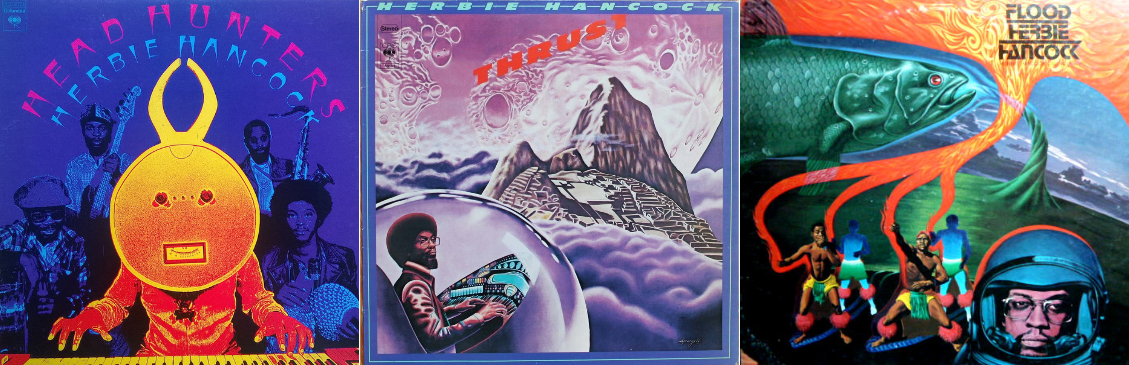
A giant of the instrument, Paul Jackson’s tenure as anchor of Herbie Hancock’s groundbreaking Headhunters ensembles brought jazz fusion and funk to the masses, and continues to influence generations of bass players and hip-hop artists who have endlessly sampled his work.
A master of rhythm and space, Jackson’s “economic” approach was founded on repetitive lower-register motifs punctuated with tuneful upper-register fills which complimented Herbie’s melodies and the grooves forged by drummers Harvey Mason and Mike Clark.
A Grammy Award nominated composer, solo recording artist, and in-demand session player/collaborator with artists including Santana, Stanley Turrentine, George Benson, Al Di Meola, the Oakland Symphony, and the Pointer Sisters – to cite a very select few – Paul Jackson was also an acclaimed educator and founder of Jazz for Kids.
Paul Jackson Sound & Vision…
Herbie Hancock “Palm Grease” https://youtu.be/sRn7WlikdUA
Paul on the tracks he composed with Herbie:
“Chameleon” https://youtu.be/WYRrIBqKsJ4
“Hang Up Your Hang-Ups” https://youtu.be/d7kRlufrZJo
“Spider” https://youtu.be/HQPdVhYZgR0
Mike Clark / Paul Jackson Funk Tutorial Part One: https://youtu.be/i-3v0NN3FNo
Paul Jackson Trio “Everything” https://youtu.be/grQBpNRIAY0
Santana: “Give Me Love” https://youtu.be/0MGBQffSVSY
Pointer Sisters “Chainey Do” https://youtu.be/xhmp3J79CNI