Photo by Juergen Spachman from Tony Levin Com
By Thomas Semioli
A revered session bassist, sideman, band-member, composer, recording artist, blogger, and photographer, among other endeavors who prolifically doubles on the Chapman Stick: Tony Levin began his musical journey as a classical bassist and tuba player, has been a pillar in Peter Gabriel’s various genre defying ensembles since 1978.
Dig Tony with Peter Gabriel https://youtu.be/05TVDCWRBog
In addition to leading his own groundbreaking bands (Stick Men, Bruford Levin Upper Extremities), Tony was a member of King Crimson for their pioneering latter day studio albums Discipline, Beat, Three of a Perfect Pair, and Thrak and continues to tour with Fripp and company on various anniversary treks.
Dig Tony with King Crimson: https://youtu.be/FhKJgqxNDD8
You also know Tony from his outstanding work on over 500 albums with artists including John Lennon (Double Fantasy), Paul Simon (One Trick Pony) Robert Fripp (Exposure), Pink Floyd (A Momentary Lapse of Reason), Alice Cooper (Welcome to My Nightmare), Lou Reed (Berlin), Todd Rundgren, Seal, Anderson Bruford Wakeman Howe, and Carly Simon to name a few.
Tony is also renowned for his “funk fingers” which are modified drum sticks attached to his finger-tips which essentially pound the bass strings a la slap style.
Dig Tony’s “funk fingers” https://youtu.be/aUjXvAPjO5g
In addition to his Rock ‘n’ Roll Hall of Fame-worthy career as a bassist, Mr. Levin was among the World Wide Web’s first bloggers wherein he published road diaries of the various tours he participated in – which you can access via his www.papabear.com.
Also be sure to check out Tony’s work on TonyLevin.Com
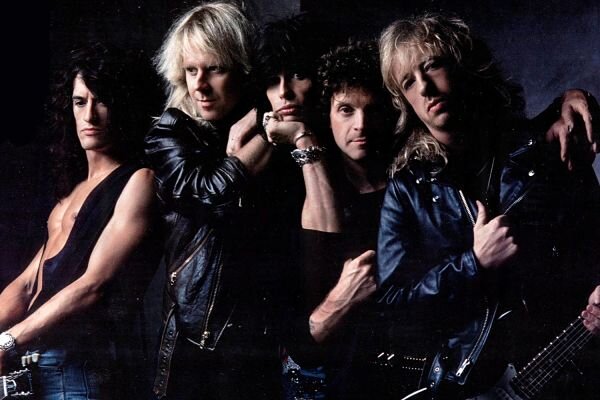
Photo courtesy of Aerosmith Com
By Thomas Semioli
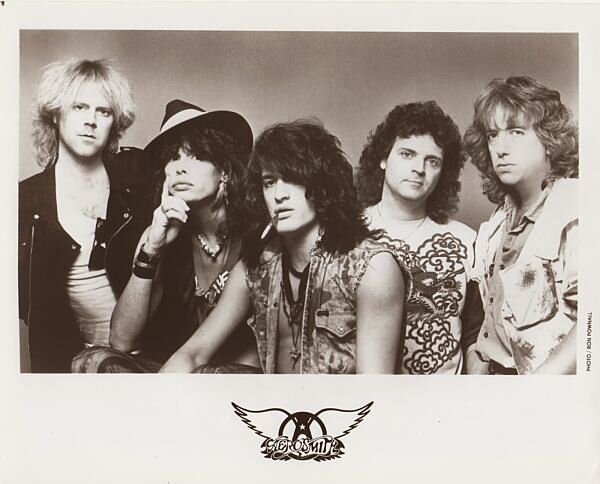
Courtesy of Aerosmith Com
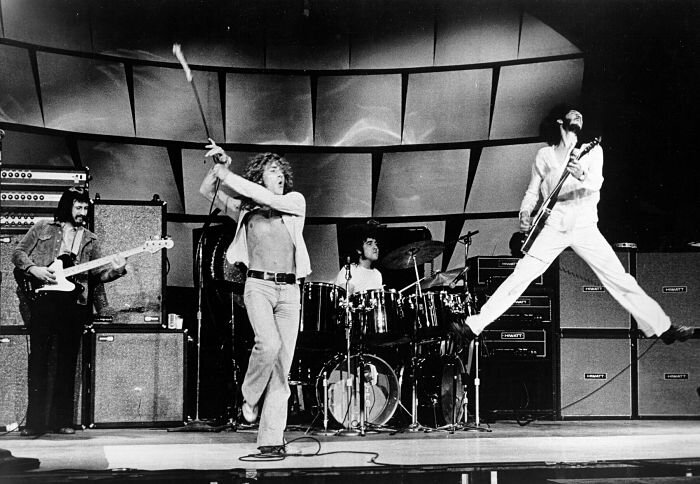
Courtesy of The Who Com
By Thomas Semioli

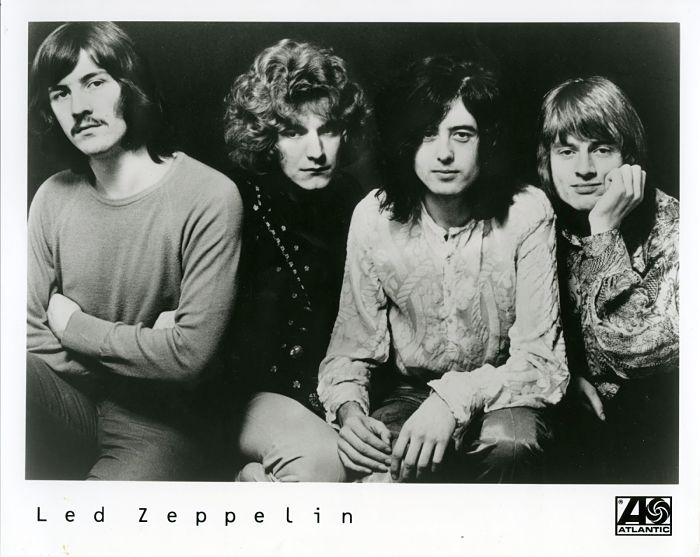
Courtesy of John Paul Jones Com
Rock journos tend to discuss the former John Baldwin as Led Zeppelin’s “secret weapon.” What’s the secret? John Paul Jones was up in the mix, his harmonic and rhythmic expertise as a bassist and keyboardist defined the band’s signature identity, and his musical knowledge expanded the range of Page, Plant, and Bonham’s artistry collectively and individually!
Previous to his tenure in Zep, Jones was an in-demand session cat, arranger, and producer on the fertile London studio scene of the early to mid-1960s. Among his higher profile credits included Donovan (“Hurdy Gurdy Man,” Mellow Yellow,” “Sunshine Superman”), the Rolling Stones (“She’s a Rainbow”), Cat Stevens, Rod Stewart, Lulu, Shirley Bassey, Herman’s Hermits, and Jeff Beck to cite a select few.
According to lore, he joined forces with Page, a session colleague, out of boredom from long days and nights in the studio. Mentored by his musical parents Joe Baldwin: a big-band pianist, and singer / performer mom, Jones’ theoretical (and historical) expertise informed his work as a bassist.
Whereas most rock bassists tended to follow the guitarist (as many a player were converted six-stringers), Jones was heavily influenced by James Jamerson, James Brown, and the Stax cats. Akin to the Motown legend, Jones worked a soulful pocket with jazzy harmonic extensions which set Zep apart from the loud and proud motley.
He is cited by scores of bassists as a primary influence – however I’ve heard few hard rock players cop his rhythm and blues feel. In particular, Led Zeppelin II is Jonesy’s masterpiece. JPJ’s main weapon of choice was the ’62 Fender Jazz, though he often brought the vogue Alembic on stage with him in the 1970s.
Led Zeppelin’s career trajectory has been extensively documented – no need to repeat it here! Following Zep’s demise, Jones continues to enjoy a diverse career, collaborating and composing with artists spanning jazz, experimental, and alternative rock.
John Paul Jones Sound & Vision as a bassist!
Led Zeppelin:
“Ramble On” https://youtu.be/EAmIuTI4wRg
“The Lemon Song” https://youtu.be/8gWbKAcuzN8
“The Crunge” https://youtu.be/CWf5FYSK7Yc
Diamanda Galas: Live https://youtu.be/AM45V5BIQPE
Them Crooked Vultures: Live on Rockpalast https://youtu.be/Ty8Yj2FCab4
Live with Lenny Kravitz: “Are You Gonna Go My Way” https://youtu.be/Ougf2ZIoqww
Solo JPJ: “Zooma” https://youtu.be/RFqSQ0Vvmx0


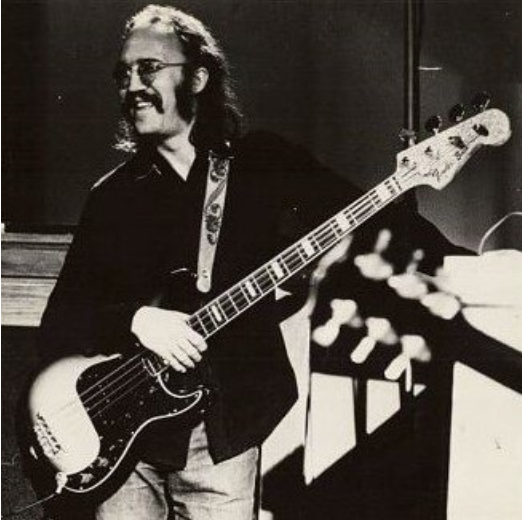
Courtesy of Jack Bruce Com
By Thomas Semioli
Along with Paul McCartney, Duck Dunn, John Entwistle, and Chris Squire – John Symon Asher Bruce was among rock’s most accomplished and influential bassists.
Jack Bruce’s iconic status as a virtuoso instrumentalist emerged from his improvisatory genius with Cream as evidenced on their legendary extended live jams on record and on the concert stage– a revolutionary horizon for rock bands of the era. His wide array of studio recordings as a solo artist and collaborator were mostly innovative and equally important in expanding the language of rock music to include jazz, classical, and permutations thereof.
Bruce’s signature tone truly emerged from his soul – regardless of the bass he utilized. From his Fender VI to his signature Gibson EB to Warwick – you always recognized Jack in a single passage!
In addition to his work as a bassist, Jack was also an extraordinary vocalist.
With Cream, Bruce also flexed his remarkable songwriting chops with lyricist Peter Brown: “White Room,” “Politician,” “SWLABR,” and “Sunshine of Your Love” are among rock music’s most enduring standards.
Bruce’s collaborations with artists from every conceivable genre – including Tony Williams, John McLaughlin, Frank Zappa, Leslie West, Carla Bley, Mick Taylor, Billy Cobham, Robin Trower, Lou Reed, and Cindy Blackman Santana, to name a very few, never failed to break new ground.
Jack Bruce Sound & Vision…
“Tickets to Waterfalls” https://youtu.be/ng7vpLsEX-o
“Theme for An Imaginary Western” https://youtu.be/ZE-zVoru1rE
“White Room” https://youtu.be/V5BF1V1pbTs
“Sunshine of Your Love” https://youtu.be/y_u1eu6Lpds
“SWLABR” https://youtu.be/l0QV71h-1b8
“Politician” Live https://youtu.be/XPv9W_55zdE
“Apostrophe” with Frank Zappa https://youtu.be/XPv9W_55zdE
Tony Williams Lifetime: “Right On” https://youtu.be/XPv9W_55zdE

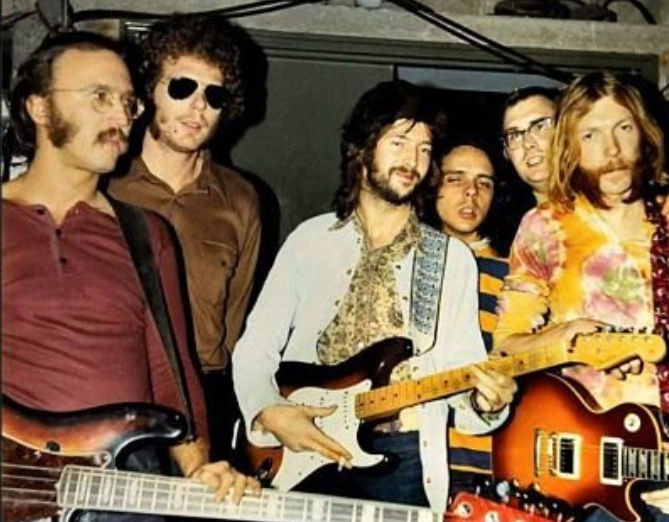
Courtesy of Cream Com

By Thomas Semioli
If you had to choose a role model of a classic rock bassist …look no further than this cat!
Huffington Post / Tom Semioli : Carl Radle: Eleven Bass Players Who Belong in the Rock and Roll Hall of Fame https://bit.ly/38WUMh2
He was the consummate sideman who came to prominence on seminal sides and concert performances with Derek & The Dominoes, George Harrison, Delaney & Bonnie, Eric Clapton, Leon Russel, and Joe Cocker. Bassist Carl Dean Radle’s motifs are so essential to the compositions that he waxed with those aforementioned rock icons; that if you were to play the songs without rendering his lines (near) verbatim – the tune sounds… wrong!
Born in Tulsa, Oklahoma, and migrating to Los Angles in the 1960s, Radle’s association with fellow Tulsan Leon Russell, then a prominent member of the Wrecking Crew, afforded Carl entry into the elite sessions circles.
Radle’s jaw-dropping resume also spans Gary Lewis & The Playboys, The Concert for Bangladesh (with Klaus Voorman), Dr. John, Dave Mason, J.J. Cale, Buddy Guy, Rita Coolidge, John Lee Hooker, King Curtis, Bobby Whitlock, Art Garfunkel, Donovan, and Bob Dylan, to cite a very select few.
Carl’s weapons of choice included a ’65 sunburst Fender Precision with a blocked and bound neck, ’68 blonde Fender Telecaster bass with a single coil Telecaster pickup and a split-coil Precision pickup, MusicMan Stingray, and a ’75 Alembic.
Radle’s fluid lines are a study in rhythm and space. His meld of staccato phrasing, sustained notes, and unadorned countermelodies sounds deceptively effortless – which further exemplifies Carl’s mastery.
Among Carl’s finest recordings include his work with drummer Jim Keltner as captured on Joe Cocker’s Mad Dogs & Englishmen (1970).
To my ears, Layla and Other Assorted Love Songs (1970) represents Carl’s most enduring recorded work and stands as a definitive example of the supportive role of the bass in a rock guitar-based setting.
Carl Radle Sound & Vision…
Derek and the Dominos
“Got to Get Better” https://youtu.be/ywdU0C2GH2o
“Bell Bottom Blues” https://youtu.be/FclW0go4Cfc
“I Looked Away” https://youtu.be/PMlmoLvRBNQ
“Anyday” https://youtu.be/QrWK5XWuGpk
Eric Clapton:
“Let It Rain” https://youtu.be/vFoheneUfU0
“Motherless Children” https://youtu.be/9EZlmqWmcqw
“Let It Grow” https://youtu.be/YpDlmop0uYU
Delaney & Bonnie & George & Eric “Comin’ Home” https://youtu.be/aazChqk4U-c
George Harrison “You” https://youtu.be/3xnTWee4eAI
Rita Coolidge “Superstar” https://youtu.be/e4Xi1I78Kms
Leon Russell “Stranger in a Strange Land” live https://youtu.be/Hjy7RAu8TJ4
Joe Cocker’s Mad Dogs & Englishmen
“Delta Lady” https://youtu.be/uIz8n4fprxw
“Darling Be Home Soon” https://youtu.be/RCl-zznJ5so
“Space Captain” https://youtu.be/RCl-zznJ5so


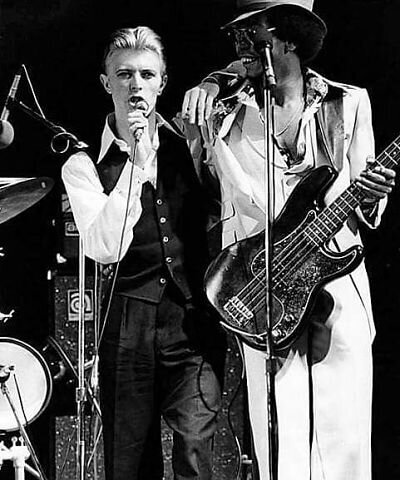
Courtesy of David Bowie Com
He was the former David Jones’ bassist during his watershed “Berlin “era from 1976 through 1979.
With producers Tony Visconti, Brian Eno; guitarists Earl Slick, Robert Fripp, Ricky Gardiner, Adrian Belew, and Carlos Alomar; keyboardists Roy Young and E Street Band pianist Roy Bittan; drummer Dennis Davis, and bassist George Murray as the core band– the Thin White Duke erased the boundaries of soul, hard rock, avant-garde and dance into works of aural art hitherto unheard.
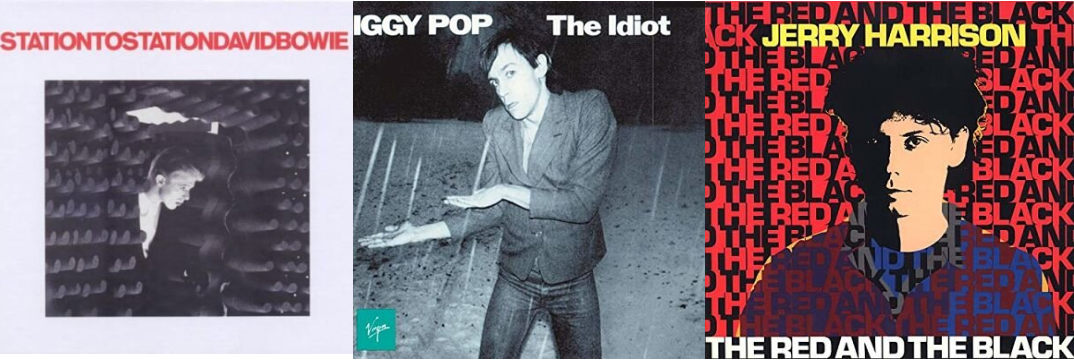
Plying unadorned funk grooves, George anchored Station to Station (1975), Low and Heroes (1977), the live twofer Stage (1978), Lodger (1979), and Scary Monsters (1980) which are among the most influential of the era and of Bowie’s entire canon.
Murray also served as the bassist with David in the producer’s chair for Iggy Pop’s best album The Idiot, and Talking Head Jerry Harrison’s underrated The Red and Black (1980).
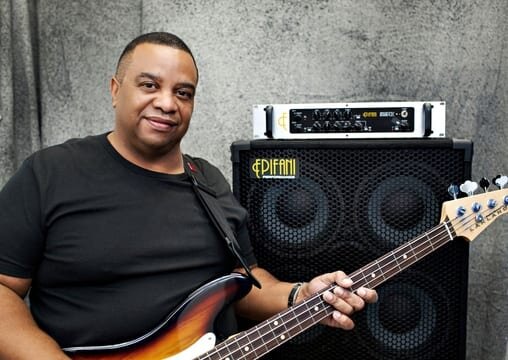
In the studio, George’s weapon of choice was the Fender Precision. On stage Murray utilized the Precision, Kramer, and Gibson Ripper basses.
After Bowie dispatched this band, Murray moved to Los Angeles and forged a career as an educator.
George Murray Sound & Vision…
David Bowie
“Sound & Vision” https://youtu.be/ZV_UsQPTBy4
“TVC 15” https://youtu.be/Dh8RDktOdnc
“Ashes to Ashes” https://youtu.be/HyMm4rJemtI
“Boys Keep Swinging” https://youtu.be/2KcOs70dZAw
“Heroes” https://youtu.be/YLp2cW7ICCU
“Panic in Detroit” Live on the Station to Station Tour 1976: https://youtu.be/3CVK_rNXMRA
Jerry Harrison
“Worlds In Collision” https://youtu.be/mrANQizoaAM
Iggy Pop
“China Girl” https://youtu.be/slU0PSJedbU
“Sister Midnight” https://youtu.be/LAiQZGDmVXg


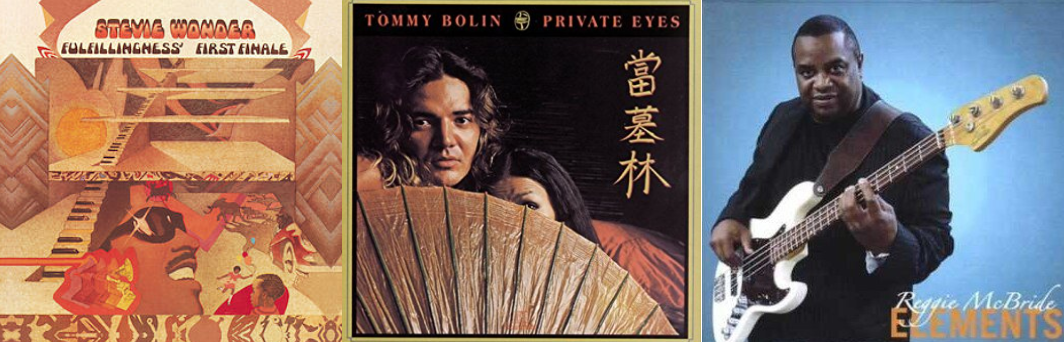
Aretha Franklin wanted him in her band when he was 14 years old. At 16 he was on the road with The Dramatics and James Brown. And at 19, Reggie McBride became a member of Stevie Wonder’s ensemble and played on the multiple Grammy Award winning classic Fulfillingness’ First Finale (1974).
A Detroit native, McBride absorbed the music of his hometown Motown and brought his unique combination of finger playing and slap technique to seminal sides by Rare Earth, Ry Cooder, Keb Mo, Funkadelic, Herbie Hancock, Phoebe Snow, Van Morrison, Minnie Riperton, David Lindley, Rod Stewart, BB King, Elton John (21 at 33, The Fox), and Rick Springfield, among many others.
On Tommy Bolin’s Private Eyes (1976) Reggie dispatched with any semblance of rock phrasing and plied gritty funk, R&B, and reggae lines which the late guitarist soared over.
Reggie’s 2005 solo album Element is a smooth jazz diamond in the rough.
Reggie McBride Sound & Vision…
Stevie Wonder:
“You Haven’t Done Nothing” https://youtu.be/0SEGHvLElxc
“Smile Please” https://youtu.be/TZGCP0W6DCg
“Higher Ground” Live on Beat Club https://youtu.be/XV1DK9tSHio
Tommy Bolin:
“Post Toastee” https://youtu.be/A7FOTBdbPN8
“Bustin’ Out for Rosie” https://youtu.be/9ua7_JS_F8I
“Sweet Burgundy” https://youtu.be/qako94KrCV0
Rare Earth:
Reggie bass solo https://youtu.be/WG260dL1NJM
“Midnight Lady” https://youtu.be/0SEGHvLElxc
Says bassist and KYBP Cub Reporter Joe Iaquinto “I love his tribute to Dee Murray on “Little Jeannie,” complete with cool double-stops…”
“Little Jeanie” https://youtu.be/kLS33TSzDag
Reggie “Element” https://youtu.be/B54DdXoU4CU
Billy Preston:
“Found The Love” https://youtu.be/V5XwKlfe8lc
“Do It While You Can” https://youtu.be/JJwN_a2bEf8
Van Morrison:
“You Gotta Make It Through the World” https://youtu.be/oCx-OJxuYuY
“Joyous Sound” https://youtu.be/JinEU3Q0HsM
Al Jarreau:
“Thinking About It Too” https://youtu.be/NgKk_dg9vOU
“Wait a Little While” https://youtu.be/2Sh0UZAFVGk
Minnie Ripperton “Perfect Angel” https://youtu.be/TZGCP0W6DCg


Courtesy Mott The Hoople Com
“They said I looked like a card carrier in drag!”
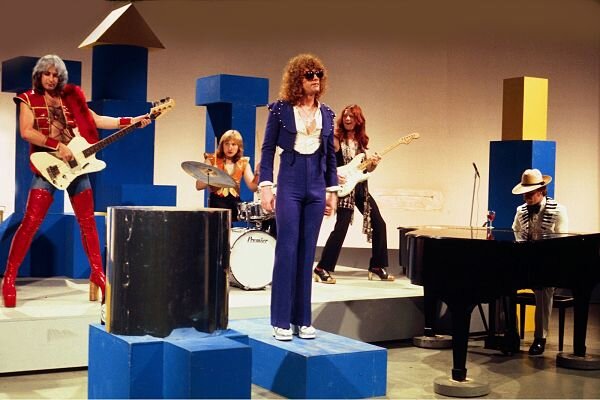
Renowned for his outrageous platforms, silver tinged locks, flashy haberdashery, and mighty Gibson Thunderbird which he painted a lustrous shade of white, the late Peter Overend Watts joyfully embodied the raucous, extravagant character of Mott the Hoople.
Akin to his sartorial splendor, Watts exuded a canny instinct for embellishing the Ian Hunter’s compositions with catchy, simple bass melodies as found in the Hoople’s rendition of Lou’s “Sweet Jane,” and such Ian Hunter – Mick Ralphs gems as “Drivin’ Sister,” “I’m a Cadillac,” “Whiskey Woman,” “Alice,” and “Sucker.”
Watts also excelled in-the-pocket as evidenced by his passages which underpin “Ballad of Mott the Hoople,” “I Wish I Was Your Mother,” and “Angel of Eighth Avenue.”
The Birmingham born bassist composed one of the Mott’s finest tracks “Born Late ’58,” and penned enjoyable rockers aplenty for the truncated Mott ensemble, most notably “By Tonight,” “Shouting and Pointing,” and “Stiff Upper Lip.”
Watts officially left the music business in 1980 following the British Lions endeavor with Mott Messrs. Buffin and Morgan Fisher.
And despite his not playing professionally for over thirty years – Pete’s skills were impressive on Mott’s reunion shows in 2009 and 2013.
I interviewed Pete for Huffington Post Books upon the publication of his tome The Man Who Hated Walking https://bit.ly/2ScEdaX in 2014.
They don’t make rock stars like Overend Watts anymore…

Peter Overend Watts Sound & Vision…
“Born Late ‘58” https://youtu.be/FqkrkEMTXMA
“Sweet Jane” https://youtu.be/GPa8GZAZJFc
“Drivin’ Sister” https://youtu.be/7uTLEPkbl7M
“Angel of Eighth Avenue” https://youtu.be/yJMHCm9swU4
“Stiff Upper Lip” https://youtu.be/tTMw11n3dDE
“Golden Age of Rock and Roll” https://youtu.be/YNmC-ZT-Eak


He anchored the first and most influential of many incarnations of John McLaughlin’s Mahavishnu Orchestra.
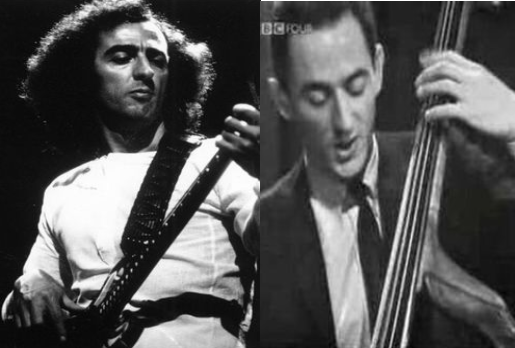
However before Rick Laird assumed rock star status on electric bass with the classic lineup of McLaughlin, Billy Cobham, Jan Hammer, and Jerry Goodman – he was an upright player who served as the house bassist at Ronnie Scott’s Jazz Club in London in the early 1960s. Rick backed many of most revered artists of the era, including Sonny Stitt, Buddy Rich, Sonny Rollins, Stan Getz, Chick Corea, and Wes Montgomery to cite a few. Rick’s credits as a sideman also include Eric Koss, Yusef Lateef, and Richie Cole.
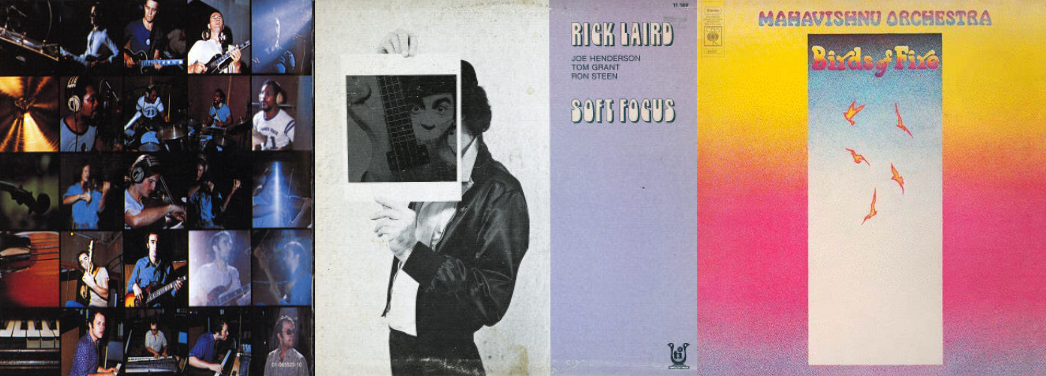
A student at Berklee College of Music in Boston, the Dublin-born Laird’s fluid lines, warm tone, and tuneful solo break on “One Word” from the classic Birds of Fire (1973) album exemplified fusion at its finest – melding rock and jazz into a coherent, mind expanding listening experience – as opposed to a serving as a showy platform to display instrumental dexterity.
Among Rick’s voltage enhanced weapons of choice were the Fender Jazz, S.D. Curlee, and Dan Armstrong. Aside from his accomplishments as a musician, Rick forged a successful career as a photographer.
Rick Laird Sound & Vision….
“One Word” https://youtu.be/GWT6xt6QMpQ
“Now You Know” https://youtu.be/FQHNabnyyuM
Rick on BBC TV with the Victor Feldman Trio https://youtu.be/LLwvdv5oWVw