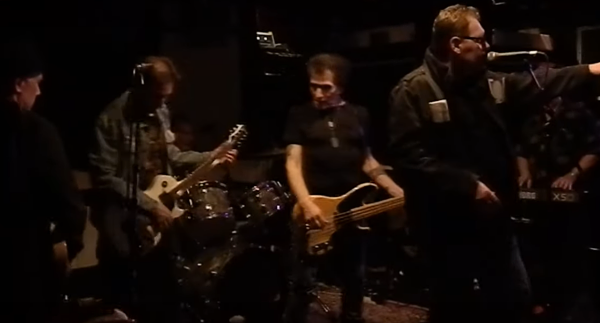
Sting (The Police)

Courtesy of Sting Com Courtesy of Sting Com

Courtesy of Sting Com

Thomas Semioli

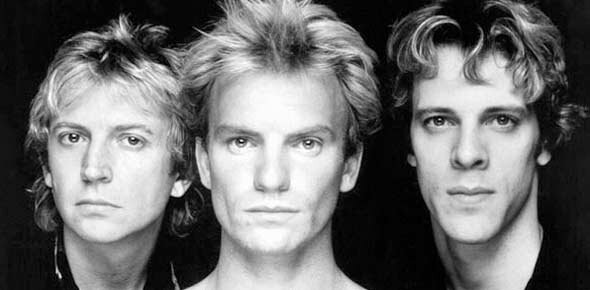
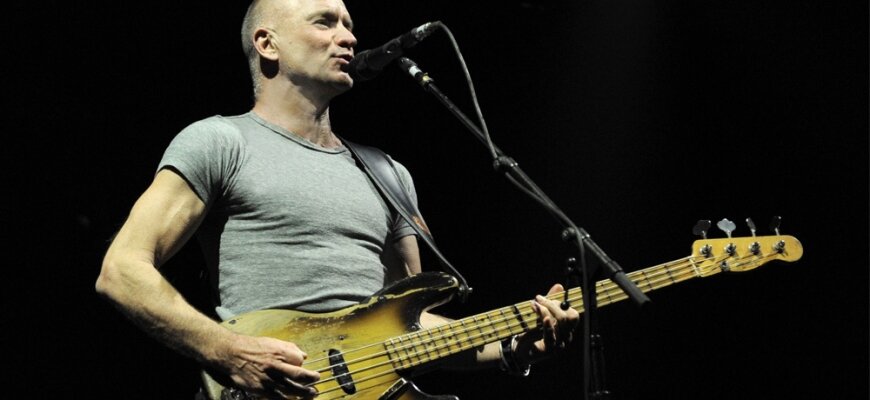
Among the world’s most “known” bassists, the musician / composer / playwriter / actor / activist who named himself for a small sharp-pointed organ on a bee’s abdomen is a giant of the instrument, though his actual playing is oft overlooked as his presence as a performer and writer is, in a word, overpowering.

Strictly speaking of his role as bassist, Sting’s body of work anchoring The Police with Andy Sumner and Stewart Copland is an exemplary study in rhythm and harmony. Sting adroitly deviated from the customary root note voice leading, and his phrasing – borne of deep reggae, jazz, and funk influences – along with his colorful counterpoint and harmonic extensions – created a genre unto his own.

His bass artistry is instantly identifiable – as was the sound of the ensemble whom he led. I compare The Police to such iconic “small groups” led by Miles Davis, Bill Evans, and John Coltrane along with their rock counterparts Cream, Rush, and the Jimi Hendrix Experience.

Akin to those aforementioned ensembles, every Police track is essential. Among my choice cuts include:

“Walking On the Moon” https://youtu.be/zPwMdZOlPo8

“Re-Humanize Yourself https://youtu.be/zPwMdZOlPo8

“Every Little Thing She Does Is Magic” https://youtu.be/aENX1Sf3fgQ

“I Can’t Stand Losing You” https://youtu.be/nH0vjLwMyc4

Dig Tony Senatore’s renditions of…

“Bed’s Too Big Without You” https://youtu.be/fMOVU1ot2cc

“It’s Alright for You” https://youtu.be/iE2Yz3Bw72c

“Message in a Bottle” https://youtu.be/wLuBWoC_Xlk

“Synchronicity”  https://youtu.be/UQ2-__qNqn4

Note that Sting is also a master technician – muting, finger-picking, and plectrum playing – whatever the situation warrants.

Among Sting’s many weapons of choice with The Police include fretted and fretless Fender Precisions, Ibanez, Steinberger XL and L2, Spector, an 8-string Hamer, and an upright Van Zalinge, to cite a select few. Nowadays Gordon prefers a 1950s Fender Precision with much wear and tear. No matter what bass he uses – Sting is living proof that the artistry is in the player, not the bass.

With reference to Mr. Sumner’s outstanding solo career, I dug that for his much heralded debut The Dream of the Blue Turtles (1985) – he surrendered the bass chair to young-lion Darryl Jones fresh out of Miles Davis’ amazing crossover jazz fusion ensemble – to enhance the jazz component of his new direction. Though his bass playing is not as pronounced as it was in the Police trio format, Sting has evolved as more of a compositional player, much like Sir Paul.


Courtesy of The Police Com Courtesy of The Police Com

Courtesy of The Police Com

Larry Graham Jr. (Sly & The Family Stone, Graham Central Station)


Courtesy of Larry Graham Com Courtesy of Larry Graham Com

Courtesy of Larry Graham Com

By Thomas Semioli

Beat is gettin’ stronger, beat is gettin’ longer too, music’s soundin’ good to me, but I want to, said I want to, I want to take you higher…

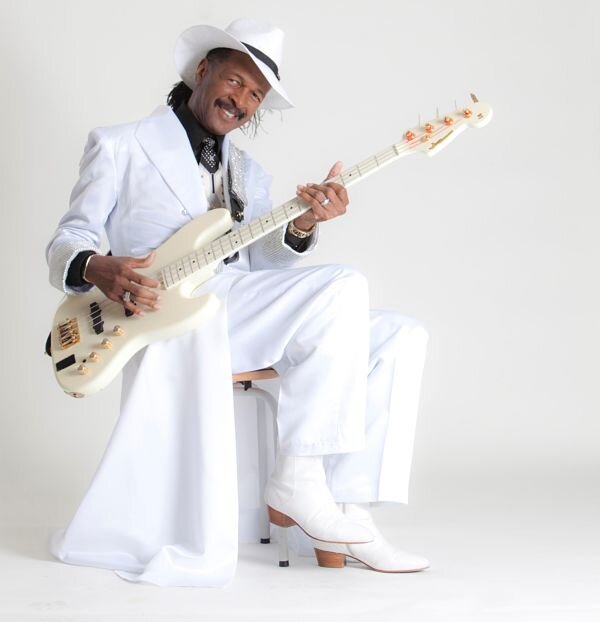
Not only did he propel he instrument higher and higher as the anchor of Sly & The Family Stone and their crossover hits and album tracks – his creation of the slap technique afforded the electric bass its most potent identity. No longer was the electric bass perceived as the bastard child of the upright and /or electric guitar! As did Jamerson before him, and Jaco following him, Larry Graham Jr. forged a music (and cultural) revolution through our instrument. His influence on funk, disco, soul, dance, rock, contemporary pop, rap, jazz fusion, hip-hop and every permutation thereof is incalculable.

Bass icons Stanley Clarke, Prince, Marcus Miller, Bootsy, Flea, Verdine White, Mark King, Bernard Edwards, and Victor Wooten, to cite a few, all owe their watershed careers to Larry. And consider that Graham is among the “Godfathers of Funk” even metal prog gods such as Geddy Lee slap / pop given the opportunity!

Ironically, necessity was the mother of all popping – or as Larry says “thumpin’ and pluckin’. In brief, the ensemble that young Larry was working in with his mom, Dell Graham, lacked a proper percussionist, hence his thumb became a de-facto kick drum and his index finger assumed the role of the snare. Pop goes the bass string – it was that simple!

Graham is also a master finger-style player who employed a wide range of effects (flange, fuzz, wah-pedal, octave dividers, phase etc.) to further enhance his artistry. His pedal tones combined with his intuitive rhythmic variations afforded his bandleader’s vamp – single chord compositions a signature flavor.

Larry’s weapons of choice are the Fender Jazz, his Warwick Signature bass, along with a Vox Sidewinder, and a custom Moon Larry Graham bass, among others.

A gifted songwriter, vocalist, showman, and recording artist, Larry’s approach serves the song first and foremost. Unlike bassists who employ his slap technique as a platform for dexterity and flash, every note Larry thumps has a musical purpose. His lines sing and dance – as do the generations who have heard him since A Whole New Thing appeared in the magical year of 1967.

After his tenure with Sly, Larry kept the funk flag flying with his ensemble that continues to this day – Graham Central Station.

Dig Larry on these Sly anthems….

“Higher” https://youtu.be/BqWQzOzK3kw

“Thank You…” https://youtu.be/wj5VODa-eTY

“Everyday People” https://youtu.be/JJt-C6I6EDs

“Dance to the Music” https://youtu.be/N_LwJCxR7F4

Dig Larry with Graham Central Station:

“Can You Handle It” https://youtu.be/ck4AlFfu5pM

“The Jam” https://youtu.be/Is665CtmBUc

“Feel the Need” https://youtu.be/B10-z3dXDCg

Dig Larry and Prince:

“The Christ” https://youtu.be/NfqO-rt0BDI

North Sea Jazz Festival 2013 https://youtu.be/vweqb8xilWI

BB King’s New York City 2010 https://youtu.be/NfqO-rt0BDI


Larry Graham Sly Stone_opt.jpg Larry Graham Sly Stone_opt.jpg

Jerry Scheff (Elvis Presley, The Doors )

Courtesy of Jerry Scheff Bio Courtesy of Jerry Scheff Bio

Courtesy of Jerry Scheff Bio

By Thomas Semioli

He anchored two cats named Elvis, and what could arguably be considered among the greatest rock and roll ensembles of all time; Elvis Aaron Presley’s “Taking Care of Business Band.” From its fiery inception in 1969 until The King’s crash and burn in ‘77 – the core collective of guitarists James Burton and John Wilkinson, drummer Ron Tutt, keyboardist Larry Muhoberac, and bassist Jerry Scheff never failed to tear it up on stage (and in the studio) regardless of the condition of their bandleader. The TCB band could swing, rock, and groove through any musical genre Elvis threw at them.

Scheff broke into the studio biz after a stint in the Navy and helmed several hits and album tracks before, during, and following his work with Presley, including such artists as The Doors, Elvis Costello, Bob Dylan, Buckingham Nicks, Todd Rundgren, The Association, Neil Diamond, The Monkees, Sammy Davis Jr., Nancy Sinatra, Everly Brothers, Willy DeVille, Richard Thompson, John Denver, and Johnny Mathis, to cite a select few.

His tome Way Down: Playing Bass with Elvis, Dylan, the Doors, and More: The Autobiography of Jerry Scheff is essential reading for bassists and rock history buffs.

Jerry’s weapon of choice during his most active period was the Fender Precision with its signature warm tone and occasional growl or “bark.” Given that he backed many of pop music’s greatest singers and songwriters, Sheff’s melodic lines were often build around rudimentary triads and subtle rhythmic variations which served the compositions and recordings.

To my ears, Scheff’s best work can be heard throughout The Doors final slab with Jim Morrison L.A. Woman waxed in late 1970 and early ‘71. Jerry’s movement defines the title track, and his jazzy phrasing and note choices for “Love Her Madly” are the stuff of bass virtuosity.

This writer cited Jerry Scheff in Huffington Post: 11 Bass Players Who Belong in the Rock and Roll Hall of Fame (December 2017) https://bit.ly/2YRri08

Dig Jerry with The Association “Along Comes Mary” https://youtu.be/URUd5RUAz1I

Dig Jerry on upright with Elvis Costello “Eisenhower Blues” https://youtu.be/lBfobZSd-SE

Dig Jerry with Bob Dylan “Changing of the Guards” https://youtu.be/qZhMvLuoMaM

Dig Jerry in rehearsal with Elvis and TCB in 1970 https://youtu.be/cmv5AcDXyqc

Dig Jerry and Elvis Live in Hawaii in ‘73 https://youtu.be/id_JFzDQPek

Dig Jerry with Richard Thompson “Read about Love” https://youtu.be/XYiZY3qC8IQ

Dig Jerry with The Doors:

“L.A. Woman” https://youtu.be/vHXjcdNIN-Q

“Love Her Madly” https://youtu.be/5iqfXaGliq8

Courtesy Jerry Scheff Com Courtesy Jerry Scheff Com

Courtesy Jerry Scheff Com

Tony Sales (David Bowie, Iggy Pop, Todd Rundgren)

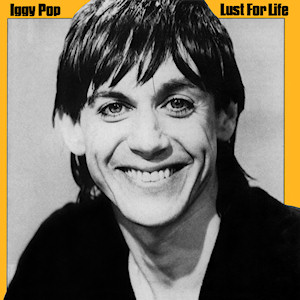
His overdriven, deep-in-the-pocket Bo Diddley / Armed Forces Signal Call inspired bass motif defines one of rock ‘n’ roll’s greatest anthems as rendered by the former James Newell Osterberg – “Lust For Life.”


Tony Fox Sales, son of the iconic comic Soupy, is among modern rock’s most inventive bassists. Given his show-business pedigree, Tony’s musical career took off at a relatively young age. With his drummer brother Hunt, Tony’s first band was aptly dubbed Tony and The Tigers, which featured guitarist Jon Pousette-Dart. They waxed a few singles and appeared on the Steve Allen Show, and Hullabaloo programs hosted by their dad’s famous pals.


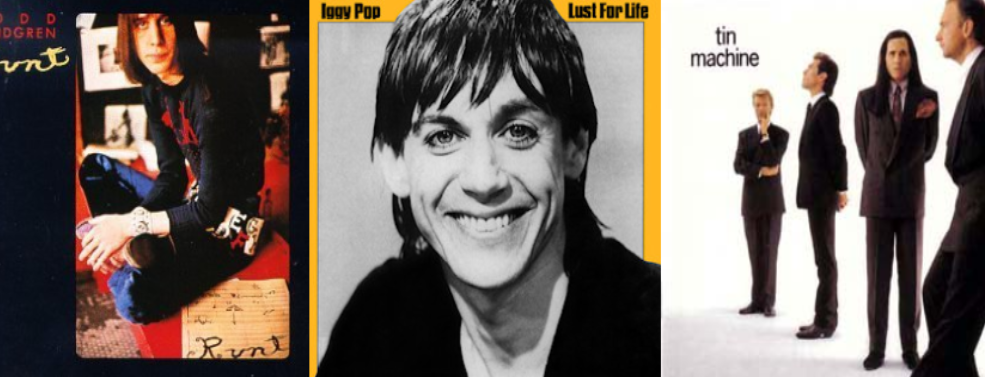
At 19, Tony and Hunt anchored Todd Rundgren’s Runt ensemble, which cut two extraordinary slabs: Runt (1970) and The Ballad of Todd Rundgren (1971).


The Sales brothers hooked up with Iggy for Kill City (1975), Lust for Life (1977), and TV Eye (1978) and several tours with Bowie and the former Stooge.


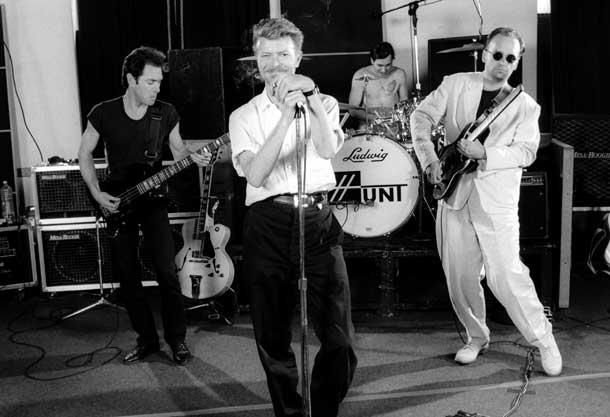
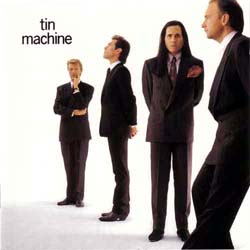
Anchoring the unfairly maligned, still ahead-of-its-time Tin Machine collective with Hunt, David Bowie (sax/vocals), and virtuoso guitarist Reeves Gabrels, Tony rendered bass passages that belied harmonic tradition yet propelled the ensemble’s quirky canon by way of old school rhythm and blues phrasing throughout their triumvirate of absolutely essential releases; Tin Machine (1989), Tin Machine II (1991), and the live set Oi Vey Baby (1992).


Among Sales additional collaborations of note included Checqered Past with Michael Des Barres, Steve Jones, Nigel Harrison, and Clem Burke; and Hired Guns with Hunt.


Tony Sales Sound & Vision…


Tony & The Tigers on Hullabaloo https://youtu.be/cRQiFwYtGRk


Todd Rundgren: “I’m in the Clique” https://youtu.be/0KXOEn_dE9U


Iggy Pop:


“Lucky Monkeys” https://youtu.be/CAgFa1YGrN4


“Lust for Life” https://youtu.be/jQvUBf5l7Vw


“The Passenger” https://youtu.be/-fWw7FE9tTo


Tin Machine


Video Compilation https://youtu.be/3H0hS1lxq4I


“Baby Universal” https://youtu.be/E7q3FDDmqmA


“You Belong in Rock and Roll” https://youtu.be/Ok5A8VoOMis


Checquered Past: “Underworld” https://youtu.be/xS-lbCFFZk4


Hired Guns:


“Shiftin’ Soul” https://youtu.be/oIhpY5dX8n0


“You Really Know How to Love” https://youtu.be/L6NQpBAL39c


Hugh Hopper (Soft Machine)

No bass player defies categorization more so than the late, truly great, utterly unpredictable Hugh Colin Hopper, who was among the most prolific and adventurous recording artists to emerge from the England’s hallowed Canterbury progressive rock and experimental jazz scene of the late 1960s and early 70s.


Hugh seemingly never ran out of fresh ideas or novel ways to express himself on the instrument. Music fans of this era are most aware of Hugh by way of his groundbreaking work with Soft Machine wherein Hopper’s exploratory use of fuzz and various effects along with his extensive rhythmic and harmonic vocabulary was the glue that held multi-instrumentalist Robert Wyatt, keyboardist Mike Ratledge, saxophonist Elton Dean and other assorted Machine band mates together for an amazing run of releases during his 1968 – 1973 membership.


Dig Hugh and Soft Machine live in 1969 https://youtu.be/soQN0sMU0Ck


Of his massive solo and collaborative canon, be advised to hear his fusion avant-garde oriented forays 1984 (1973), Hopper Tunity Box (1977), A Remark Hugh Made (1994) and Numero D’Vol (2007).


Hugh also made several notable appearances as a valued sideman on such seminal releases including Syd Barrett’s Madcap Laughs (1969), Kevin Ayers’ Joy of a Toy (1969), Robert Wyatt’s Rock Bottom (1974) and Carla Bley’s European Tour 1977 (1978).

Tim Drummond (CSNY, Bob Dylan, Illinois RnR Archives)

Courtesy CSNY Com


“Heart of Gold,” “Gotta Serve Somebody,” “Licking Stick”…


An undeniable Rock and Roll Hall of Fame worthy bassist as noted by this writer in Huffington Post, the late Timothy Lee Drummond’s studio and stage credits span rock, blues, folk, gospel, rhythm & blues, country, jazz, and countless variants thereof.


Huffington Post / November 2016: Tim Drummond: 11 More Players Who Belong in the Rock and Roll Hall of Fame https://bit.ly/2Eu35De


A master groove player who served the song first and foremost, Tim waxed classic sides and anchored historic tours with Crosby, Stills, Nash & Young in multiple configurations; Bob Dylan, Ry Cooder, J.J. Cale, James Brown, Hank Ballard, Beach Boys, Jewel, Roy Buchanan, Rita Coolidge, Neil Diamond, Bette Midler, and Hoyt Axton, among scores of others.  


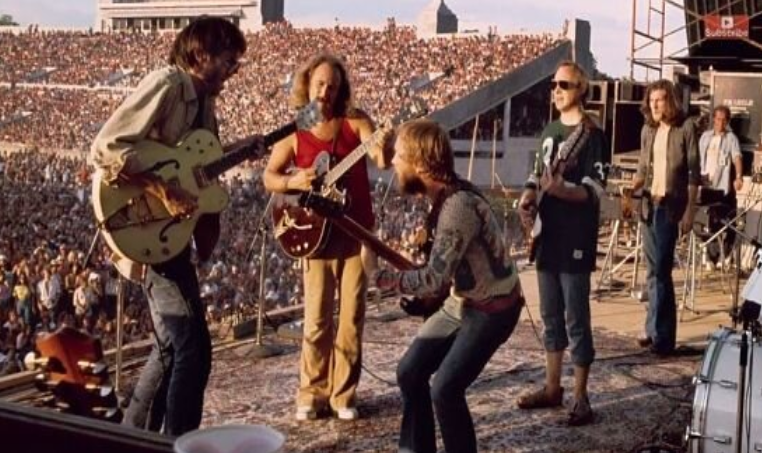
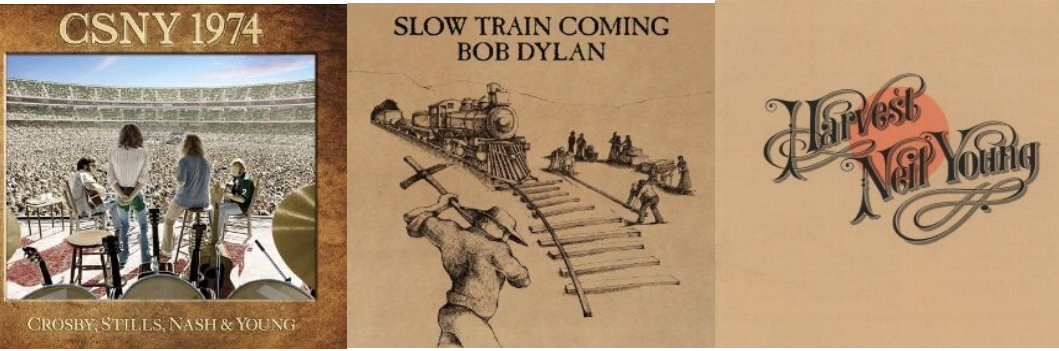
Be advised to check out Tim on the extraordinary CSNY 1974 (2014) live collection wherein his fluid lines and funky rhythms bridge the ample gaps between the oft contentious quartet of bandleaders on that historic Watergate-era trek across North America.
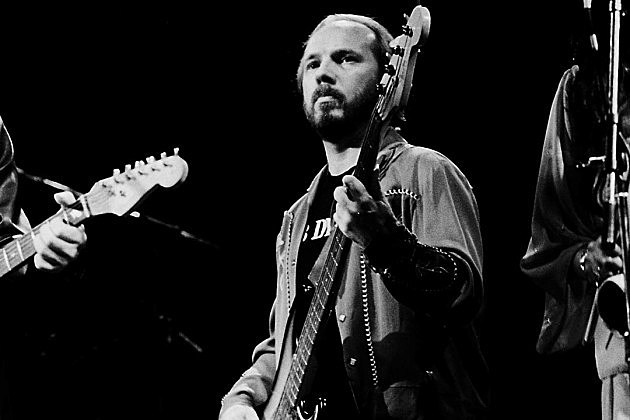


Tim Drummond Sound & Vision….


CSNY: “Almost Cut My Hair” from the ‘74 Tour https://youtu.be/Xiz2yZgD9B0


Bob Dylan: “Gotta Serve Somebody” https://youtu.be/0MzyBv4yOPU


Neil Young “Heart of Gold” https://youtu.be/X3IA6pIVank


James Brown “Licking Stick” https://youtu.be/6XC1H9X9R7U


Ken Voss Illinois Rock and Roll Archives…

 

For bass player Tim Drummond (4/20/40-1/10/2015) his musical path took him from local bands in central Illinois to Chicago to Cincinnati where he backed James Brown to Nashville to a lengthy career supporting Neil Young. Woven within that are some 300 album credits working with the likes of J.J. Cale, the Beach Boys, Don Henley, Charlie Daniels, Rick Danko, Stevie Ray Vaughan, Ry Cooder, Bob Dylan and others over his 30- year+ career.


It all started in Canton, a small central Illinois community about 200 miles southwest of Chicago. While in high school he was in a band called What For. When it came time to record, they opted to change their name in honor of the spot at the soda shop where they used to meet after school, becoming the Third Booth. When they cut their one and only record, the producer mis-titled the song “Sound Inc.” when it first got released on the local Thunder label. While it didn’t get any local airplay when they took it to Chicago, WLS DJ Art Roberts ended up liking the fuzz-laden B-side “Mysteries” and gave it airplay on his “Subterranean Circus,” the single climbing to #20 on the station’s chart. That generated calls from other labels and it finally got distributed nationally on the Independence label with “Sound Inc.” properly credited as “I Need Love.” The record never picked up steam and by the end of high school, the Third Booth was empty.


Drummond headed to Chicago to see where music would take him. In the early ‘60s he joined up with Eddie Cash and Company, a steady-working lounge band said to be booked 50 weeks a year. The lineup in that band included Jimmy Vincent (aka Jim Donlinger of Exceptions fame) and Chuck “Bing” Day on guitars, Billy Lowes on drums and Drummond on bass. “The two years with Cash would turn out to be a grueling test of endurance,” recalls Vincent as they travelled the country with one-night stands at various Air Force and Army NCO clubs along with the occasional week-long lounge gig. After two years, “The day came when our very solid bass player, Tim Drummond, decided that he had finally endured enough, between the grinding tour schedule and our bizarre Gestapo wannabe bandleader,” says Vincent. “He gave his two-week notice.”


Drummond found his next opportunity in Cincinnati with an eight-piece, all-white soul group called the Dapps. They recorded a number of singles for the King label in 1968-69. Slowly but surely they stripped down to a five-piece, and eventually a four-piece where they became the session band backing James Brown on his 1969 album I’m Black and I’m Proud (King 1047). While in Cincinnati he played rockabilly with Conway Twitty, funk with James Brown and vintage R&B with Hank Ballard before moving to Nashville where he played on sessions with Joe Simon, Fenton Robinson, Jimmy Buffett and Charlie Daniels, among others.


When Neil Young had traveled to Nashville to work on Harvest, Drummond visited the studio and became a member of the Stray Gators with the drummer Kenny Buttery and pedal steel guitarist Ben Keith. Drummond would continue to record and tour with Young on albums and concerts that did not involve his primary backing band Crazy Horse. Since the early ‘70s he’s been backing Neil Young even as Young’s support group migrated through various musicians as the Stray Gators, Shocking Pinks and International Harvesters. Drummond can be heard on Young’s albums Harvest, On the Beach, Comes a Time, Hawks & Doves, etc.


He was part of Crosby, Stills, Nash and Young’s infamous 1974 “doom tour” and had continued working with CSN even after Young left. In 1979, he was out on tour with Bob Dylan for his Slow Train Running and Saved tours. Working with Dylan, he co-wrote material to his next album including the lead track “Saved.” He also co-wrote material with J.J. Cale, Ry Cooder and Tracy Nelson.


After re-uniting with Young’s “Harvest” crew for the Harvest Moon record, Drummond ended his two-decade-long tenure with Young with their 1993 “MTV Unplugged” performance.


Drummond became an in-demand session player, teaming with drummer Jim Keltner as Tim and Jim. Throughout the ‘80s he could be found on Building the Perfect Beastfrom Don Henley, Lonnie Mack’s Strike Like Lightning, Fenton Robinson’s Mellow Fellow and Bette Midler’s Beast of Burden. In the ‘90s he can be heard on Victim of Romance from Michelle Phillips, Paula Abdul’s Spellbound, Jewel’s Pieces of You and John Hammond’s Got Love if You Want It. The next decade found him ranging from Was (Not Was)’s Boo! to Judy Henske’s Loose in the Woods to Bobby Whitlock’s It’s About Time.


Sadly, Drummond passed away in 2015. Fortunately, the Neil Young catalog pays homage to Drummond with the 2019 Tuscaloosa, Volume 4 of the Neil Young Archives Performance Series with a recording of the Stray Gators at the University of Alabama from February 5, 1973 https://youtu.be/x0L9iY4SUj4.


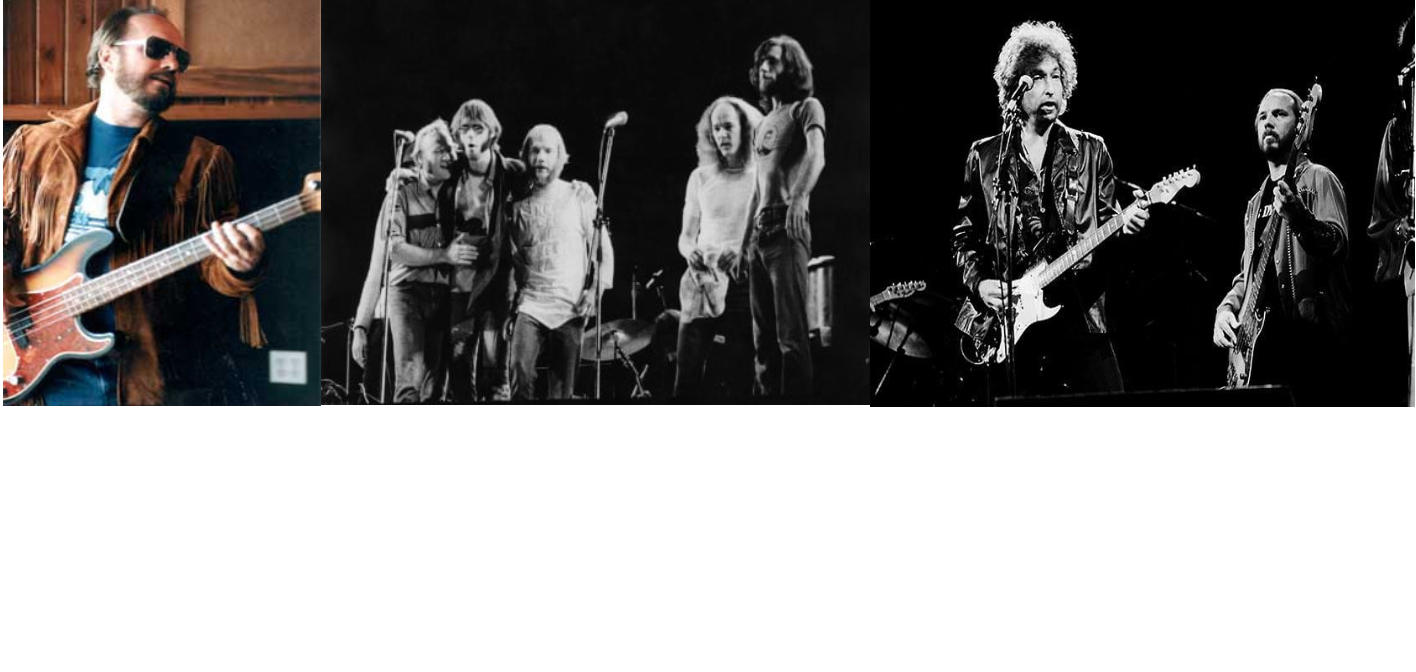
Photos: Tim Drummond (third from left) with Crosby, Stills, Nash and Young in 1974. (Photo by Mick Gold) and Drummond on stage with Bob Dylan at the Poplar Creek Music Theater in Hoffman Estates, June 10, 1981 (Photo by Paul Natkin)
 

Tom Robinson (TRB)

Courtesy Tom Robinson Com

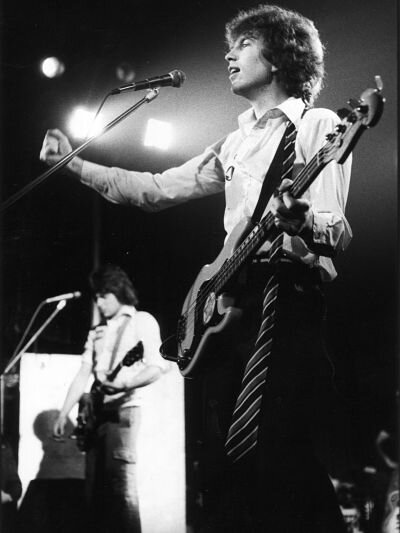
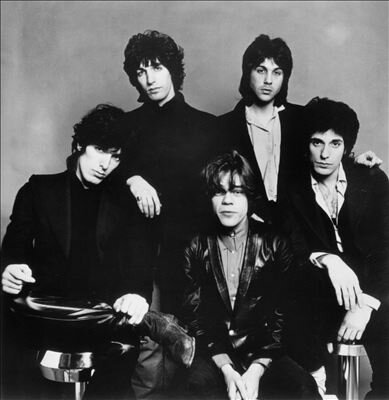
Bassist and bandleader of the highly influential Tom Robinson Band (TRB) which spanned the years 1976-79, Robinson possesses that rare gift of combining an activist, intellectual libretto with great songs and melodies.


Anthems including “Up Against the Wall,” “Ain’t Gonna Take It,” “Glad to Be Gay,” “Blue Murder,” “Right On Sister,” and “2-4-6-8 Motorway” remain as relevant today as they did four decades ago.


As a bassist who came to the instrument out of necessity, Robinson – with his signature Fender P, was a solid pocket player.


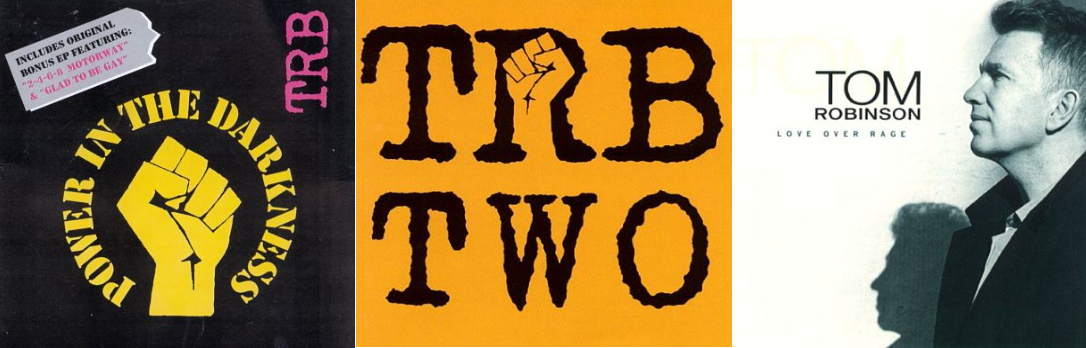
Though his band was branded punk, Tom and the TRB were much more expansive – incorporating blues, jazz, soul, cabaret, dance-hall, and reggae motifs into their two essential albums: Power in the Darkness (1978) and TRB II (1979). Ever since he split TRB, Tom fronts his solo projects as a guitarist.


Tom Robinson Sound & Vision:


“Up Against The Wall” https://youtu.be/-kZMfLULwHA


“2-4-6-8 Motorway” https://youtu.be/kGrnEc_3mYo


“Bully For You” https://youtu.be/RIavik9iv_A


Mani (Gary Mounfield)


STONE_ROSES_SECOND+COMING-117539.jpg STONE_ROSES_SECOND+COMING-117539.jpg

His “Madchester” motifs launched a Britpop revolution in the 1990s.


Mani 1_opt.jpg Mani 1_opt.jpg

With the Stone Roses and Primal Scream, Gary Moundfield’s magnificent meld of dub, rock, and psychedelia exuded massive, legato grooves and countermelodies coaxed from his arsenal of basses which included Rickenbacker, and a Jack Casady Epiphone, among others.


mani 1.jpg mani 1.jpg

Dig Mani on “Ten Story Love Song” https://youtu.be/0uNLw3pXlVM

And on Primal Scream’s “Kowalski” https://youtu.be/ZVcwG-gY9dM


Mani 2_opt.jpg Mani 2_opt.jpg

A Manchester United Devotee, in 2010 Mani joined forces with former Smiths bassist Andy Rourke and Joy Division / New Order bassist Peter Hook under the moniker Freebass, which waxed It’s A Beautiful Life before calling it a day.

What the reunited Stone Roses will do next is anyone’s guess, however here’s the bass passage that started it all “I Wanna Be Adored” https://youtu.be/4D2qcbu26gs


Mani 3.jpg Mani 3.jpg


mani 3_opt.jpg mani 3_opt.jpg

Buzz Verno (David Johansen Band, Joey Kelly)

Courtesy of David Johansen Com Courtesy of David Johansen Com

Courtesy of David Johansen Com

When David Jo first flew solo following the New York Dolls he assembled a streetwise ensemble for his first two releases which featured a core band of drummer Frankie LaRocka, guitarists Johnny Rao and Thomas Trask, and ex-Doll Syl Sylvain along with brilliant cameos by Ian Hunter, Dan Hartman, Stan Bronstein, Nona Hendryx, Scarlet Rivera, Sara Dash, Joe Perry, Felix Cavaliere, and producer/guitarist Mick Ronson to cite a distinguished few.


The bass player on those dates was the charismatic, pompadour coiffed Buzz Verno who laid the foundation pure, simple, and in-the-pocket to enhance David’s restlessly romantic character portraits set to three chords and a thundering backbeat.


Dig Buzz on stage with David for “Frenchette” https://youtu.be/08MuQAC5zpw


Buzz Verno with Joey Kelly Buzz Verno with Joey Kelly

Buzz Verno with Joey Kelly

Dig the Buzz Verno Band with Joey Kelly…

Part One: https://youtu.be/vQ_UbAj7bhs

Part Two: https://youtu.be/wuAQaP59bPc


Marcus Miller (Miles Davis, David Sanborn)

Courtesy Marcus Miller Com
By Thomas Semioli


Akin to the icons who preceded and influenced him- namely Stanley Clarke, Jaco Pastorius, and Larry Graham – Marcus Miller has expanded the language of the instrument and the jazz fusion genre as a player, recording artist, producer, and composer. And like all the great ones, his tone – the Fender Jazz “scoop” – is instantly recognizable. In fact, Miller’s timbre is now universally acknowledged as a standard electric bass tone.


Born into a musical family in Queens County, New York 1959 – Miller was classically trained on the clarinet. Still in his teens, Marcus became a first call session cat – playing on scores of record dates, jingles, and soundtracks during the golden era of the New York City studio scene of the 70s -80s.


His first high-profile gigs were with Lenny White, David Sanborn, and Miles Davis. With Davis, during the jazz icon’s much heralded comeback in the 1980s, Miller served as the trumpeter’s musical anchor. Marcus composed and produced Davis’ final masterpiece, and one of the greatest cross-over jazz slabs of all time Tutu (1986). 


Marcus’ Grammy Award nominations as a producer include Davis, Luther Vandross, David Sanborn, Chaka Kahn, and Wayne Shorter.


As a bandleader he nailed a Grammy for Best Contemporary Jazz Album in 2001 for M2, in addition to several nominations throughout his career. The list of major artists Marcus Miller has collaborated with is inexhaustible. Marcus has scored nearly thirty films, and he’s always busy on the concert circuit on every continent.  


To bring the instrument to a new generation, Marcus teamed with Sire guitars for his affordable, signature bass. And in his spare time, Marcus is a Sirius/XM radio host of Miller Time which covers “360 Degrees of jazz, from hip-hop to be-bop!”


Marcus Miller Sound & Vision…


Grover Washington “Just the Two of Us” https://youtu.be/Bw68MDfeN9I


Selah Sue “Que Sera Sera” https://youtu.be/Ld6yvfsSMJY


Miles Davis “Tutu” https://youtu.be/0Jnqz62d9oM


David Sanborn “Let’s Just Say Goodbye” https://youtu.be/Bw68MDfeN9I


With Bryan Ferry at Live Aid 1985 https://youtu.be/FxXw8gZIfc4


Marcus pays homage to Jaco “Teen Town” https://youtu.be/bE2pAU9LIgI


Marcus Miller:


“Power” https://youtu.be/1X2tHJ5gUek


“Blast” https://youtu.be/S1Anp9WxD30


“Highlife” https://youtu.be/d1ac922Xj2A