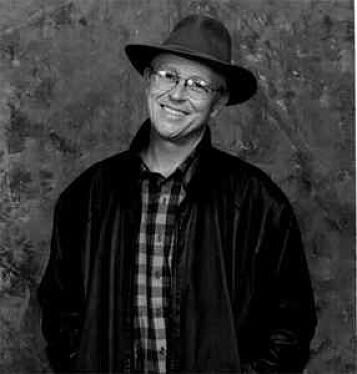
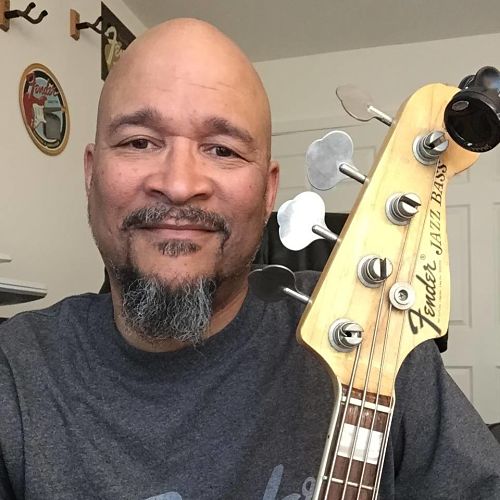
Given that his photograph hardly appeared on any of the releases he played on (with the one notable exception of Boz Scaggs & Band) – his album credits are often mistaken for David Brown of the original Santana band in several archival / historical publications!
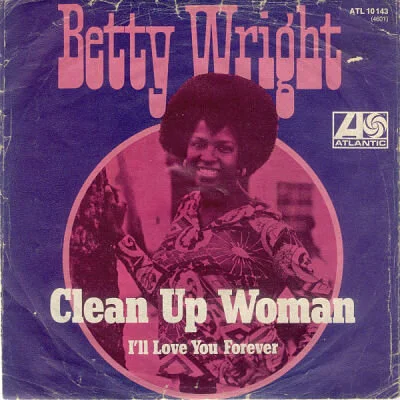
A pocket player with a soulful disposition, this David Brown was an accomplished studio player and sideman who anchored several slabs and/or concert performances by such acclaimed artists including Duane & Gregg Allman, solo Gregg, Betty Wright (“Clean Up Woman”), Boz, Kitty Wells, Martin Mull, Arthur Conley, Bonnie Bramlett and Elvin Bishop, to cite a select few.
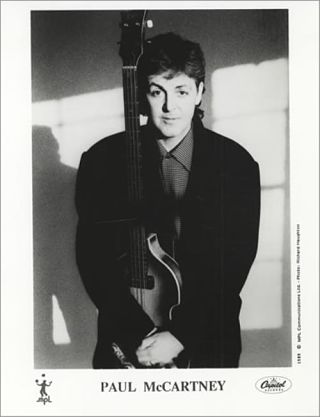
The bass police opened a vein – and continue to hemorrhage – whenever Paul’s forays into the extended range are mentioned.
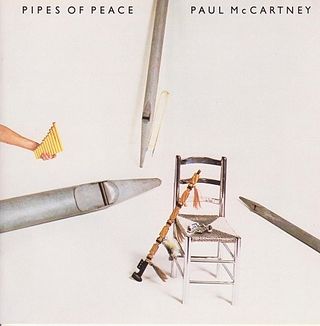
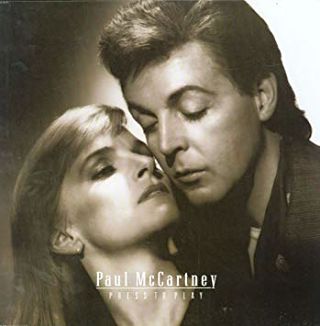
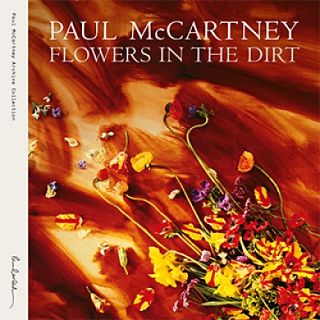
To my ears– Paul was / is oft panned for what other artists are praised for. Macca’s trio of mid-80s slabs (Pipes of Peace / 1983, Press to Play / 1986, Flowers In The Dirt / 1989) were commendable pop efforts, and his low-B bass served the songs and the arrangements.
At the time – the 1980s – the concept of the “legacy artist” in rock had yet to be established as it would be in the 1990s wherein producers such as Don Was and Rick Rubin (and record company suits) nudged older rockers to wax new records that echoed their classic sides.
Yet back in the Reagan / Thatcher / Phil Collins era, elder artists were “pressed” to sound “contemporary” lest they be considered irrelevant.
Take into strong consideration that musicians are curious by nature, and when new technology comes out, we want to use it! Nowadays “retro” is revered – and desired. As a 1980s working musician – my colleagues and I never considered “looking back.” That’s not what the Beatles did, nor Bowie, nor Miles.
Bring on the Steinberger XL, DX 7, Linn Drum Machine. Paul’s employ of producers such as Hugh Padgham, Mitchell Froom, and his gravitation to the extended range bass was, in my opinion, a wise decision.
However many fans desperately hunger for their favorite artists to stay the way they were the first time they fell in love them, and they resist artistic evolution – despite the fact that their rock and roll heroes were innovators in the first place! That is the misstep, not Paul’s choice of instruments! Today the 5 string is a staple on stage, and in the studio. And we must give credit once again to James Paul McCartney – who helped “legitimize” the extended range.
Alex James (Blur)
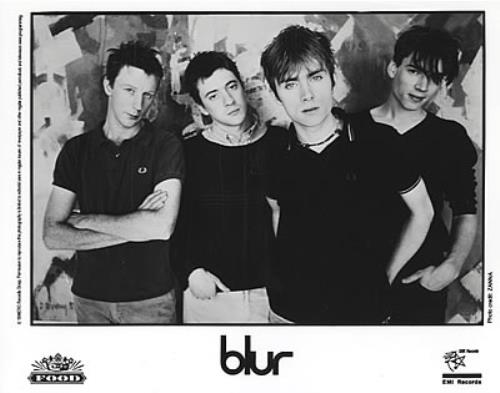
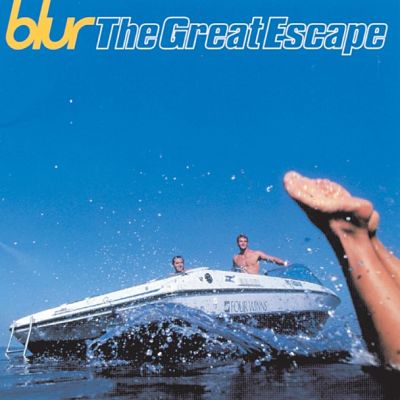
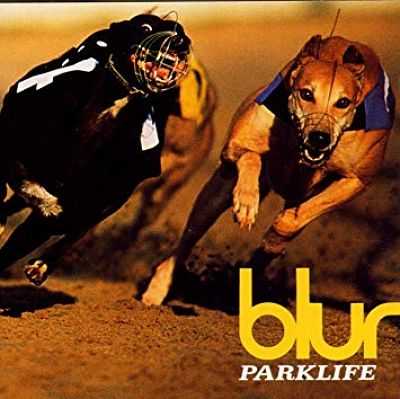
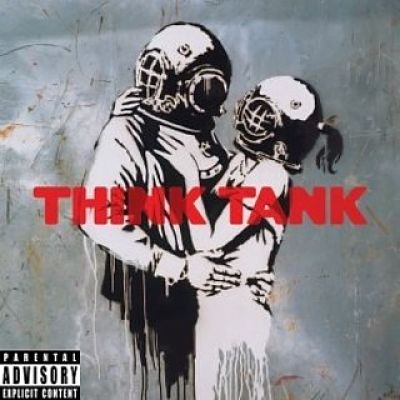
At the zeitgeist of 1990s Brit Pop populism, Blur were among the finest ensembles of the era who actually lived up to the hype. Damon Albarn and Graham Coxon garnered much of the attention, as singer / guitarists are prone to do. However their not so secret weapon was bassist Alex James – who rendered extraordinary groove / countermelodic motifs as evidenced on such tracks as “Colin Zeal” (Modern Life Is Rubbish/ 1995) “Entertain Me” (Great Escape / 1995), “Girls and Boys” (Leisure / 1991).
Plying his craft with a plectrum, James’ primary tools of the trade included Fender Precision, Fender Jazz, and Ernie Ball MusicMan Stingray.
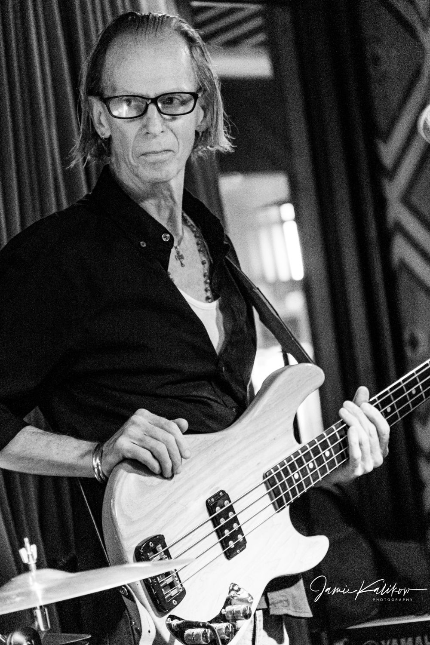
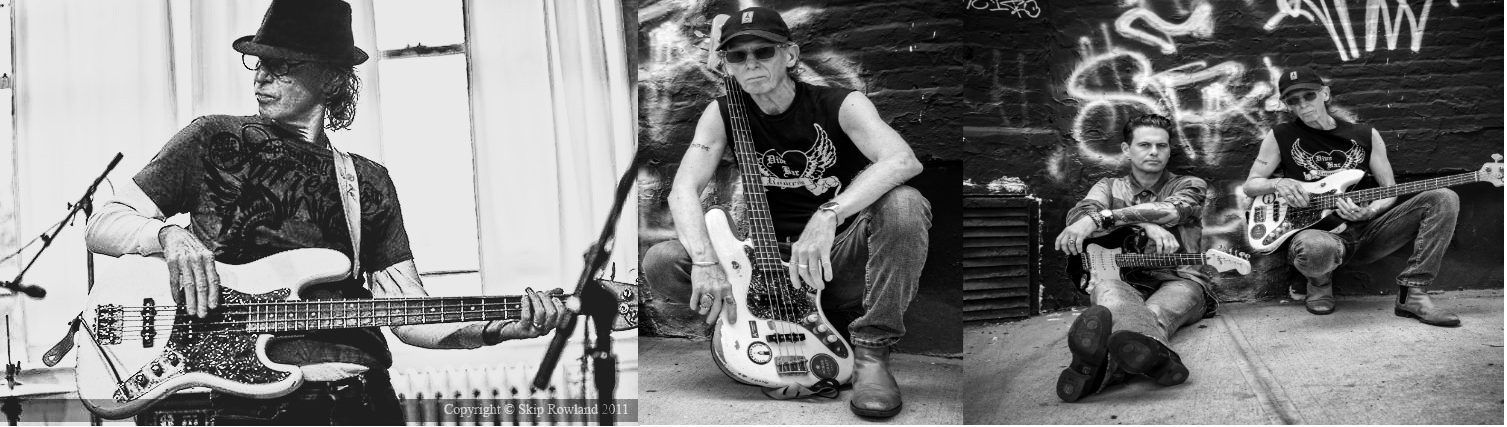
Mike Muller (Dive Bar Romeos, Manu Lanvin, Too Many Lauras, Bopcats, SBT, Mario Rossi)
Photo by Jamie Kalikow
Yet another badass bass cat from Long Island… Michael Muller is the dude who lays down the groove, works a melody, renders a solo, anchors the gig with a flair for improv when required, and wherever needed from the clubs to the concert halls and all the permutations thereof.
A composer, producer, educator, and vocalist: Muller time means waxing sides and working stages with some of the most respected names in the biz, and indie rockers who may not have had their commercial due, yet forged artistry worthy of rediscovery. Methinks if and when Muller departs this mortal coil, he’ll be a first call player in the next dimension of other worldly existence.
Nattily attired, urban squire, not perspired, far from retired, sans the muck and mire, preachin’ to the choir, puttin’ out the fire, will not raise your ire, his need ain’t dire..workin’ the blooze boogie pocket croonin’ and groovin’.
The indigenous Smithtown-ian commenced his career as a teen, working local clubs – as we all do. Upon graduation from SUNY Stonybrook, he migrated to Richmond, Virginia which, at the time, was a musical hotbed. And it probably still is. Upon joining pop rockers Single Bullet Theory (don’t tell the CIA…) Mike was in the studio cutting their debut slab for Nemperor Records (label to Stanley Clarke, Lenny White, and Tommy Bolin for those of you keeping score…).
Following his SBT stint, Muller worked his craft in the USA and France – which he does to this day. Note his time in Lindy Fralin’s Bobcats. Fralin is a noted vintage-style pick-up designer. Both Muller and yours truly mod our respective instruments with Lindy’s products.
We knew Muller was a rock star! But a leading man? Dramatis personae? Dig Mike’s video “Curious” produced and directed by Jamie Lamm. Says Mike “I’ve seen too many of my friends succumb to drugs and addictions, both are easy to take hold of, and too easy to take the wrong road.”
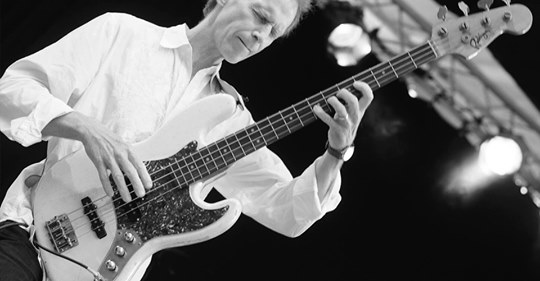
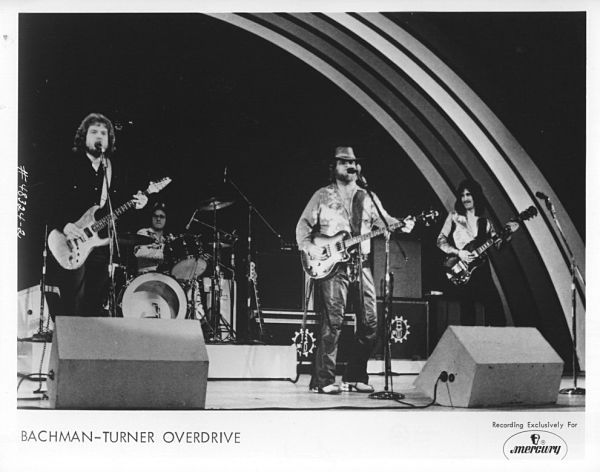
Recommended to Randy Bachman by Neil Young, Charles Frederick Turner is the “T” in BTO aka, the mighty Bachman-Turner-Overdrive. An accomplished singer, guitarist, composer – that’s CFT’s lead vocals on a few of Canadian band’s most recognizable hits including “Let It Ride,” and “Roll On Down the Highway” among others.
A pocket player now favors extended range (see below) and who plays to the song – Turner has occasionally reunited with his band-mates over the years, and has recorded and toured with Randy under the Bachman & Turner moniker.
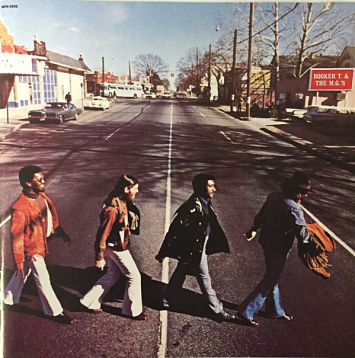
https://youtu.be/VcbcYvBj9HY August 8, 1969: the Fabs traversed the now iconic zebra crossing in St. John’s Wood and thus begat a multitude of multi-genre variations!
Such was the impact of Abbey Road that jazz master George Benson waxed his own CTI / Don Sebesky-ized version (The Other Side of… )with bassists Jerry Jemmott and Ron Carter; whilst Booker T & the M.G.’s rendered a southern soul Stax adaptation (McLemore Avenue / 1970) with Duck Dunn doing his thing.
To my ears, the winner here is Benson and his all-star cast including Freddie Hubbard, Mel Davis (Mel’s Place Baldwin, Long Island), Idris Muhammad, Ray Baretto, Hubert Laws, Herbie Hancock, Bob James, and Sonny Fortune!
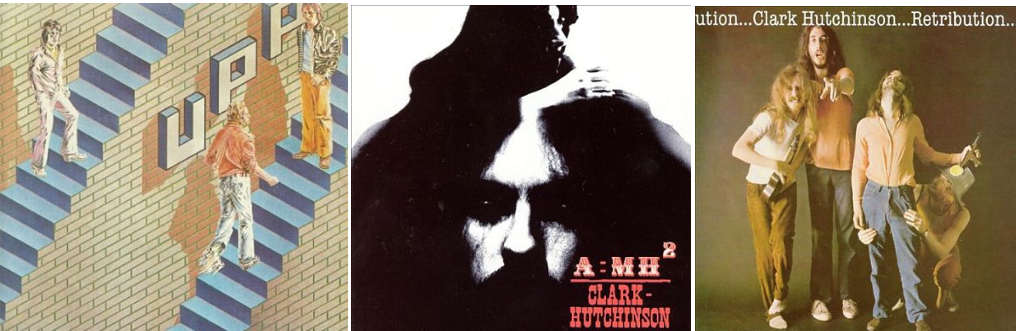
Stephen Amazing (Upp, Jeff Beck, Clark-Hutchinson)
According to legend, when Andy Clark turned to his bassist and bellowed “Stephen, you’re amazing!” he adopted the moniker “Stephen Amazing.”
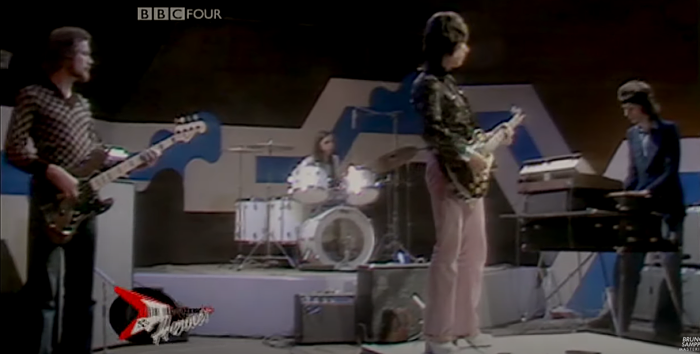
The bassist born Stephen Fields utilized both a trad finger picking and a plectrum / rhythm guitar strumming approach – which indeed, were quite amazing – see the Upp BBC video clip below. Mr. Amazing waxed an amazing slab with Jeff Beck – who served as the anonymous producer / guitarist on Upp in 1975. Amazin’ Amazing also backed Beck for a few gigs circa ’74-75 and anchored jam band / blues rockers Clark – Hutchinson before vanishing from music biz without a trace….hence this is all we know about him.
Note to bass detectives: if you have info on Stephen, please contact us!
Phil Spalding (Seal, The Who, Mike Oldfield, Toyah, Right Said Fred)
His website was modestly subtitled “Music & Mayhem” – and when you watch our interview with the late great Phil Spalding from Terminal Studios in Bermondsey, London – you’ll know why!
And if you’ve been listening to pop music on purpose or by accident, chances are you’ve heard Phil Spalding. A chameleonic player, composer, writer, and clinician, Mr. Spalding was that rare bassist who served a multitude of genres with authenticity and a sense of “joie de vivre.”
A groove and melodic master whose expertise extends to the stage and the studio Phil’s credits are astounding: Seal, Sir Mick, Sir Elton, Terence Trent D’Arby, Joe Cocker, Toyah, Mike Oldfield, Kylie Minogue, Robbie Williams, Right Said Fred (“I’m Too Sexy”), Matthew Sweet, Bernie Torme, GTR with Steve Howe, Steve Hackett; Original Mirrors, Jewly Perso, Ray Charles, and if I keep dropping names I’ll break the internet….
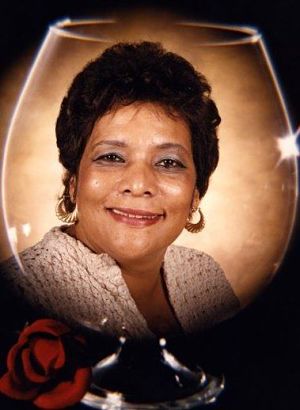
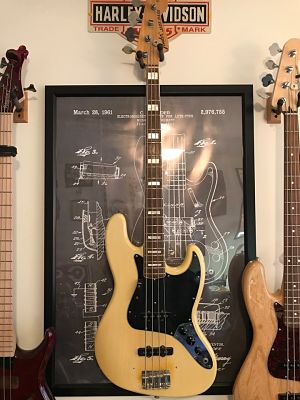
Today I have owned my 1974 Jazz bass forty-four years. I had it as a kid, as a father, and now a grandfather, it always reminds me how wonderful my mother was.
I cut grass all summer to buy my first bass and started playing commercially at 14. Played regularly in a couple of bands and in my high school jazz band. I saved up money from my gigs and bought my second bass and a bigger amp. Unfortunately, our house was broken into and that bass was stolen.
I was devastated and absolutely miserable. I had no idea what I would do.
I went to school on 9th of May 1975 and walked into the band director’s office. I was shocked to find my mother there with the band director. On the floor in front of them, in a case, was a brand-new Fender Jazz.
I was informed that it was mine… I couldn’t believe it. We lived modestly, so I know it was a great sacrifice. It was the Bass I wanted. How she knew that I will never know, but that just attests to how special she was.
Although it doesn’t get the play it deserves, no other bass I own will ever be cherished as much. It’s a simple reminder of how very wonderful my mother was.
R.I.P. Mom
The Lonely Streets’ Warren Renfrow: What Becomes a Legend Most?
Rock and roll is in a tough spot, dear readers. The record biz is kaput. Terrestrial rock radio has gone underground i.e. it’s dead and buried. Sir Mick has a new valve. Punk rock relics are in museums and its fashion cues retail at Neiman Marcus. And alternative rock plays in Vegas. What next, Greta Van Fleetwood Mac?
But don’t lose faith, because just when it appears that our brickhouse has caved in, an album (that is, an assemblage of audio recordings issued as a collection on compact disc, vinyl, audio tape, or another medium) “drops” that restores our belief in three chords, a sunburst Fender Precision, and the truth (or something close to it).
Behold our saviors: Greg Antista and The Lonely Streets. Their debut disc – Shake, Stomp and Stumble sees the light of day on May 17, 2019 on Primal Beat Records. Their roots run deep, deep, deep into the Orange County / California punk scene.
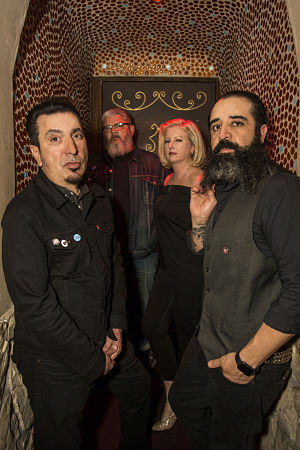
Kids in the Hall: LR Greg Antista, Warren Renfrow, Jessica Kaczmarck, Jorge E. Disguster
Where to begin? Bandleader / primary songwriter Greg Antista lists Joyride and Foxy on his resume. Lead-guitarist Jessica Kaczmarek toiled in Busstop Hurricanes, and Russell Scott & The Red Hots, among others. Jorge E. Disguster has manned the skins for Mr. Mirainga, Mink Daggers, Disguster and CoDependents.
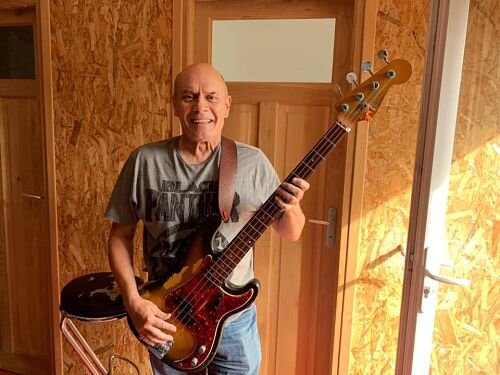
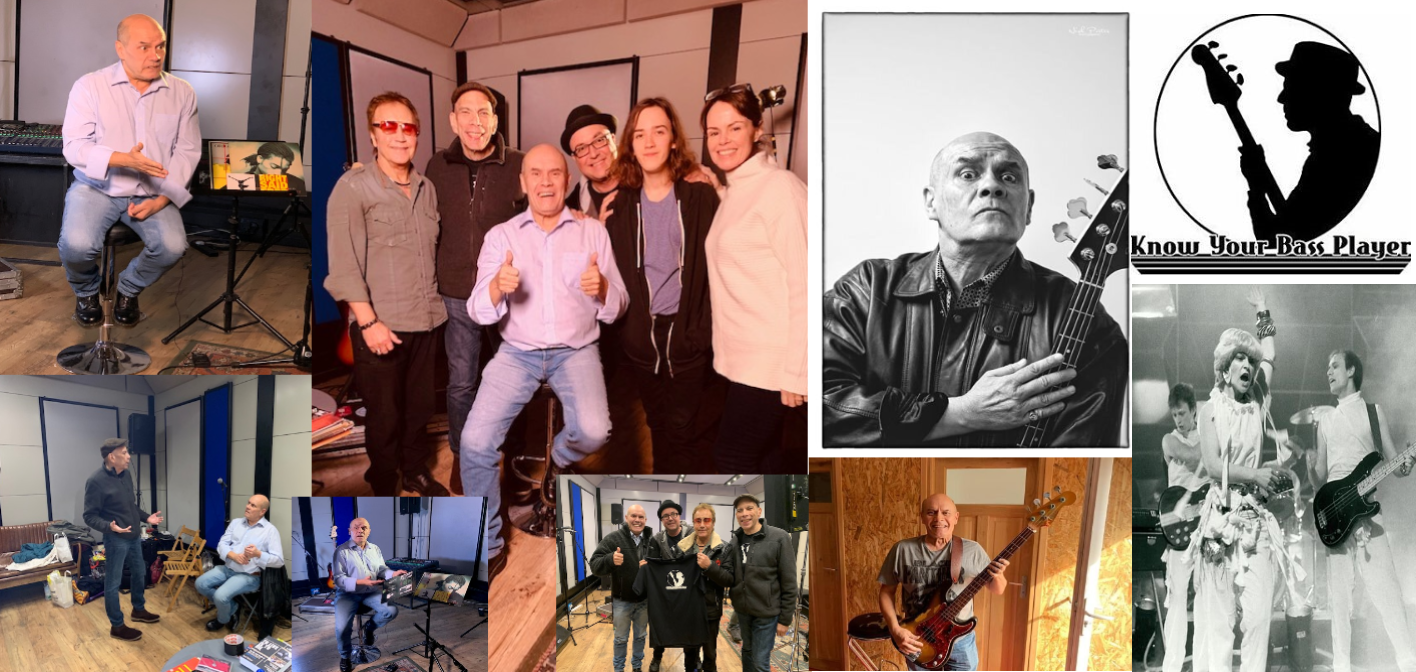
And then there’s the star of the Know Your Bass Player show, bassist Warren Renfrow – anchor of the mighty Cadillac Tramps, Manic Hispanic, Final Conflict.
If you don’t like the way I play…move me! Bassist Warren Renfrow
If that does not impress you, you may be a Childish Gambino fan. Research these giants of their chosen genre on YouTube.
The band members have known each other for centuries (the press release reads “decades,” but you can never trust such documents) and despite the fact that they’ve been in business for a little over a year, these veteran cats rock with the exuberance of youth and the wisdom of age.
Thanks to digital and social media it is no longer required of a hack such as I to “describe” GAATLB music to you. I’ll draw analogies to Social Distortion, Alejandro Escovedo, Tom Clark and the High Action Boys, Jason & The Scorchers, The Clash, and The Stranglers – and I may be right. Antista is a master lyricist – akin to the best writers, he paints pictures with few words. The melodies are inescapable, and the rhythm section is air-tight, loud and proud.
Greg Antista assumes the position.
And what of our man Renfrow? We’re talking legend here. In addition to his aforementioned pedigree, Warren went to war as a touring bassist with The Damned and Adolescents.
Logistics and schedules prevented us from capturing Warren for Know Your Bass Player on Film – though Mark, Mark, Derek and I will see to it that we do.
Until then, we give you the words of Warren Renfrow.
Were the Renfrows a musical family? While I’m the only one in my family to play an instrument, I grew up in a household with seven siblings. I was exposed to everything they listened to — mostly ’60s pop/rock, with an emphasis on the Beatles and the Stones. My older brother was the closest in age to me. He took me to a lot of really great concerts like Elton John, AC/DC (with Bon Scott), The Who with Keith Moon, and one of the first tours by Elvis Costello and the Attractions.
At what point in your formative years did you gravitate towards playing a musical instrument? Like most kids, I air guitared with a stick or a broom. Then a family friend gave me a little Sears bass and amplifier (kinda wish I still had it). I remember sitting and trying to learn, playing along to side one of the first Rodney on the Roq album.
Describe the moment you first became aware of the bass – was it a record, a song you heard on the radio, a performance? It was probably listening to Dee Murray playing on “Funeral for a Friend/Love Lies Bleeding” from Elton John’s Goodbye Yellow Brick Road album. The sound, the tone…the way it pops out and drives the song.
How did you evolve into Warren the bass player? I saw an old, grainy VHS of the original lineup of The Damned performing. Captain Sensible was playing bass. He just had such an attitude, and that’s who I wanted to be. I even tried wearing a beret and little round glasses, but I’ve got too big of a noggin to carry off that look. Continuing with the Damned, another big influence was Paul Gray. Back in 2002, I had the opportunity to be the fill-in bassist for the Damned when they opened for a Rob Zombie tour. It was an awesome feeling playing those songs that I revered, and nailing it. Leading up to the tour, the drummer, Pinch, and I rehearsed in a garage, then drove straight through to Houston where the rest of the band met us. During our one rehearsal before the tour, I was so exhausted from the drive that it didn’t even hit me that I was playing with my idols. Going through the set, “Wait for the Blackout” came up. As we were playing that song, I looked up and saw Captain Sensible and Dave Vanian and that’s when it hit me. That very moment — out of everything I’ve done musically — remains the most memorable.
Many folks, despite their love of music, are woefully unaware of the existence of the electric bass and what it does. Anyone ever ask you “what does that thing do?” I’ve never had to answer for it. The bass and drums (the rhythm section) are the engine of the machine. The rhythm section drives the song. When you’re tapping your foot, or nodding your head, or dancing… it’s to the rhythm section. If you wanna be the star of the band though, bass ain’t for you. You’d probably get more attention if you were in the witness protection program. But if you’re an introvert, it’s the perfect instrument.
Tell me about your first gig – triumph or tragedy? I will say my first gig was pretty fuckin’ awesome. It was with my first band, The Inferior, with Ron Martinez, who I’d later play with again in Final Conflict. He’s now in the Lower Class Brats. I’m sure we sucked but we had the time of our lives.
The Cadillac Tramps were an iconic So-Cal ensemble: tell me about the recordings and performances you are most proud of. I loved the music on the first two albums but they weren’t recorded well. Those records failed to capture us properly as a live unit. By our third album, It’s Alright, we actually had a pretty good producer named Howard Benson, and the sound quality was a lot better. As far as performances and touring, I look at it as an evolutionary process. You need to build a fanbase. When you first visit a town it’s possible that you’ll only play to 10 people. A few months later that crowd would grow to around 50, then 100. If you visit that market consistently, you’ll eventually sell out the venue. Back then, during the early days of the Cadillac Tramps, it was all word of mouth. No internet. On the opposite end of the spectrum, I can remember taking the stage opening for Pearl Jam and hearing the roar of 12,000 people. I was overwhelmed. Tears welled up. As I reflect on that moment, I have to mention the Cadillac Tramps’ dynamic and talented frontman, Mike “Gabby” Gaborno. He was the guy who made everybody in the room feel like his best friend. He had that gift.
Recall for me the emotions you felt when you first heard yourself on the radio with Cadillac Tramps. It was on 95.5 KLOS, Uncle Joe Benson’s “Local Licks.” It was fuckin’ cool. You turned on the radio and there you were. I never thought that would happen.
The Tramps were/are a tremendous influence on a generation of alternative rockers – comment on the band’s legacy – what does that mean to you? It’s nice to hear we were influential, but honestly, I sure as hell didn’t know it. I haven’t given much thought to our legacy. I just look back on it as the best of times.
Final Conflict and Manic Hispanic also garnered acclaim aplenty – what was special about those ensembles? Final Conflict was special because it was my first real band. That band grew out of backyard parties, before we eventually played clubs. Now Manic Hispanic, that was special because it was a joke that took on a life of its own. Everybody in the band was of Mexican descent, so the twist was that we would take old classic punk songs and put our own cultural stamp on them. We would make them funny. It was a totally cool thing because we were all great friends and we’d get to goof out on these classic songs we loved, and laugh.
Tell me how Greg Anista recruited you to be one of The Lonely Streets. Back in the 1990s when the Tramps were at their apex, pretty much our favorite local band was Joyride with Steve Soto and Greg Antista. Steve and Greg shared singing and songwriting duties. I’ve always liked Greg’s songs. In between then and now, there were a lot of years where everyone settled down, had kids and kind of focused on that. Now everyone’s kids are older and getting out of the house. In 2017, Greg wanted to put a band together, and I believe it was Steve Soto who said, “Hey, why don’t you ask Warren to play with you.” Greg asked, and I’ve always loved his songs, so I said yeah and I’ve been having a blast ever since.
GAATLS are a group of friends and collective of rock and roll veterans – tell me how that affects the music – it sounds as if the band has been playing together for years! While I’m fortunate to have had the opportunity to play with many talented people, within the framework of a group, there’s a lot to be said for chemistry. When you like the people that you’re playing with, and you like the songs that you’re playing, it comes together quite easily. At this point in my life, I have to really like what I’m doing and have fun doing it, or it’s just not worth my time. I’m not going to play in a band just to play in a band.
Talk about recording SSS – did you work the songs out on the road first? The band certainly recreates the energy of a performance in the studio – not an easy thing to capture! Greg wrote all the songs acoustically and got together with us each individually, gave us his version, and then we all came up with our parts. The equation came together and gelled. Once again, a lot has to be said for chemistry. But if I would have to reveal our secret weapon, it would be Paul Miner at Buzz Bomb Studios. Paul is a great engineer and producer and he had a lot of great ideas during the sessions. I wish Paul was around when the Cadillac Tramps were recording.
SSS is a fantastic record – however we are living in a “post album” era. What are your opinions on the fact that the majority of music listeners stream single songs – is the album format dead? Is it relevant anymore? The album format was limited by how much music you could fit on two sides of a disc. Streaming music is the next evolutionary step. There are no limits to what people can create. I think the waters are still being navigated.
When you first picked up the bass, did you think you’d still be playing in your middle-age? It is more satisfying now as an experienced player as opposed to rocking in your younger ears? Early on, my only goal was to play parties, get fucked up, and get laid. Looking back on that now and where it’s taken me — and taking those goals into consideration — I have to say I am a major success. But it’s way more satisfying now. At the beginning I wasn’t part of the music. Now I am.
Recall for us your gig nightmare – that one show where everything that could go wrong went absolutely …wrong? There used to be these yearly shows called the Hootenanny. One year, the Stray Cats reunited to play the Hootenanny and the Cadillac Tramps were on the bill. I remember feeling really charged up and excited as we took the stage. Unbeknownst to us, our drummer had gotten really drunk in the lead up to our set. So instead of the Tramps hitting the stage like a wildcat, it was more like a beached whale. Horrible.
Who are some of your favorite bass players? Who were the players that inspired you even if you don’t play like they do? I guess I could bring up the usual suspects, like McCartney or Jamerson. There was a time that I really wanted to be and play like Paul Gray, but now as I’ve gotten older, I find myself being more of a ‘dug in, in the pocket’ groove rhythmic player. And I’m amazed by guys like Conrad Lozano or the Mighty Gil T or John Baz. You can’t teach the way those guys play.
Aside from The Lonely Streets – what more would you like to accomplish before you call it a career? Once again, I just want to have fun playing music that I like. As long as that’s happening, I’ll never call it a career and I’ll go into the box playing.
Breaking News: Warren has waxed a new slab with Manic Hispanic slated for summer release!