Rutger Gunnarsson (ABBA)

Courtesy of Abba Site Com Courtesy of Abba Site Com

Courtesy of Abba Site Com

You can dance, you can jive, having the time of your life, ooh, see that girl, watch that scene digging the dancing queen…


Though rockers of my generation (1970s) were mortified at their popularity, this Swedish pop supergroup were a bona-fide song / harmony driven hit-making machine worthy of their reverence.


Their bassist toiled in several rock bands in his native Linkoping before enrolling at Stockholm’s Royal College of Music. While there, a colleague suggested that apply for a road gig with The Hootenanny Singers – Benny Andersson and Bjorn Ulvaeus. That musical collective soon developed into ABBA, and the rest, as they say is history.


A melodic pocket player, the late Rutger Gunnarsson anchored all the ABBA slabs, he was their touring bassist on several treks, and also served as an arranger on their string of multi-platinum platters. 


In addition to working with Bjorn and Benny following ABBA’s demise, Rutger also collaborated with Gemini, Celine Dion, Adam Ant, Ulf Lundell and Josefin Nilsson, among others. 


Gunnarsson was also involved the ABBA musical Mama Mia! and anchored the repertory ABBA Orchestra in Concert. 


Rutger Sound & Vision…

“Dancing Queen” https://youtu.be/B139-IqKcqg


Rutger rockin’ on “Summer Night City” https://youtu.be/SWj2vy7VS8Q  


Plonking down quarter note roots on “Take A Chance” https://youtu.be/-crgQGdpZR0


Dig Tony Senatore’s rendition of “Waterloo” https://youtu.be/4fQBaDHsGU4


Courtesy of Abba Site Com Courtesy of Abba Site Com
Courtesy of Abba Site Com
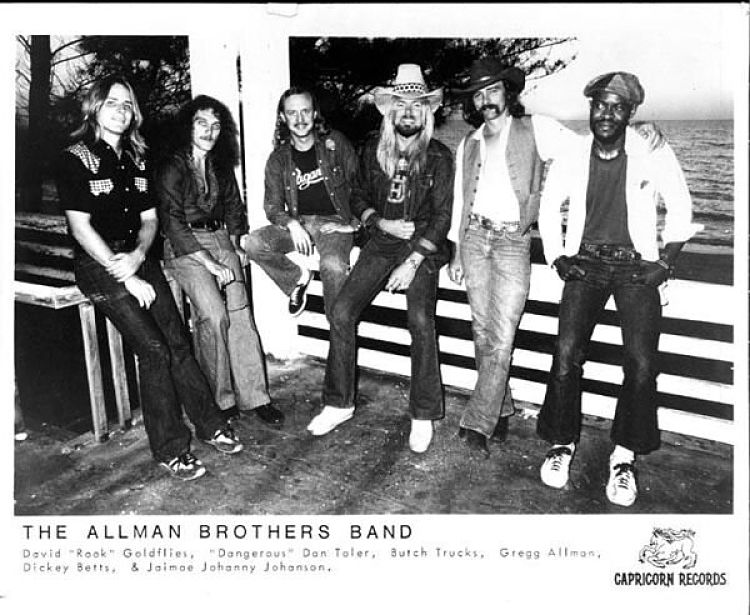
David Goldflies (Dickey Betts, Allman Bros.)


An extraordinary upright and electric player, David “Rook” Goldflies anchored the Allman Brothers Band from 1978-82 as the ensemble aimed for more of a commercial audience on record. Though the Brothers were not quite cut out for pop radio, David and the band soared on stage, and Goldflies’ work on three Allmans’ releases Enlightened Rogues (1979), Reach for the Sky (1980), and Brothers of the Road (1981) was exemplary.


Born into a family of classical musicians, David was a key member of Dickey Betts’ Great Southern. Nowadays David is a composer and bassist with the Panama City Pops Orchestra, and also helms an Allman Brothers repertory ensemble aptly named the Allman Goldflies Band.


As I was witness – when David Goldflies and Dan Toler joined the then-reunited ABB they brought with them a vibrant, fresh perspective on the blues rock blues rock format which, to my ears, was in a creative rut by the late 1970s.


Composed by Dickey Betts and David Goldflies, and featuring percussionist Joe Lala and vocalist Bonnie Bramlett – dig this pop oriented track “Try It One More Time” https://youtu.be/hS_rGgQpqUI featuring David’s soulful slap-and-pop, harmonic extensions, and sharp tone throughout.


Recordings such as this helped expand the language of the genre and introduced a new generation, myself included, to roots and blues music. Enlighted Rogues, Reach for the Sky, and Brothers of the Road, were gems of their era – hence their appeal to my age group. Then we went back and further explored the art-form.


A master groove and counter-melodic player, improviser   – keep up with David’s numerous projects by way of https://www.goldfliesmusic.com/


 David Goldflies Sound & Vision 

WSRE Pensacola Broadcast of the Allman Goldflies Band https://youtu.be/d7i42N2mnpE

David with BHLT – Betts, Hall, Leavell, Trucks at the Capitol Theater in Passaic NJ in 1983 https://youtu.be/k_Dn1YFkN_Q

David with the Allmans Live at the Capitol Theater in 1979 https://youtu.be/5Hb9aNgivdg

Read about David in Broadway World which references Know Your Bass Player: https://bit.ly/37mU8Zi

Eleven More Bass Players Who Belong in the Rock and Roll Hall of Fame: David Goldflies https://bit.ly/2IQTkl3


David Goldflies on Season Tres of Know Your Bass Player on Film, 2019 New York City, Euphoria Studios 


Joe Cetner (The B’zz)

Joe C 3_opt.jpg Joe C 3_opt.jpg

By Joe Gagliardo

In 1977 or thereabouts, Joe Cetner attended a Cheap Trick gig at the Brat Stop, a venue just over the Wisconsin border, and he was blown away by Tom Petersson’s bass playing.

The following night, he went to see Chicago legends, D’ Thumbs (Cliff Johnson’s band immediately before Off Broadway, which also included drummer Tommy Aldridge following his tenure in Black Oak Arkansas, and shortly before he would wax platinum albums and traverse arenas with Pat Travers, Whitesnake and Ozzy Osbourne).

Once again Joe was blown away by a bassist with a Cheap Trick connection: Jon Brandt, who would go on to replace Pete Comita – who took over the bass chair from Petersson. Brandt anchored the Rockford, Illinois Rock and Roll Hall of Famers from 1981-88.

Driven by those live club experiences, and influenced by Paul McCartney and John Entwistle, Joe made the decision to play the bass guitar!

Equipped with a 1972 Sunburst Gibson Thunderbird, Joe quickly became a regular on the Chicago club scene, including gigs anchoring Pin Ups, who were among the hot, local late 70’s club bands.

Joe C 5_opt.jpg Joe C 5_opt.jpg

In the 80’s Joe played with Tommy Holland in a latter-day configuration of The B’zz.  As that band wound down, Joe became part of Tommy Holland’s next project, Holland, which was signed to Atlantic records, and also featured drummer Brad Rohrssen and guitarist Michael Angelo Batio.  Holland’s LP, entitled Little Monsters, produced by Tom Werman, rocks hard and fast!

Joe C 1_opt.jpg Joe C 1_opt.jpg

At that time Joe switched to one of his 1963 Fender Jazz basses as his go-to instrument.

Check out Holland’s “Wake Up The Neighborhood,” a song that was featured in the 1985 movie, Girls Just Want to Have Fun   https://youtu.be/hkw0r3Hf2ZQ

… and “High Life” https://youtu.be/z0RuuAqL1Ng

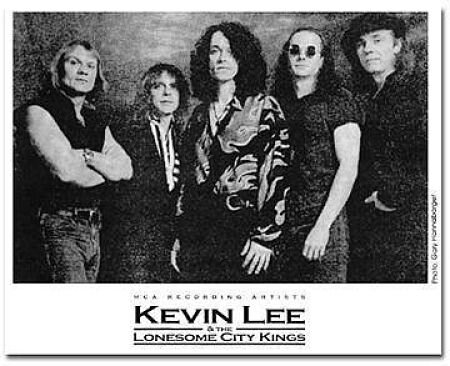
In the early 90’s Joe and Kevin Lee were in California and formed Kevin Lee and the Lonesome City Kings.  Inked to the MCA imprint, the band released one LP, Restless, co-produced by Don Dixon.

Joe C 4_opt.jpg Joe C 4_opt.jpg

 Check out these two tracks:

 “Standing in the Line of Fire” https://youtu.be/X6v3e_SuGXY

“One Little Promise” from the Kill the Power Show  https://youtu.be/z0RuuAqL1Ng.

Weary of Chicago winters, Joe packed up and moved to Florida in the mid-1990s.  In addition to playing music on the beach and for various charities, for the past twenty-five years Joe has been living his dream of being a boat captain: an endeavor which takes him back to his childhood – racing home from school to watch Where The Action Is—sun, sand, beaches, waves and music!

Joe C 2_opt.jpg Joe C 2_opt.jpg

Tony Curatola (Billy Panic)

Tony Curatola 1_opt.jpg Tony Curatola 1_opt.jpg

By Tony Senatore

Tony’s study of the bass guitar began in 1977, under the tutelage of Al Faraldi, who, interestingly enough, was not a bassist. Faraldi was primarily a jazz guitarist that played classical guitar. The core of Mr. Faraldi’s teaching was his emphasis on reading, the Carol Kaye Bass Method, as well as Bach’s Six Suites for Violincello Solo and the Charlie Parker Omnibook.

After three years with Faraldi, and a brief stint with Jeremy Steig in 1979, Tony left New Jersey for the Berklee College of Music, where he spent a semester, but soon realized that he could forge a more personal style on his own.

Although Tony reunited with Faraldi from 1983 to 1984, he came to the realization that what he was looking for could only be found through real world experience. Thus, the streets and bars of New York became his college campus, and his professors were his heroes, ranging variously from Jaco Pastorius, Gary Willis, to Ray Brown and Ron Carter.

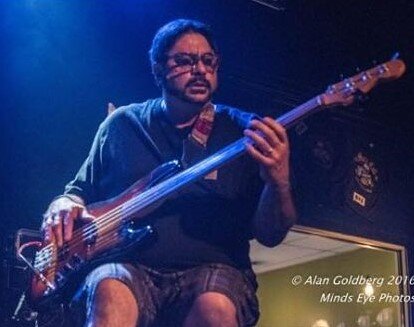
Photo by Alan Goldberg - Courtesy Tony Curatola Facebook Photo by Alan Goldberg - Courtesy Tony Curatola Facebook

Photo by Alan Goldberg – Courtesy Tony Curatola Facebook

These days, Tony enjoys playing live with his band Billy Panic, whose 2015 release entitled ISH is a musical tour de force of all that Tony holds sacred: melody, harmony and the groove. He also is the house bassist at the weekly jam session with his band The Dogs at The Peddler Jam in Cresskill, New Jersey.

He enjoys the challenge of the endless array of styles he is confronted with each week, and he particularly enjoys mentoring and nurturing younger players. Tony also maintains a rigorous daily practice schedule on his upright and electric basses and has learned a lot from Rufus Philpot’s bass instruction videos.

Tony feels that Rufus is one of the best players and educators available anywhere.

In summary, unlike many of his contemporaries, Tony Curatola’s strength as a musician is realizing what he doesn’t know and having the humility to learn it.

Dig Tony with Billy Panic:

“Work Shoes” https://youtu.be/YSyAEtoPcu4

“Hudson River Walk”  https://youtu.be/dGVnZ1gEKkw

“Running with the Bulls” https://youtu.be/8ymhQzYhJ2s

Tony Curatola in his own words…

How do I judge me…” Let me count the ways.  

Two-five-one that’s right, for many years I not only studied jazz,  but I used it as a barometer to judge myself not only as a bassist but as a musician overall. 

Although I am relatively learned and fluid in the style and admittedly it has taught me much in terms of theory, composition and the like, in all honesty I have to admit two things. First and foremost, I don’t enjoy it, I never did and second I’m not much more than proficient at it. 

It wasn’t until recently when I had a conversation with pro bassist and confidant Tony Senatore who quite literally told me “its okay,” yes okay to openly admit that I don’t care to play jazz anymore.

It wasn’t the music of my time. I grew up in the seventies listening to Joni Mitchell, James Taylor and the all the super bands of the time (none of which played jazz). Since then I’ve come to happily emulate the music I grew up on and really enjoy playing. I no longer judge myself by two-five-one, but I do count to four at the start of most tunes.    

Nowadays I mostly play on a stage not a “bandstand…”

Tony Curatola 3_opt_opt.jpg Tony Curatola 3_opt_opt.jpg

Alan Mair (The Beatstalkers, The Only Ones)

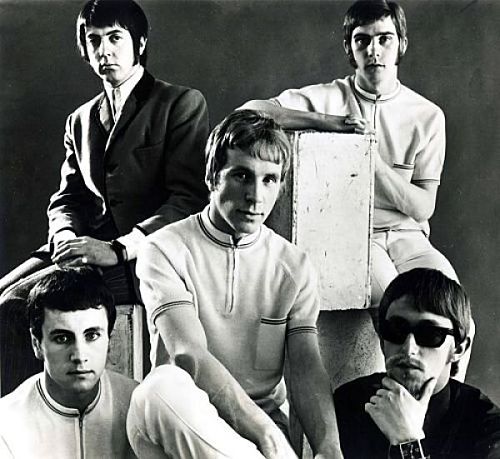
In four extraordinary interview segments with Alan Mair filmed at Terminal Studios in beautiful downtown Bermondsey, the bassist / composer / recording artist / producer / haberdasher discusses his career with The Beatstalkers, as a haberdasher, and bassist with The Only Ones, among other endeavors!


Special thanks to Amanda Thorpe, Sal Maida, and Edward Rogers for their editorial inspiration.


Alan Mair Know Your Bass Player on Film Season Tres https://bit.ly/2QAk64A


Alan Mair Part 1 

In the first of four extraordinary interview segments with Alan Mair filmed at Terminal Studios in beautiful downtown Bermondsey, the bassist / composer / recording artist / producer / haberdasher discusses his tenure in The Beatstalkers who were considered the “Scottish Beatles.” Among the band’s notable collaborators included a young singer songwriter David Jones, later known to the world as David Bowie – who composed and sang back-up for the group.

Alan Mair Part 2

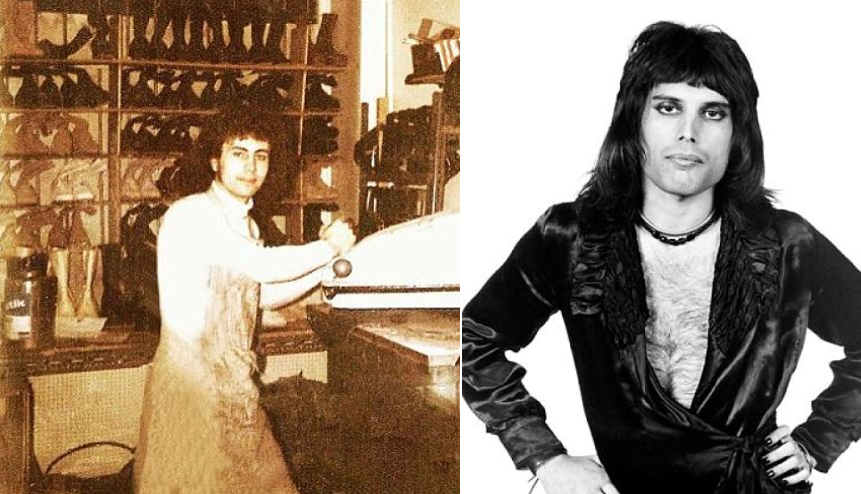
In the second of four extraordinary interview segments with Alan Mair filmed at Terminal Studios in beautiful downtown Bermondsey, the bassist / composer / recording artist / producer / haberdasher discusses his transition from Beatstalker to boot-maker at Kensington Market, wherein he employed the former Farrokh Bulsara – later to be known to the world as Freddie Mercury.

Alan Mair Part 3 

In the third of four extraordinary interview segments with Alan Mair filmed at Terminal Studios in beautiful downtown Bermondsey, the bassist / composer / recording artist / producer / haberdasher discusses tenure in The Only Ones.


Alan Mair Part 4

“I want some of that!”

In the fourth and final interview segment with Alan Mair filmed at Terminal Studios in beautiful downtown Bermondsey, the bassist / composer / recording artist / producer / haberdasher recalls the unlikely reunions of both The Beatstalkers and The Only Ones.

Alan Mair: Season Tres Behind-the-Scenes: Rockers ‘n’ Schmatas!

Beatstalkers / The Only Ones bassist Alan Mair, who employed Freddy Mercury as a salesman in his Kensington Market boot shop, discusses fashion with Mark, who has familial ties to the garment industry. Derek reminisces about The Who with Alan.


Andre Howard (Lonnie Brooks, Magic Slim)

Andre 1.jpg Andre 1.jpg

By Joe Gagliardo

When Andre Howard was growing up, he had an uncle who would regularly visit his home and play blues guitar and sing.

Andre’s dad had a house full of instruments too, and Andre would sometimes join in with his with his uncle, playing trumpet or drums.  Then one day his uncle arrived with a friend who brought along his bass guitar, and everything changed for Andre!  With minimal instruction that day, Andre learned to play a basic blues pattern, and he never looked back.

With his Teisco bass, Andre began soaking up the plentiful blues, soul and rhythm and blues music being played on Chicago radio.  While still in high school, Andrew was gigging five nights a week in the clubs.

Eventually Andre’s pursuit of music took him to Nashville, where he did studio work, and performed regularly with Victor Wooten’s talented Family at 3rd and Lindsley, one of the great authentic blues bars outside of Chicago.

Andre 1_opt.jpg Andre 1_opt.jpg

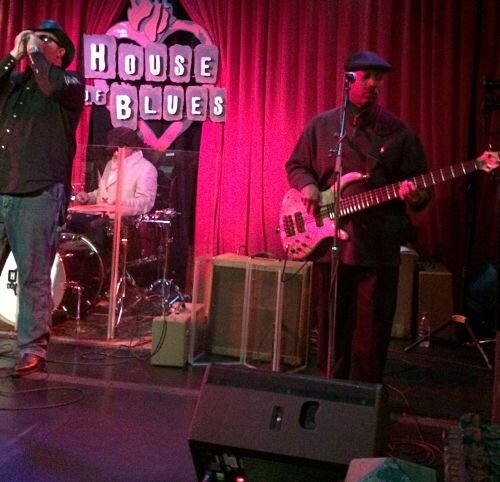
Since returning to Chicago in 2000, Andre has been a mainstay at the top Chicago blues clubs, including the Kingston Mines, B.L.U.E.S., Blue Chicago, and Buddy Guy’s Legends, often playing 5 nights a week.

He has played with a virtual who’s who of blues royalty, including, Lonnie Brooks, Magic Slim and the Teardrops, Eddie “The Chief” Clearwater, Liz Mandeville, and Big Time Sarah.

Andre 2_opt.jpg Andre 2_opt.jpg

These days, Andre’s basses of choice are a 7-string Ibanez, a 5- string Schack, or a 4 string Steinberger.

If you have been in a Chicago blues club in the last twenty years, there is a good chance that you have seen and heard Andre perform.

You can catch him supporting a blues legend, playing with Frank Bang and the Cook County Kings, or with his critically acclaimed Andre Howard Band.

Check out Andre’s soulful grooves with Frank Bang & The Cook County Kings, and it’s is readily apparent why he has become known as “Da Funky One!”

The Blues Don’t Care LP  https://youtu.be/t3KCYVa18s4

Live at “The Funky Biscuit”  https://youtu.be/qyHY8hnRhA0

Andre 3_opt.jpg Andre 3_opt.jpg

Eddie Jackson (Queensryche)

Courtesy of Queensryche Official Com Courtesy of Queensryche Official Com

Courtesy of Queensryche Official Com

By Tony Curatola

Eddie Jackson, cofounder of Queensryche, is arguably one of the most underrated bassists of our time!

Mr. Jackson is also commonly known among those in-the-know as “Edbass” and “One Take” both of which speak to his tremendous knowledge and facility on his instrument.

Born in Robstown, Texas in 1961 Eddie came up as a player in a golden era of the instrument which gave us John Paul Jones, Chris Squire, Jaco Pastorius, and John Entwistle – to cite a few who raised and set the bar extremely high for upcoming players.

Courtesy of Queensryche Official Com Courtesy of Queensryche Official Com

Courtesy of Queensryche Official Com

Eddie Jackson’s sound is reminiscent of Chris Squire – who I’m sure we can all agree was one of the premier players as bassist and anchor for Yes – Mr. Squire’s work needs no introduction!

Eddie “One Take” Jackson clearly embodies the best of the best in progressive music and has always done so with impeccable modesty. His discography is as extensive as his talent. Any time spent listening to Eddie and his work (and his approach to the nuances and complexity of the music) is time well spent for bass enthusiasts as well as “Joe Listener.”  Perhaps “Silent Lucidity” says it all. Pun intended!

Courtesy Queensryche Official Courtesy Queensryche Official

Courtesy Queensryche Official

Eddie Jackson’s weapons of choice include Fernandes, Spector NS-2, Spector 5LX extended range, Tobias 5-string, and Hartke amplifiers, bass cabinets.

4 Eddie Jackson 2.jpg 4 Eddie Jackson 2.jpg

My choice tracks which I feel demonstrate Eddie Jackson’s diversity include…

“Jet City Woman”  https://youtu.be/EHapAsmvGEU

“Light Years” https://youtu.be/qqI4OfolPuo

“Hundred Mile Stare” https://youtu.be/N9gYGpFltOA

“The Killer” https://youtu.be/qYLxGa57YGs

Courtesy Queensryche Official Kari Pearson Courtesy Queensryche Official Kari Pearson

Courtesy Queensryche Official Kari Pearson

KYBP On Film Season Tres: Alan Mair: From Beatstalkers to Boots…and Freddie Mercury


MAIR TN  22.png MAIR TN  22.png

In the second of four extraordinary interview segments with Alan Mair filmed at Terminal Studios in beautiful downtown Bermondsey, the bassist / composer / recording artist / producer / haberdasher discusses his transition from Beatstalker to boot-maker at Kensington Market, wherein he employed the former Farrokh Bulsara – later to be known to the world as Freddie Mercury.

Special thanks to Amanda Thorpe, Sal Maida, and Edward Rogers for their editorial inspiration.

Tom Semioli: Interviewer / Writer. Mark Preston: Producer / Director. Derek Hanlon, Oliver Harley Symonds: Cinematographers.
Mark Polott: Editor.

Wayne Nelson (Little River Band)

Wayne Nelson_opt.jpg Wayne Nelson_opt.jpg

By Joe Gagliardo

How does a guy from Chicago, via Peoria, Illinois, end up being the lead singer, bassist and producer for an Australian group that had achieved massive success all over the world?  You are about to find out!

Wayne Nelson was raised in a musical family: his father was a drum major in college, and his mom loved classical music. Surrounded by majestic music playing in the house, his parents also sang in their church choir, and got Wayne involved at a very early age. Singing in the choir, while standing in front of the pipe organ, Wayne developed a love for the bass and cello sections.

WN2_opt.jpg WN2_opt.jpg

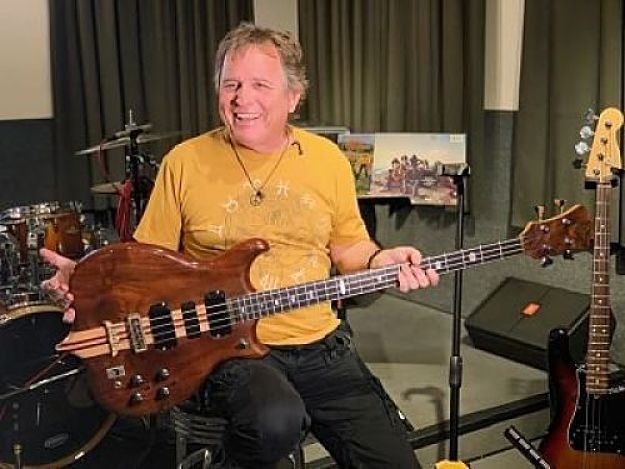
In high school, Wayne formed his first band, serving as a bassist and lead singer. Starting out on a lemon yellow Teisco, dubbed the “yellow submarine,” Wayne graduated to a 1968 Fender Precision bass, and ultimately to his current basses, a 5-string Victor Wooten model Jazz Bass and a 5-string  Ernie Ball MusicMan StingRay.

Among Wayne’s bass heroes are a varied group with regard to genres and playing styles: James Jamerson, Paul McCartney, Bill Wyman, Peter Cetera, Jim Fielder (Blood, Sweat & Tears), Jaco Pastorius, Jack Bruce, Larry Graham, Ron Carter, Charlie Mingus and Anthony Jackson.

WN5_opt.jpg WN5_opt.jpg

Those influences have served Wayne well.  While in Chicago, he was in The Grip, which included former American Breed and Rufus members, Lee Graziano and Paulette McWilliams, who, in addition to her solo career, went on to sing with Marvin Gaye and Luther Vandross, among others, and he appeared on Paulette’s LP, Never Been Here Before.

He also played with Wooden Nickel singer/songwriter/ recording artist, Megon McDonough; Koala, which was a blue-eyed soul funk band, and John Bishop, a jazz guitar player.

Moving to Los Angeles at the suggestion of one of his former band mates, Wayne played bass with singer Eloise Laws, the sister of Hubert and Ronnie, and the drummer, coincidentally, was Andre Fischer, who was the drummer on the first Rufus LP with Chaka Khan.

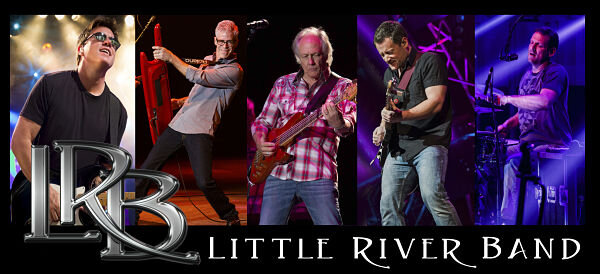
Wayne played with Jim Messina for two years and anchored the former Buffalo Springfield / Loggins & Messina guitarist’s debut release, Oasis.  His tenure with the Messina band included a two week tour in 1980 opening for the Little River Band. During that trek, Wayne was asked to join as the bass player.  Fast forward 40 years, and Wayne is now the bassist, lead singer and producer of the Little River Band.

Keep up with Wayne and the Little River band here: www.reallittleriverband.com

Check out Wayne’s singing and bass lines with the LRB:

“It Was The Night” https://youtu.be/2qsQrsjkPpM

“How Many Nights” https://youtu.be/OdOxR_GkWMU

“It’s Just a Matter of Time” https://youtu.be/G4UOCkJ9YeE

2018 LRB Promo_opt.jpg 2018 LRB Promo_opt.jpg

In the early 90’s Wayne was also part of the LA Cowboys, with their sole release Endless Summer, produced by Wayne and Jim Studer, and included Michael Thompson, Michael Landau, Tris Imboden and Greg Bissonette.

Check out the title track “Endless Summer”  https://youtu.be/3SsQ4-Kd4zA

Guillermo Madrigal (Forbode)

Guillermo 1_opt.jpg Guillermo 1_opt.jpg

By Robert Jenkins

Forebode bassist Guillermo Madrigal is a force of nature.

He stands close to nine feet tall and weighs almost 700 pounds of pure muscle!! Okay, maybe 6’3” and 250 but it’s still pure muscle; and he looks like he can bench 400….

Frighteningly, Guillermo’s bass rig matches his physique!

His main rig consists of a Sunn 300T and an Ampeg SVT2 both running into a Worshipper 4×15 speaker cabinet. FOUR. FIFTEEN. INCH. SPEAKERS!

His bass of choice? A vintage Peavey T-40, which is, of course, the heaviest bass ever made. Guillermo is also an avid collector of vintage Peavey basses and guitars, sporting three T-40 basses in his collection. Needless to say; he can move some air.

Asked about his fascination with the T-40 Guillermo simply replied that when he first tried the instrument as a beginning player – “it just felt right!” And he puts all of them to good use!

Forebode is a crushingly heavy band, leading the “Doom Metal” scene here in Austin. In my honest and humble opinion, Forebode is the heaviest band on the scene right now. They have one EP and are currently working on a full-length album, hopefully due out in 2020.

Despite his intimidating physique and stage presence, Guillermo is one of the nicest people you could want to meet. A recent devotee to the bass, Madrigal was naturally drawn to the instrument. Once again, the instrument “just felt right for him.“

His influences are wide and varied, however when I asked who his favorite bassist was he had to call it a tie between Jaco Pastorius and Al Cisneros.

Guillermo can be seen and heard with Forebode regularly around the Austin metal club scene and in the surrounding metro area.

Check out Forebode on their most recent EP

https://www.youtube.com/playlist?list=OLAK5uy_laW3j9z7YihhA8kws_bn853KunVHSados

Guillermo 2_opt.jpg Guillermo 2_opt.jpg