Courtesy of Jack Bruce Com
By Thomas Semioli
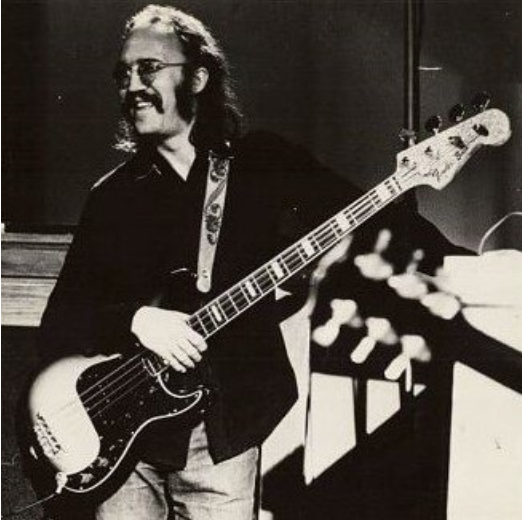
Along with Paul McCartney, Duck Dunn, John Entwistle, and Chris Squire – John Symon Asher Bruce was among rock’s most accomplished and influential bassists.
Jack Bruce’s iconic status as a virtuoso instrumentalist emerged from his improvisatory genius with Cream as evidenced on their legendary extended live jams on record and on the concert stage– a revolutionary horizon for rock bands of the era. His wide array of studio recordings as a solo artist and collaborator were mostly innovative and equally important in expanding the language of rock music to include jazz, classical, and permutations thereof.
Bruce’s signature tone truly emerged from his soul – regardless of the bass he utilized. From his Fender VI to his signature Gibson EB to Warwick – you always recognized Jack in a single passage!
In addition to his work as a bassist, Jack was also an extraordinary vocalist.
With Cream, Bruce also flexed his remarkable songwriting chops with lyricist Peter Brown: “White Room,” “Politician,” “SWLABR,” and “Sunshine of Your Love” are among rock music’s most enduring standards.
Bruce’s collaborations with artists from every conceivable genre – including Tony Williams, John McLaughlin, Frank Zappa, Leslie West, Carla Bley, Mick Taylor, Billy Cobham, Robin Trower, Lou Reed, and Cindy Blackman Santana, to name a very few, never failed to break new ground.
Jack Bruce Sound & Vision…
“Tickets to Waterfalls” https://youtu.be/ng7vpLsEX-o
“Theme for An Imaginary Western” https://youtu.be/ZE-zVoru1rE
“White Room” https://youtu.be/V5BF1V1pbTs
“Sunshine of Your Love” https://youtu.be/y_u1eu6Lpds
“SWLABR” https://youtu.be/l0QV71h-1b8
“Politician” Live https://youtu.be/XPv9W_55zdE
“Apostrophe” with Frank Zappa https://youtu.be/XPv9W_55zdE
Tony Williams Lifetime: “Right On” https://youtu.be/XPv9W_55zdE

Courtesy of Cream Com

By Thomas Semioli
If you had to choose a role model of a classic rock bassist …look no further than this cat!
Huffington Post / Tom Semioli : Carl Radle: Eleven Bass Players Who Belong in the Rock and Roll Hall of Fame https://bit.ly/38WUMh2
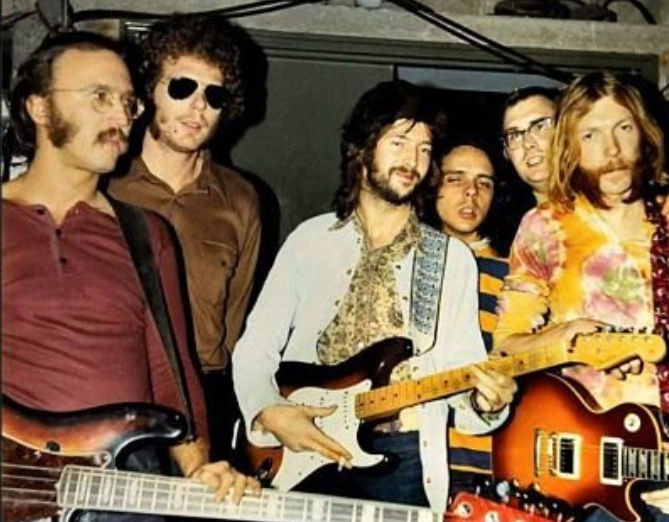
He was the consummate sideman who came to prominence on seminal sides and concert performances with Derek & The Dominoes, George Harrison, Delaney & Bonnie, Eric Clapton, Leon Russel, and Joe Cocker. Bassist Carl Dean Radle’s motifs are so essential to the compositions that he waxed with those aforementioned rock icons; that if you were to play the songs without rendering his lines (near) verbatim – the tune sounds… wrong!
Born in Tulsa, Oklahoma, and migrating to Los Angles in the 1960s, Radle’s association with fellow Tulsan Leon Russell, then a prominent member of the Wrecking Crew, afforded Carl entry into the elite sessions circles.
Radle’s jaw-dropping resume also spans Gary Lewis & The Playboys, The Concert for Bangladesh (with Klaus Voorman), Dr. John, Dave Mason, J.J. Cale, Buddy Guy, Rita Coolidge, John Lee Hooker, King Curtis, Bobby Whitlock, Art Garfunkel, Donovan, and Bob Dylan, to cite a very select few.
Carl’s weapons of choice included a ’65 sunburst Fender Precision with a blocked and bound neck, ’68 blonde Fender Telecaster bass with a single coil Telecaster pickup and a split-coil Precision pickup, MusicMan Stingray, and a ’75 Alembic.
Radle’s fluid lines are a study in rhythm and space. His meld of staccato phrasing, sustained notes, and unadorned countermelodies sounds deceptively effortless – which further exemplifies Carl’s mastery.
Among Carl’s finest recordings include his work with drummer Jim Keltner as captured on Joe Cocker’s Mad Dogs & Englishmen (1970).
To my ears, Layla and Other Assorted Love Songs (1970) represents Carl’s most enduring recorded work and stands as a definitive example of the supportive role of the bass in a rock guitar-based setting.
Carl Radle Sound & Vision…
Derek and the Dominos
“Got to Get Better” https://youtu.be/ywdU0C2GH2o
“Bell Bottom Blues” https://youtu.be/FclW0go4Cfc
“I Looked Away” https://youtu.be/PMlmoLvRBNQ
“Anyday” https://youtu.be/QrWK5XWuGpk
Eric Clapton:
“Let It Rain” https://youtu.be/vFoheneUfU0
“Motherless Children” https://youtu.be/9EZlmqWmcqw
“Let It Grow” https://youtu.be/YpDlmop0uYU
Delaney & Bonnie & George & Eric “Comin’ Home” https://youtu.be/aazChqk4U-c
George Harrison “You” https://youtu.be/3xnTWee4eAI
Rita Coolidge “Superstar” https://youtu.be/e4Xi1I78Kms
Leon Russell “Stranger in a Strange Land” live https://youtu.be/Hjy7RAu8TJ4
Joe Cocker’s Mad Dogs & Englishmen
“Delta Lady” https://youtu.be/uIz8n4fprxw
“Darling Be Home Soon” https://youtu.be/RCl-zznJ5so
“Space Captain” https://youtu.be/RCl-zznJ5so


Courtesy of David Bowie Com
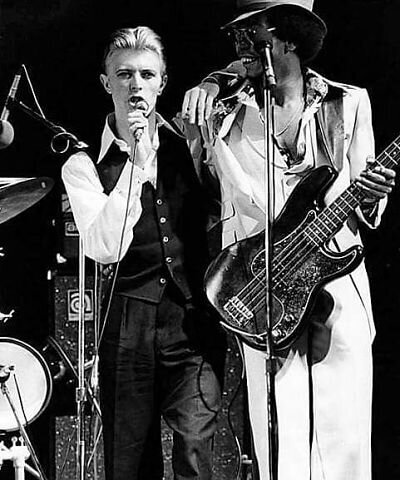
He was the former David Jones’ bassist during his watershed “Berlin “era from 1976 through 1979.
With producers Tony Visconti, Brian Eno; guitarists Earl Slick, Robert Fripp, Ricky Gardiner, Adrian Belew, and Carlos Alomar; keyboardists Roy Young and E Street Band pianist Roy Bittan; drummer Dennis Davis, and bassist George Murray as the core band– the Thin White Duke erased the boundaries of soul, hard rock, avant-garde and dance into works of aural art hitherto unheard.
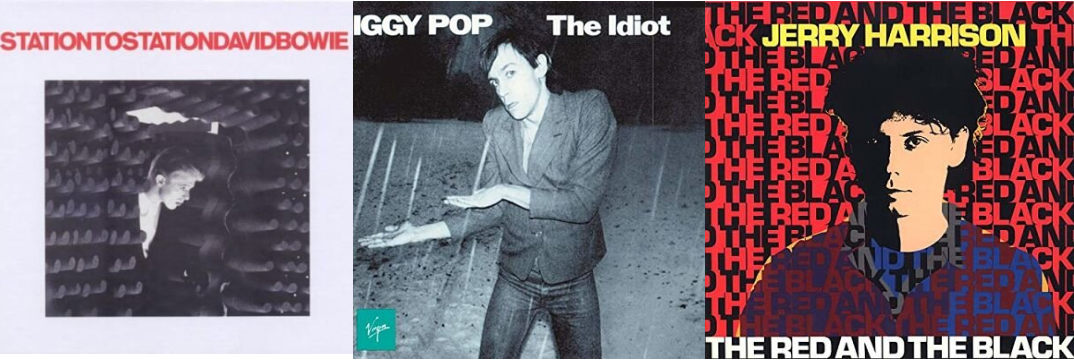
Plying unadorned funk grooves, George anchored Station to Station (1975), Low and Heroes (1977), the live twofer Stage (1978), Lodger (1979), and Scary Monsters (1980) which are among the most influential of the era and of Bowie’s entire canon.
Murray also served as the bassist with David in the producer’s chair for Iggy Pop’s best album The Idiot, and Talking Head Jerry Harrison’s underrated The Red and Black (1980).
In the studio, George’s weapon of choice was the Fender Precision. On stage Murray utilized the Precision, Kramer, and Gibson Ripper basses.
After Bowie dispatched this band, Murray moved to Los Angeles and forged a career as an educator.
George Murray Sound & Vision…
David Bowie
“Sound & Vision” https://youtu.be/ZV_UsQPTBy4
“TVC 15” https://youtu.be/Dh8RDktOdnc
“Ashes to Ashes” https://youtu.be/HyMm4rJemtI
“Boys Keep Swinging” https://youtu.be/2KcOs70dZAw
“Heroes” https://youtu.be/YLp2cW7ICCU
“Panic in Detroit” Live on the Station to Station Tour 1976: https://youtu.be/3CVK_rNXMRA
Jerry Harrison
“Worlds In Collision” https://youtu.be/mrANQizoaAM
Iggy Pop
“China Girl” https://youtu.be/slU0PSJedbU
“Sister Midnight” https://youtu.be/LAiQZGDmVXg


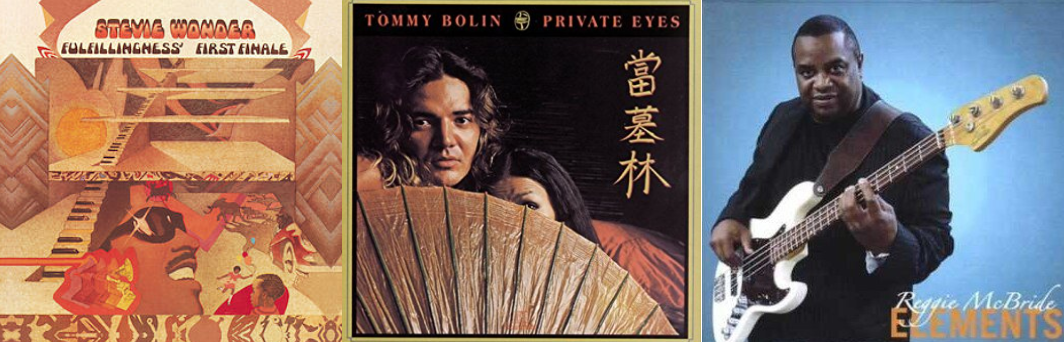
Aretha Franklin wanted him in her band when he was 14 years old. At 16 he was on the road with The Dramatics and James Brown. And at 19, Reggie McBride became a member of Stevie Wonder’s ensemble and played on the multiple Grammy Award winning classic Fulfillingness’ First Finale (1974).
A Detroit native, McBride absorbed the music of his hometown Motown and brought his unique combination of finger playing and slap technique to seminal sides by Rare Earth, Ry Cooder, Keb Mo, Funkadelic, Herbie Hancock, Phoebe Snow, Van Morrison, Minnie Riperton, David Lindley, Rod Stewart, BB King, Elton John (21 at 33, The Fox), and Rick Springfield, among many others.
On Tommy Bolin’s Private Eyes (1976) Reggie dispatched with any semblance of rock phrasing and plied gritty funk, R&B, and reggae lines which the late guitarist soared over.
Reggie’s 2005 solo album Element is a smooth jazz diamond in the rough.
Reggie McBride Sound & Vision…
Stevie Wonder:
“You Haven’t Done Nothing” https://youtu.be/0SEGHvLElxc
“Smile Please” https://youtu.be/TZGCP0W6DCg
“Higher Ground” Live on Beat Club https://youtu.be/XV1DK9tSHio
Tommy Bolin:
“Post Toastee” https://youtu.be/A7FOTBdbPN8
“Bustin’ Out for Rosie” https://youtu.be/9ua7_JS_F8I
“Sweet Burgundy” https://youtu.be/qako94KrCV0
Rare Earth:
Reggie bass solo https://youtu.be/WG260dL1NJM
“Midnight Lady” https://youtu.be/0SEGHvLElxc
Says bassist and KYBP Cub Reporter Joe Iaquinto “I love his tribute to Dee Murray on “Little Jeannie,” complete with cool double-stops…”
“Little Jeanie” https://youtu.be/kLS33TSzDag
Reggie “Element” https://youtu.be/B54DdXoU4CU
Billy Preston:
“Found The Love” https://youtu.be/V5XwKlfe8lc
“Do It While You Can” https://youtu.be/JJwN_a2bEf8
Van Morrison:
“You Gotta Make It Through the World” https://youtu.be/oCx-OJxuYuY
“Joyous Sound” https://youtu.be/JinEU3Q0HsM
Al Jarreau:
“Thinking About It Too” https://youtu.be/NgKk_dg9vOU
“Wait a Little While” https://youtu.be/2Sh0UZAFVGk
Minnie Ripperton “Perfect Angel” https://youtu.be/TZGCP0W6DCg


Courtesy Mott The Hoople Com
“They said I looked like a card carrier in drag!”
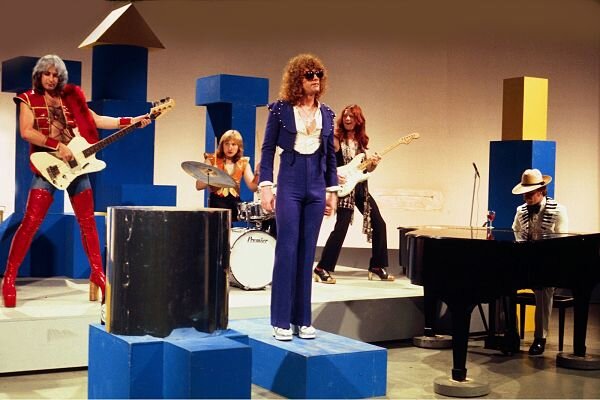
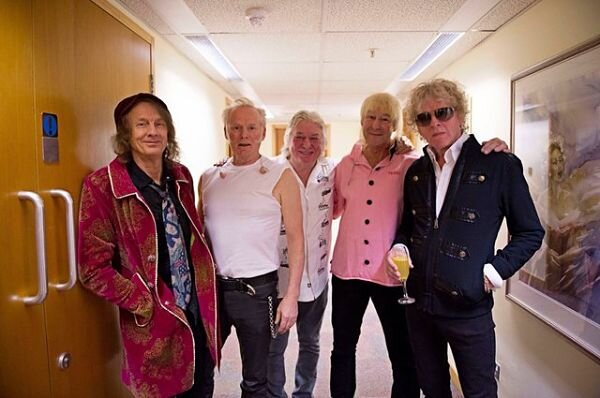
Renowned for his outrageous platforms, silver tinged locks, flashy haberdashery, and mighty Gibson Thunderbird which he painted a lustrous shade of white, the late Peter Overend Watts joyfully embodied the raucous, extravagant character of Mott the Hoople.
Akin to his sartorial splendor, Watts exuded a canny instinct for embellishing the Ian Hunter’s compositions with catchy, simple bass melodies as found in the Hoople’s rendition of Lou’s “Sweet Jane,” and such Ian Hunter – Mick Ralphs gems as “Drivin’ Sister,” “I’m a Cadillac,” “Whiskey Woman,” “Alice,” and “Sucker.”
Watts also excelled in-the-pocket as evidenced by his passages which underpin “Ballad of Mott the Hoople,” “I Wish I Was Your Mother,” and “Angel of Eighth Avenue.”
The Birmingham born bassist composed one of the Mott’s finest tracks “Born Late ’58,” and penned enjoyable rockers aplenty for the truncated Mott ensemble, most notably “By Tonight,” “Shouting and Pointing,” and “Stiff Upper Lip.”
Watts officially left the music business in 1980 following the British Lions endeavor with Mott Messrs. Buffin and Morgan Fisher.
And despite his not playing professionally for over thirty years – Pete’s skills were impressive on Mott’s reunion shows in 2009 and 2013.
I interviewed Pete for Huffington Post Books upon the publication of his tome The Man Who Hated Walking https://bit.ly/2ScEdaX in 2014.
They don’t make rock stars like Overend Watts anymore…

Peter Overend Watts Sound & Vision…
“Born Late ‘58” https://youtu.be/FqkrkEMTXMA
“Sweet Jane” https://youtu.be/GPa8GZAZJFc
“Drivin’ Sister” https://youtu.be/7uTLEPkbl7M
“Angel of Eighth Avenue” https://youtu.be/yJMHCm9swU4
“Stiff Upper Lip” https://youtu.be/tTMw11n3dDE
“Golden Age of Rock and Roll” https://youtu.be/YNmC-ZT-Eak


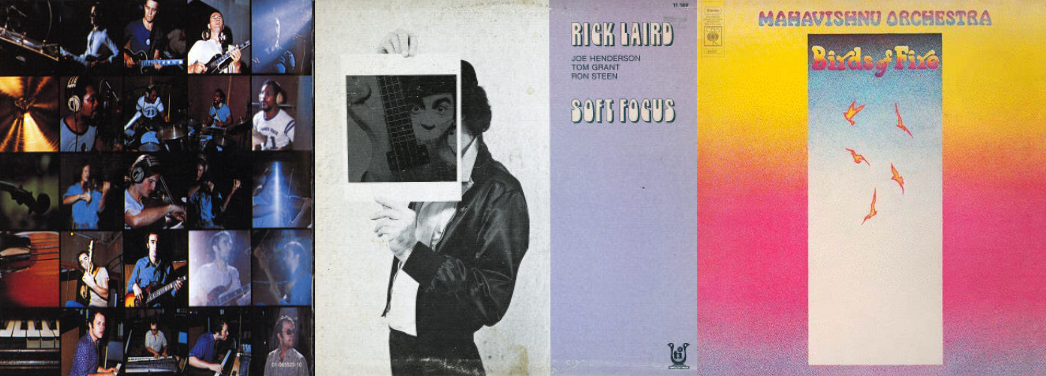
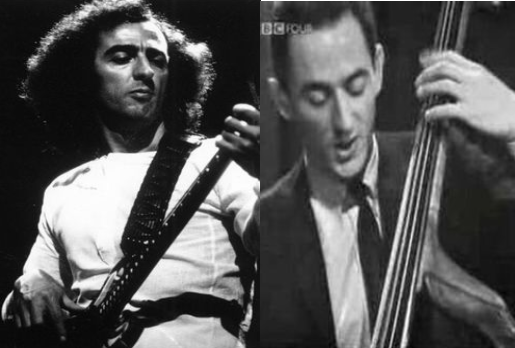
He anchored the first and most influential of many incarnations of John McLaughlin’s Mahavishnu Orchestra.
However before Rick Laird assumed rock star status on electric bass with the classic lineup of McLaughlin, Billy Cobham, Jan Hammer, and Jerry Goodman – he was an upright player who served as the house bassist at Ronnie Scott’s Jazz Club in London in the early 1960s. Rick backed many of most revered artists of the era, including Sonny Stitt, Buddy Rich, Sonny Rollins, Stan Getz, Chick Corea, and Wes Montgomery to cite a few. Rick’s credits as a sideman also include Eric Koss, Yusef Lateef, and Richie Cole.
A student at Berklee College of Music in Boston, the Dublin-born Laird’s fluid lines, warm tone, and tuneful solo break on “One Word” from the classic Birds of Fire (1973) album exemplified fusion at its finest – melding rock and jazz into a coherent, mind expanding listening experience – as opposed to a serving as a showy platform to display instrumental dexterity.
Among Rick’s voltage enhanced weapons of choice were the Fender Jazz, S.D. Curlee, and Dan Armstrong. Aside from his accomplishments as a musician, Rick forged a successful career as a photographer.
Rick Laird Sound & Vision….
“One Word” https://youtu.be/GWT6xt6QMpQ
“Now You Know” https://youtu.be/FQHNabnyyuM
Rick on BBC TV with the Victor Feldman Trio https://youtu.be/LLwvdv5oWVw


He is the last Gypsy standing….
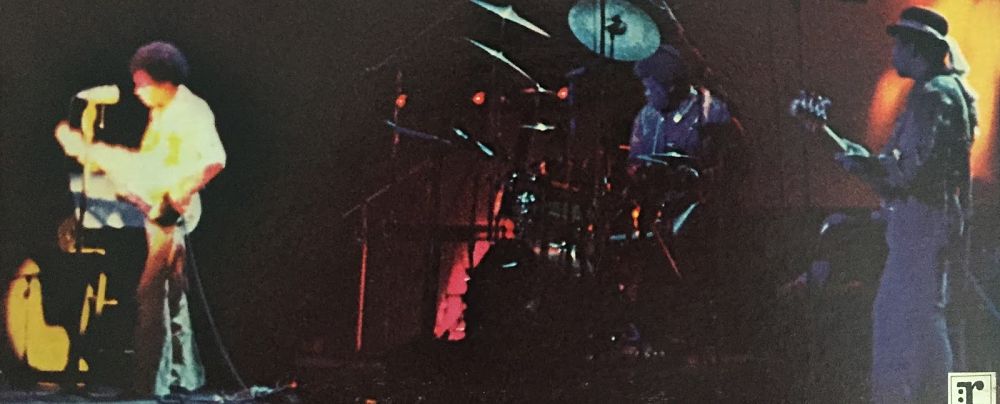
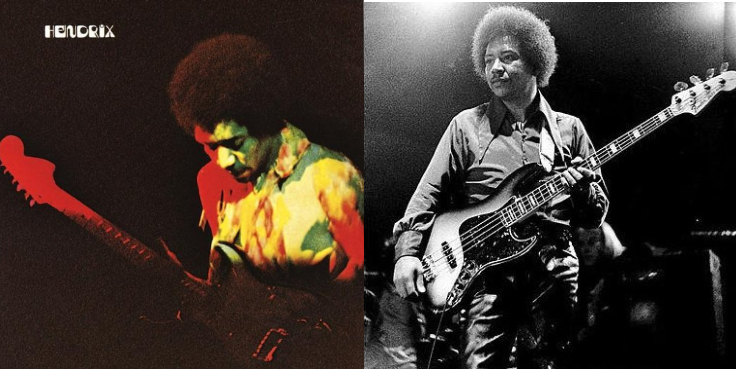
Billy Cox is a spectacularly soulful bassist who, to my ears, brought out the best in Jimi Hendrix as evidenced by the flawed-but-brilliant concert slab Band of Gypsys (1970) along with numerous studio/ live archival Hendrix releases with Cox featuring drummers Buddy Miles and Mitch Mitchell.
As Jimi frequently utilized odd time signatures and was given to multiple key modulations in a single composition – Cox possessed an amazing ear, impeccable dexterity – and an intuitive sense of where Hendrix was headed harmonically, rhythmically, and spiritually.
I understand that Cox and Hendrix collaborated on the direction of the bass passages. Their chemistry was as extraordinary as it was versatile – these cats could go anywhere! A finger player working a Fender Jazz bass, Cox coaxed a warm tone from his instrument with sufficient edge to navigate Jimi’s sonic forays.
Raised in the rich musical environment of Pittsburgh, Billy and Jimi initially collaborated in the United States Army 101st Airborne Division band in 1961. Following their discharge from military service, they worked the “chitlin circuit” and formed The King Kasuals Band in Nashville, which featured members who would later emerge as the Muscle Shoals horn section – playing on countless hit records.
When Hendrix split to find fame, fortune, and eventually misfortune, Cox honed his craft on sessions, club dates, and television shows including The Beat in Dallas, and Night Train in Nashville.
Jimi summoned his Army buddy – for musical and personal reasons – in 1969 as his life and career were spinning out of control. Cox became Jimi’s emotional and musical anchor. Hendrix disbanded the Experience for the more experimental Gypsy Sun and Rainbows collective which featured percussionists and a second guitarist. That ambitious yet shambolic ensemble, which appeared at Woodstock 1969, was eventually trimmed down to the tighter trio Band of Gypys with Billy and drummer Buddy Miles.
Jimi’s BOG waxed one official album during the guitarist’s lifetime – the aforementioned performance set which was captured on New Year’s Eve 1969/70 and released as a contractual obligation.
Over the years, Hendrix fans, journos, and the like debated the merits of BOG versus the landmark impact of the Jimi Hendrix Experience. Granted, Buddy Miles is an “acquired taste.” Just 22 at the time, Miles had already waxed two slabs under his own name. He was the exact opposite of Experience drummer Mitch Mitchell, favoring pocket grooves borne of funk and soul rather than busy, polyrhythmic jazz flavorings. Buddy was also an emotive improvisational vocalist whose gospel informed flair might have been a bit too much for rock audiences to digest at the time.
To my ears, JHE and BOG were apples and oranges – two totally different ensembles with a contrary modus operandi despite the fact that they shared the same bandleader.
BOG never had a chance to develop in the studio or on stage. Perhaps they were ahead of their time, perhaps it was just the hard realities of the marketplace. Pressure from “management” forced Jimi to re-vamp the Experience with Billy in the bass chair in place of the more rock-oriented Noel Redding. To my ears, Billy was not the optimum choice for a loud, rock trio – though he certainly had the chops and creativity to forge a hybrid rock / rhythm and blues bass approach ala John Paul Jones in Led Zeppelin.
Following Jimi’s passing, Cox can be heard on several posthumous studio and live recordings such as The Cry Of Love (1971), and Rainbow Bridge (1972) among others, and the numerous reissues of the New Year’s Eve concerts such as Band of Gypsys 2 (1986), Live at the Fillmore East (1999), Machine Gun: The First Fillmore East Show (2016), and the massive Songs for Groovy Children: The Fillmore East Concerts (2019).
Attention Billy Cox – Jimi Hendrix shoppers: for the best of Billy and Jimi on stage – I advise the original Band of Gypsys (Capitol 1970) live set. For the best of Billy and Jimi in the studio, I advise First Rays ofthe New Rising Sun (1997).
Billy waxed a solo side Nitro Function in 1971 which was a fine attempt to recreate the aesthetic of his work with Jimi. His additional outings were essentially Hendrix tributes and blues exercises.
Cox also recorded and toured with Charlie Daniels, and J.J. Cale among others wherein his soulful inclinations were unfortunately non-existent.
In the 1990s Billy, Buddy Miles and Mitch Mitchell began appearing in Hendrix repertory ensembles which garnered acclaim aplenty on the festival circuit and carried the magic of Hendrix to new, younger audiences. Several high-profile rockers, including Jack Bruce, participated in the projects.
Nowadays Cox appears with Experience Hendrix and owns a video production company.
As was the case with Noel Redding, many fans and music scribes conject on the what-ifs on the topic of Jimi’s bass players. Would more harmonically adventurous players such as Jack Casady, John Entwistle, Jack Bruce, or Sir Paul have pushed Hendrix to greater heights?
I think not. In my estimation, Billy Cox was the perfect player to commandeer Jimi’s next artistic move. His elastic passages afforded Jimi a foundation to further explore and expand the language of his instrument. Jimi’s artistry didn’t allow for additional soloists – there was no need to. In fact, when BOG grooved together they formed a singular force. Cox and Hendrix also shared similar backgrounds and paid their dues together. There is no substitute for shared experiences!
Fact is, the Experience with Noel and Band of Gypsys with Billy enabled Jimi to create his timeless canon. They were essential to his greatness. When it came to choosing the players, Jimi Hendrix got it right both times.
Billy Cox Sound & Vision…
Billy Cox anchoring Freddie King, Little Milton, Joe Simon, Venice Starks, The Beat Boys from Hoss Allen’s 1966 Rhythm & Blues Revue https://youtu.be/vsKCDTN6zEo
Band of Gypsys
“Power to Love” https://youtu.be/YQ3EWmdEki8
“Them Changes” https://youtu.be/BHU5Le-2d6k
“Power of Soul” https://youtu.be/W-M16K6UlQg
“Machine Gun” with interviews https://youtu.be/W-M16K6UlQg
Jimi Hendrix:
“Freedom” with Interviews https://youtu.be/VjOViXpa7Ns
“Foxy Lady” Live https://youtu.be/zv97c3W6lw8
“Voodoo Child (Slight Return)” Live https://youtu.be/qFfnlYbFEiE
“Purple Haze” https://youtu.be/cJunCsrhJjg
Billy Cox Nitro Function: “Powerhouse” https://youtu.be/YNkwEPYFaog

Photo courtesy of Deep Purple Com
By Thomas Semioli

Courtesy of Vigier

From the City University of New York, Queens College, session bassist and producer Harvey Brooks was the go-to player on the New York City studio scene in the 1960s and 1970s and helped to establish the instrument in modern popular music and jazz.
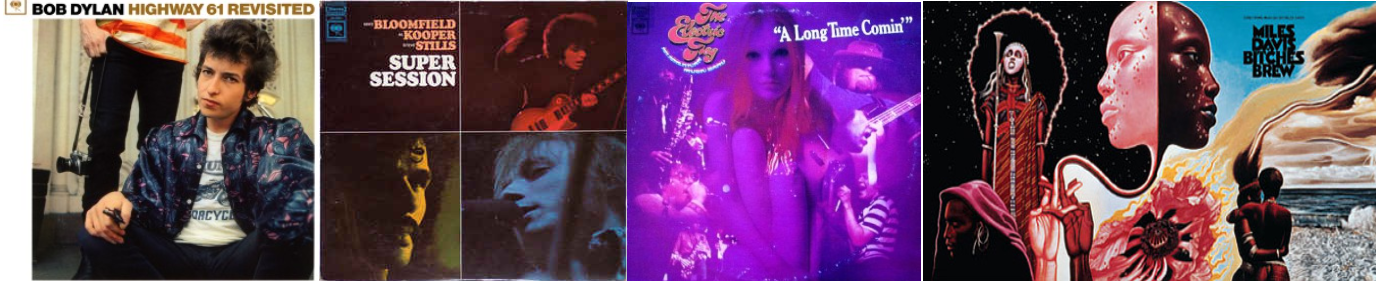
As the electric bass was essentially in its infancy, Brooks brought his understanding of blues, pop, soul, folk, and jazz to the instrument, appearing on such influential albums as Bob Dylan’s Highway 61 Revisited, Miles Davis’ Bitches Brew (with Dave Holland), Al Kooper’s Super Sessions, the Doors’ Soft Parade, and The Electric Flag’s A Long Time Coming, to cite a very select few few.
Harvey mastered the pocket, and no matter how far he extended the harmonic and rhythmic possibilities within a chord, he always managed define the changes. In the process he taught Miles to rock, added zest to Dylan’s libretto, and gave Mike Bloomfield the support he needed to extend the language of blues guitar.
HUFFINGTON POST / Tom Semioli: Harvey Brooks: Eleven Bass Players Who Belong in the Rock and Roll Hall of Fame https://bit.ly/2hOLzO3
Be sure to check out Harvey’s YouTube Video Blog and book “View from the Bottom.” Harvey’s weapons of choice are the Fender Precision and Jazz basses, with LaBella strings, and Ampeg amplification.

Harvey Brooks Sound & Vision…
Bob Dylan: “It Takes A Lot to Laugh, It Takes a Train To Cry” https://youtu.be/SN1ACh8lzHg
Electric Flag “Groovin’ Is Easy” https://youtu.be/Zl29ULtQKXc
Super Sessions “Harvey’s Tune” https://youtu.be/QUT_NQ4tbTI
Miles Davis “Bitches Brew” https://youtu.be/Q26k14yBAnM
The Doors “Touch Me” https://youtu.be/8lVqEchxIxw

Photo courtesy of Bad Company Com
Boz Burrell, bassist by Tom Semioli
Artists/Bands: Bad Company, King Crimson, Alvin Lee & Mylon LeFevre, Jon Lord, Pete Townshend & Ronnie Lane
Seminal Sides: Bad Company (1974), Straight Shooter (1975), Run With The Pack (1975) – all with Bad Company
Though Peter Overend Watts of Mott the Hoople was offered the gig first, the late Raymond “Boz” Burrell was the perfect choice for the iconic hard rock hit making machine Bad Company.
A former jazz crooner (The Tea Time 4, and The Boz People with Ian McLagan) who took up the bass at Robert Fripp’s behest as a member of King Crimson, the vastly underrated Boz plied his craft with innate simplicity abetted with a decidedly rhythm and blues disposition.
Dig Boz with Crimson “Ladies of the Road” https://youtu.be/1HPV5Gdq_q8
A fretless pioneer, Boz also waxed sides with Pete Townshend and Ronnie Lane (Rough Mix/1977), Alvin Lee and Mylon LeFevre (On the Road to Freedom / 1973), Jon Lord, Alexis Korner, and Chris Farlowe, among others.
Following his tenure in Bad Company, Boz worked with blues rock artist Roger Chapman, and most notably with Scottish blues belter Tam White, with whom he toured extensively until Burrell popped his clogs in 2006.
Among Boz’s weapons of choice included an Ampeg AMUB-1 Fretless bass, Fender Precision, Fender Jazz, MusicMan Stingray, a Lakeland 55-02 Five string, and a Fender Precision fretless.
When the original Bad Company reunited in ’99 (The Original Bad Company box set), Boz flexed his vastly improved harmonic chops on the five string!
Boz Burrell Sound & Vision:
Boz on the 5 String for “Shooting Star” 1999 https://youtu.be/huQRD_RZxP0
Boz on his composition “Gone Gone Gone” https://youtu.be/kc0G7kDqCRg
“Can’t Get Enough” Live https://youtu.be/7p9mzYB–uI
Boz with….
Alvin Lee & Mylon LeFevre “Riffin” https://youtu.be/vl9oR4uQPlc
Jon Lord “Hollywood Rock and Roll” https://youtu.be/wIHq714ywBg
Tam White “Save Me” https://youtu.be/QqfBcjOH4mo
Pete and Ronnie “Heart to Hang On To” https://youtu.be/uQ4PIFeofd4

Boz Burrell Coda from Lou Loudhailer, who owns one of Boz’s instruments: I bought it frorm a little shop in Camden Town in 1982. I saw it and thought wow that’s the bass for me – although I’d never played a fretless until then. It was about £200… after I bought it the guy in the shop said ‘You just bought Boz Burrell’s bass’ – so I didn’t know until I’d paid for it – I was a fan of Bad Company so I was happy with that! I’ve played it ever since. I read somewhere that Boz didn’t get on with it which is why he sold it. But I love it. It’s got an early serial number. Plays and sounds amazing. I bought a new Cutlass with a carbon graphite neck a few years later when I was in the Red Guitars and played that until about 3 years ago when I replaced it with a Caprice.