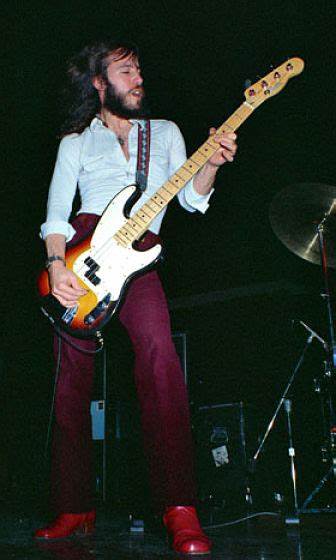
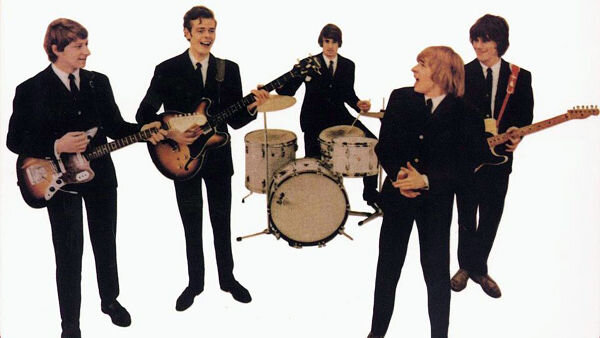
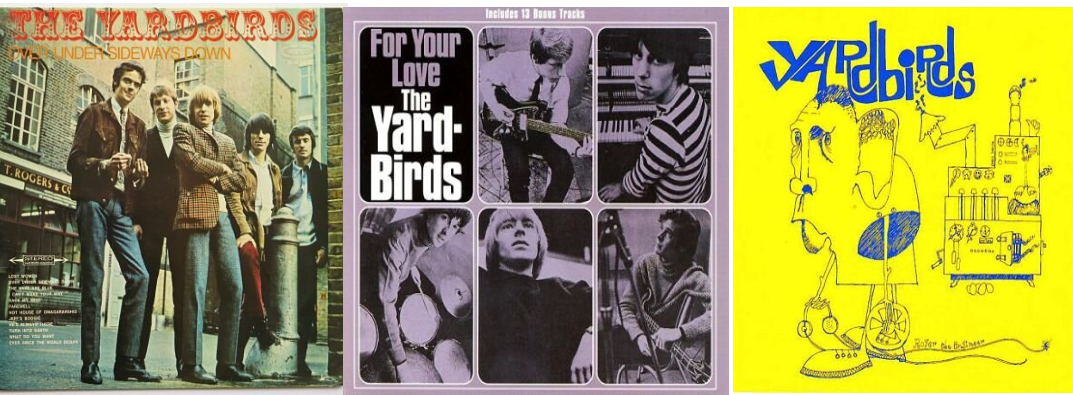
Paul Samwell-Smith (The Yardbirds)
By Thomas Semioli

He set the template for scores of players – including Kenny Aaronson, Sal Maida, and Joe Gagliardo – with a lifetime’s worth of bass riffs. When he put down the instrument, he forged an equally influential (and more high profile) career as a producer during the zeitgeist of the singer songwriter movement of the 1970s.

Cradling an Epiphone Rivoli, Paul Samwell-Smith’s decidedly aggressive motifs with The Yardbirds profoundly inspired generations of rockers spanning Bruce Springsteen, Aerosmith, and the original Alice Cooper band to cite a very, very, very select few.

As a founding member of The Yardbirds, Paul Samwell-Smith anchored  classics including “For Your Love,” “Over Under, Sideways, Down,” and “Heart Full of Soul” among others, which were a watershed meld of blues, pop, and psychedelic rock.

After Paul split from the group in 1966 – surrendering bass duties to Jimmy Page –  he turned to the producer’s chair guiding such artists as Renaissance, Cat Stevens (Mona Bone Jakon, Tea for the Tillerman, Teaser & the Firecat,  Catch Bull at Four, Buddah & The Chocolate Box), Carly Simon (Anticipation),  Chris De Burgh, and Murray Head, among others, on several of their finest recorded works.


Paul Samwell-Smith Sound & Vision

Dig Paul Samwell-Smith workin’ the pocket and walkin’ double time on multi-instrumentalist / bassist Graham Gouldman’s composition “Evil Hearted You.” https://bit.ly/2R4nUsE

Dig the Yardbirds on American television “For Your Love” https://youtu.be/HU5zqidlxMQ

Dig Kenny Aaronson in the 21st Century Yardbirds https://youtu.be/HBzIHJwJlt8

Dig Billy Sheehan talkin’ and riffin’ Paul Samwell-Smith https://youtu.be/GTZHEo9gY6I
Brian Wilson (The Beach Boys)

Courtesy of Beach Boys Com


By Thomas Semioli


His legacy and influence as bass guitar innovator and pioneer stands equal to James Jamerson, Sir Paul, Jaco, Jack Bruce, Duck Dunn, and Chris Squire – to cite a select few legends.  Perhaps the one reason why Brian Douglas Wilson is not (often) considered among the instrument’s elite is that his parts were mostly cut by studio bassists rather than himself. Regardless, Brian wrote ‘em!


We’ll leave it to the history books to discuss Brian the songwriter, conceptualist, producer, arranger,  collaborator, recording artist, bandleader, studio maestro, visionary…


Listen to any Brian Beach Boys track and behold the bass passages as songs within the songs. If you consider every Wilson composition a “mini opera” – as I do, then Brian’s bass parts emerge as operas within the operas!


A student of Cole Porter, George Gershwin, and all things Phil Spector – in short, Brian expanded the language of the instrument by combining its role as a harmonic and rhythmic foundation with that of melodic catalyst.


Volumes have been written dissecting and analyzing, Brian’s compositional methods, song forms, and influences. To fully appreciate Brian’s work as a bassist, it would certainly help if you have a working knowledge of music theory and harmony. If not, simply delve into the tracks and allow yourself to absorb the true genius of Brian Wilson the bass player.


Brian Wilson Sound & Vision:

“Good Vibrations” https://youtu.be/rQ-UFKxDq5o

“Sloop John B.” https://youtu.be/MWJXTdCVsKI

“Wouldn’t It Be Nice” https://youtu.be/3y44BJgkdZs

“Surfer Moon” https://youtu.be/hn9yozBz9Ys

“When I Grow Up to Be A Man” https://youtu.be/S3E0TSyu-Gg

“God Only Knows” https://youtu.be/u90beUXTKwo


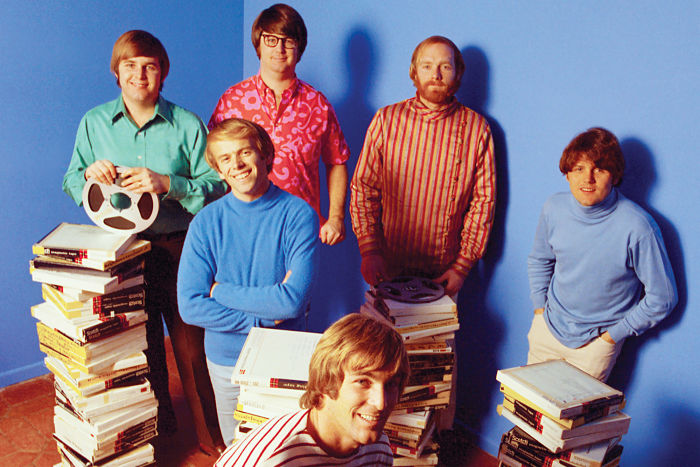
The Beach Boys pose for a portrait – Bruce Johnston, Dennis Wilson, Mike Love, Brian Wilson, Al Jardine, Carl WilsonCredit: Capitol Photo Archives

Bob Cranshaw (Sonny Rollins, Buddy Rich)

By Thomas Semioli

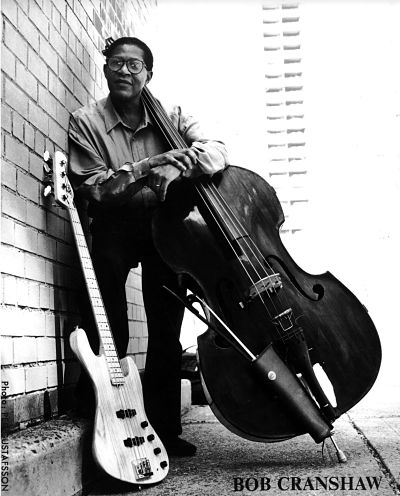
Among the first established upright cats to embrace the electric amid a storm of criticism from the jazz police, Bob Cranshaw was renowned for his long association with Sonny Rollins. In fact, Cranshaw gravitated to the instrument as a result of a serious back injury in an automobile accident.


A prolific recording artist and sideman, he is among the instrument’s most recorded players on upright and electric.  Bob’s career spanned Tony Bennett, Buddy Rich, Paul Simon, George Shearing, Frank Sinatra, Grant Green, Judy Collins, Wayne Shorter, Freddie Hubbard, and Joe Henderson to cite an extremely select few.


Cranshaw served as the first house bass player for Saturday Night Live from 1975-80 and was the musical director for The Dick Cavett Show in the 1980s.


An activist for the Musician’s Union, Bob was a strong campaigner for artists’ rights regarding pensions and royalties until his passing in 2016.


Bob Cranshaw Sound & Vision

With Paul Simon “It Was a Sunny Day” https://youtu.be/Kz9o3tf9lmk

Bob on stage with Sonny Jazz Jambouree 1980 https://youtu.be/QWE83meaNME

With Lee Morgan “You Go to My Head” https://youtu.be/dMsBCDVXHGc

With Buddy Rich “How Long” https://youtu.be/jtFmLwdUqnw

Victor Wooten (Bela Fleck & The Flecktones, SMV)

Courtesy of Victor Wooten Com

By Thomas Semioli

“Any good bassist’s first task is to help make your group sound better.”

He is considered the “Michael Jordan” of the instrument! An author, composer, educator, entrepreneur, recording artist, and founding member of the groundbreaking blu-bop (as in bluegrass and be-bop) ensemble Bela Fleck and the Flecktones- Victor Lemonte Wooten is recognized as one of the world’s preeminent electric bassists.

Inspired by Larry Graham, Bootsy, Stanley Clarke, and Willie Weeks – Wooten’s command of numerous bass techniques along with his signature double-thumb method is unparalleled.

Born to military parents who were constantly relocating during his youth, Victor’s siblings were all musicians – and they needed a bass player. Hence at the age of 2, young Victor was on the bandstand with his brothers before he could sit up straight in a chair. Wooten is quick to emphasize the diversity of 1960s radio stations, the support of his mom and dad, and his brothers ability to play music in a wide array of genres and styles to be among his most important influences.

In addition to his work as a performer and recording artist, Victor is a prolific educator. He founded Bass/Nature Camp in 2000, which morphed into Victor Wooten’s Center for Music and Nature. Wooten is also an instructor at the Victor Wooten/Berklee Summer Bass Workshops in Boston along with bassist Steve Bailey.

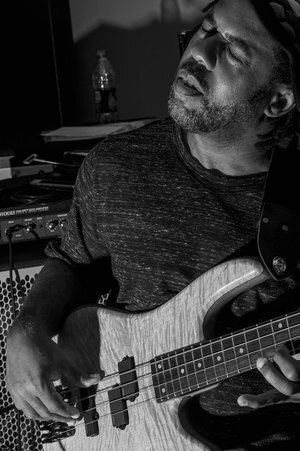
Victor favors Fodera basses, including his signature model. A multi-instrumentalist and upright player, Wooten is also a cellist and will occasionally perform on the instrument with the Flecktones.

Victor Wooten Sound & Vision:

Bela Fleck and the Flecktones:

“Sex in a Pan” live https://youtu.be/lZQeoT6rQNo

“Sinister Minister” https://youtu.be/w9XDUBDMNuk

With SMV (Stanley Clarke, Marcus Miller, Victor Wooten) Live 2009  https://youtu.be/p2A1JuPUHlE

Solo Victor:

“U Can’t Hold No Groove” https://youtu.be/gfErjPvJrwQ

“Me and My Bass Guitar” https://youtu.be/ek_pOuwjW-Y

“Victa” https://youtu.be/UnKw136PP38

Jeff Berlin (Bruford)

Courtesy of Jeff Berlin Music Group Com

By Thomas Semioli


“Jeff Berlin is the best bass player on the planet!” Geddy Lee


“He’s …The best bass player I’ve ever heard.” Jack Bruce


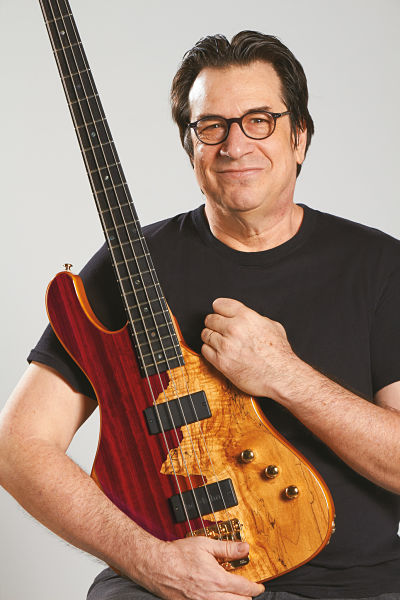
Yet another influential player from Queens County New York, Jeff Berlin is not only a master bassist, recording artist, music journalist, podcast host, and composer – he is an acclaimed educator whose books, lectures and videos are essential for serious bassists. (www.JeffBerlinMusicGroup.com)


Jeff’s journey as a musician began with violin at age 14. Then, like sooooo many of his generation, he saw The Beatles on The Ed Sullivan Show and….the rest, as we say, is history.


Jeff’s big break came in 1977 when Yes drummer Bill Bruford tabbed him for his solo ensemble. The Bruford collective waxed four seminal jazz fusion sides which garnered attention aplenty among rock and jazz fans, and aspiring bassists: Feels Good To Me (1977), One of a Kind (1979), The Bruford Tapes (1980), and Gradually Going Tornado (1980) which prominently featured Jeff on bass – and vocals.


A prolific recording artist Berlin exemplifies everything that is engaging in jazz fusion – his supportive passages, improv, and melodic prowess have inspired players for generations.


Much has been written (and said) about Jeff’s strong opinions regarding his views on being a musician, and the craft of bass playing – however I find Jeff to be spot on in many instances. Plus, his resume speaks for itself.


For those of you keeping sideman score, dig a sampling of Jeff’s collaborative credits which include Patrick Moraz, Patti Austin, Ray Barretto, David Liebman, the aforementioned  Bill Bruford, Passport, Allan Holdsworth, Janis Ian, k.d. Laing, and Ritchie Kotzen, to cite a very select few.


Jeff Berlin Sound & Vision

With Bruford live 1979: https://youtu.be/nYgD8x12kfE

With Patrick Moraz “Rise and Fall” https://youtu.be/pHrKrFBnDq0

Jeff Berlin Music Group “Cissy Strut” https://youtu.be/GfSEz-F48jE

Bruce Palmer (Buffalo Springfield)

Courtesy Buffalo Springfield Com

By Thomas Semioli


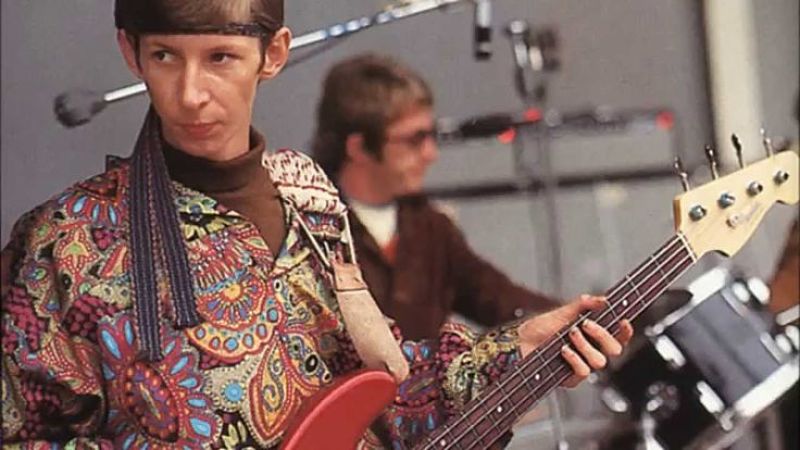
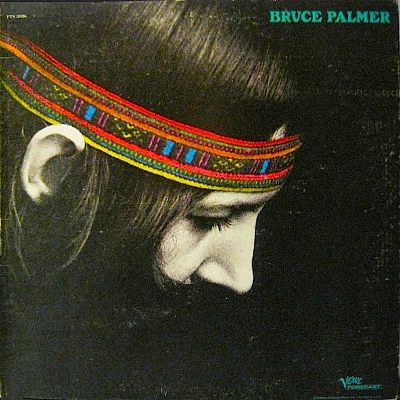
Derailed by substance abuse, Bruce Palmer’s career could have been much more – as evidenced by his lone solo slab The Cycle Is Complete (1971) wherein the multi-instrumentalist / bassist turns in a turns in a rather engaging and eccentric jazz, psychedelic, new age song-cycle comprised of extended electric Miles- like jams and improv.


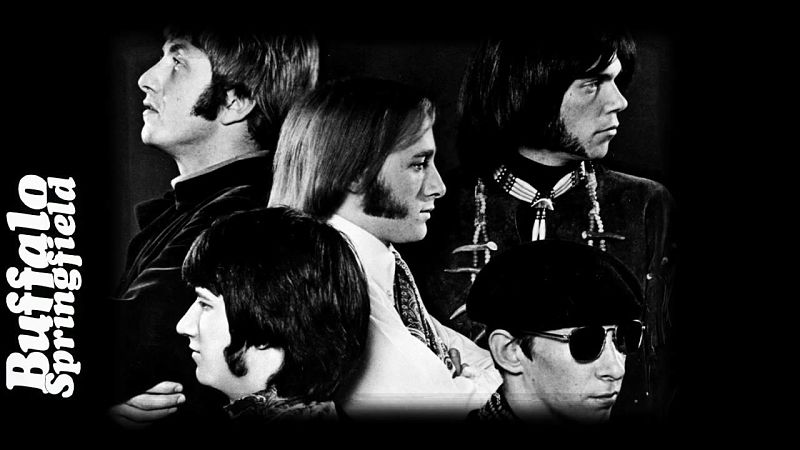
His first band of renown was Jack London & The Sparrows, a smokin’ rhythm and blues outfit that featured a cat who went on to fame and (mis)fortune as Rick James. Bruce assumed the bass chair from RJ’s player Nick St. Nicholas, later of Steppenwolf – and they took flight as the Mynah Birds, adding another Canadian, guitarist, singer, and songwriter Neil Young. The band scored a deal with Motown which fell apart when James was busted for going AWOL from the United States Navy. Neil and Bruce headed to Los Angeles wherein they formed Buffalo Springfield and the rest, as they say, is history…


Though Stephen Stills and Young were the primary composers, according to Stills and Atlantic Records honcho Ahmet Ertegun – Bruce emerged as the rhythmic glue that held the band together. However drug busts and deportations in ’67 and ‘68 caused Palmer, a Canadian, to leave the band on two occasions. The troubled bassist was eventually replaced by Jim Messina and bassist Jim Fielder, later of Blood, Sweat & Tears.


Palmer failed an audition with CSN&Y and Neil tried in vain to get Bruce in playing condition for his early 80s Trans tour, but to no avail. Bruce Palmer passed in 2004.


Bruce Palmer Sound & Vision


“For What It’s Worth” https://youtu.be/1eD-8NTwP9I


“Sit Down I Think I Love You” https://youtu.be/bLvKvEeyNtA


The Cycle Is Complete https://youtu.be/yCl2zI8c-D4


Rick Price (The Move, Wizzard)

By Thomas Semioli

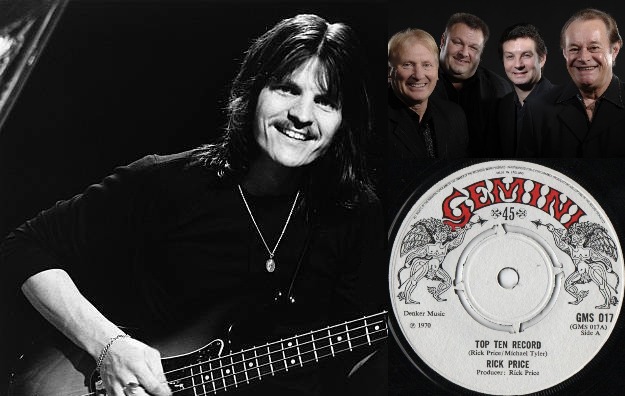
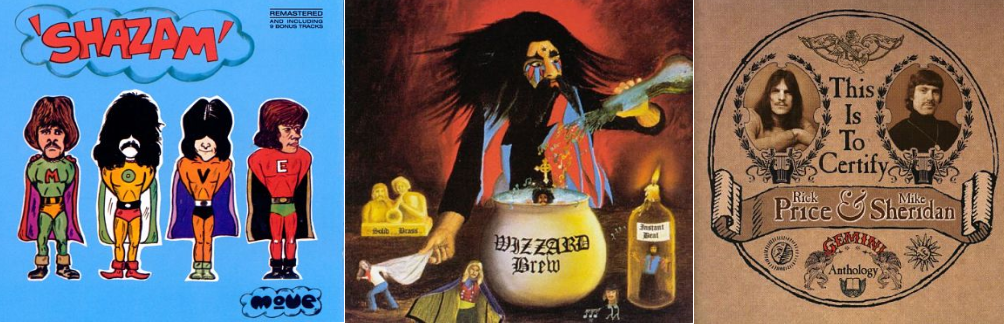
Rick Price joined The Move in 1969 just in time promote their classic slab Shazam (1970) which featured one bass track cut by Tony Visconti.


An accomplished singer and composer, it’s not certain if Price actually waxed any tracks on Shazam, and his tracks on the Move’s final platter Message from the Country (1971) were allegedly wiped out and re-rendered by Roy Wood. Hence Looking On (1970) was his sole recorded work with the band wherein Price traverses prog, pop, experimental, and what was soon to be considered “heavy metal.”


After splitting from the band, which morphed into the Electric Light Orchestra,  Price joined his ex-Move mate Wood in the experimental glam pop collective Wizzard, wherein he cut two discs amid the war-paint, freakish costumes, and pageantry.


Rick waxed a solo side, and also collaborated with Mike Sheridan on various recordings magnificently traversing pop and art-rock as captured on the archival This is To Certify (1970).

Rick Price Sound & Vision…


“Top Ten Record” https://youtu.be/qW0mp_BA5Yg


The Move:


“Turkish Tram Conductor Blues”  https://youtu.be/vUo1eGOwX-k


“Feel Too Good” https://youtu.be/n5iW-PGAkYY


Wizzard:


“See My Baby Jive” https://youtu.be/y7F25rNsnyo


“Are You Ready to Rock” https://youtu.be/5aaUfYYcYFA


Sheridan & Price “Sometimes I Wonder” https://youtu.be/wiPHeOiHCBM


Rick Rosas (Neil Young, Joe Walsh)

By Thomas Semioli


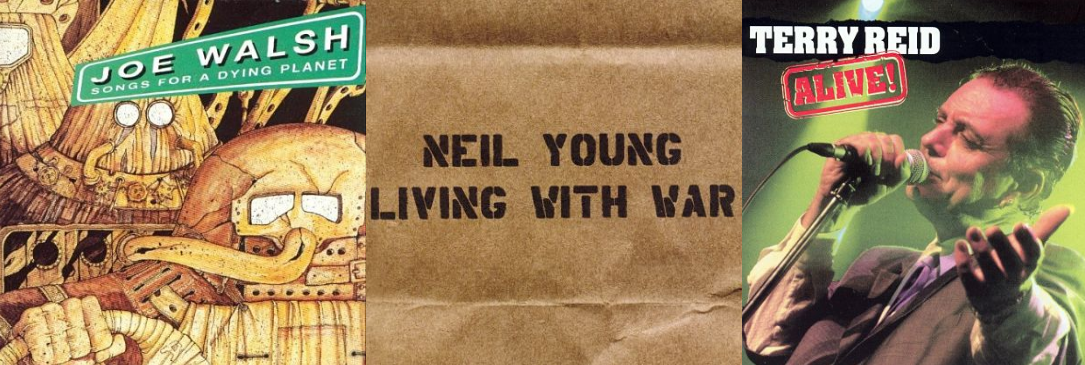
To my recollection, he was dubbed “Rick the Bass Player” on the Howard Stern Show during one of several raucous Joe Walsh appearances.*


 Among the top sidemen on the LA scene until his passing in 2014, Rick Rosas was an exemplary pocket / song player whose list of credits include several laudable slabs and tours with Neil Young (including CSN&Y, as a sub for Billy Talbot in Crazy Horse, and for a Buffalo Springfield reunion), Joe Walsh, Johnny Rivers, Terry Reid, Etta James, Ron Wood, and Johnny Rivers to cite a select few.


Rick appeared as “Buster” the bass player in Jonathan Demme’s final film Ricki and the Flash (2015).

*According to bassist Bill Cherensky Prior to Howard Stern, Joe Walsh had a show on FM radio (WPLJ, I think). He was Rick The Bass Player on there. The funniest thing I ever heard was his brilliant skewering of McCartney’s Silly Love Song. I mean, it takes talent to use bass playing as satire!


Rick Rosas Sound & Vision:

Joe Walsh “The Gamma Goochie” https://youtu.be/SVo8QQelhvU

Neil Young “Living With War” https://youtu.be/P5tNjdgLqws

Live with Terry Reid and Waddy Wachtel “You Don’t Know” https://youtu.be/C2OG7FXht6E


Rick Danko (The Band)

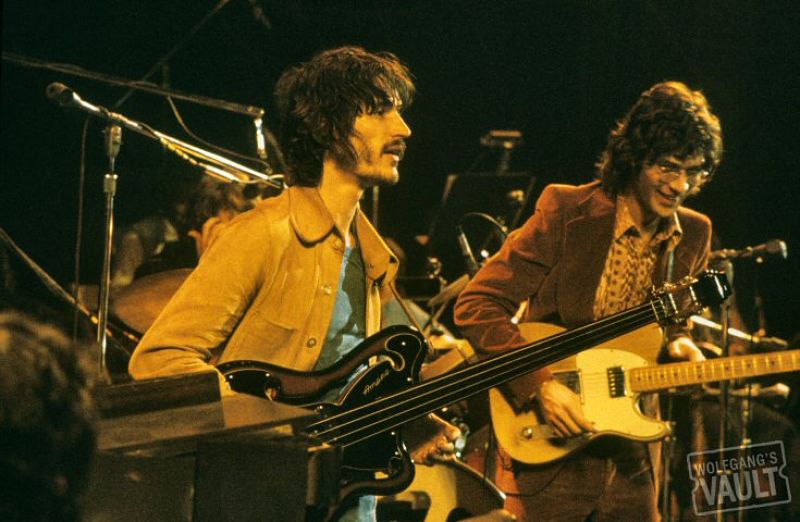
Courtesy of Wolfgang’s Vault

By Thomas Semioli


“I don’t play bass, I just fill space!”


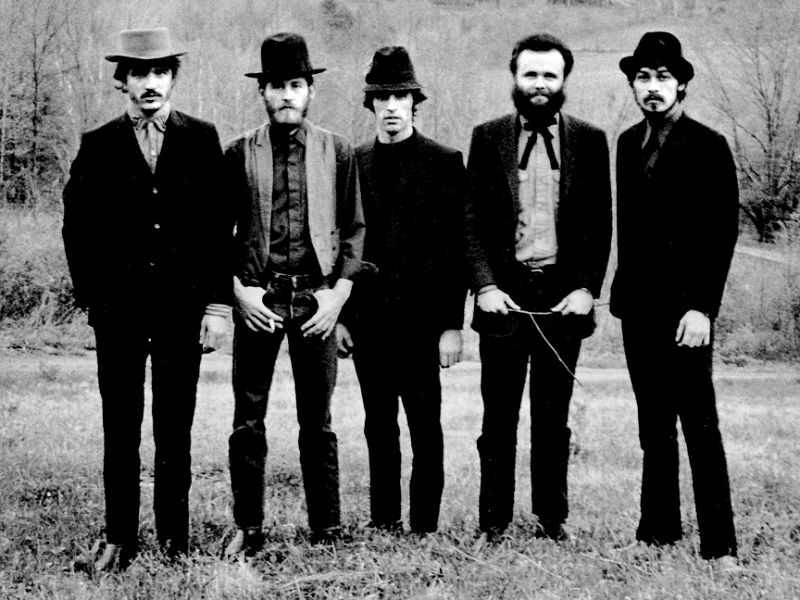
Along with drummer Levon Helm, Richard Clare Danko anchored one of American music’s most potent and influential ensembles: The Band.


Whereas most bassists tend lock in with the kickdrum and go with the flow, Danko’s bass passages defied convention, dancing betwixt the melodies and rhythms forged by Helm, guitarist Robbie Robertson, and keyboardists Richard Manuel and Garth Hudson.


Adept on guitar, mandolin, upright, cello, accordion, trombone, banjo, piano, and fiddle: Danko was also an accomplished vocalist and composer. Akin to Johnny Cash and Billie Holiday, you could feel the weight of the world in Rick’s impassioned vocal style – which directly translated to his bass playing.


His greatest work was in the company of his Band mates. Their ten studio slabs (with and without Robertson), archival, and live platters are essential. Whether they realize it or not, every Americana artist and ensemble owes a debt to Rick and The Band that can never be repaid.


Not to be overlooked is Rick’s extraordinary body of work with The Band’s mentor Bob Dylan. Throughout the grooves of Planet Waves (1974), Before the Flood (1974), and The Basement Tapes (1975) and assorted vault releases, Danko served as Bob’s most formidable harmonic and rhythmic foil.


Though Danko waxed several concert and collaborative platters, his true signature solo outing was his eponymous 1977 gem, which was overlooked during the punk era zeitgeist. Though weary from his tenure in The Band, Danko was still a force to be reckoned with. Sadly Rick’s career was beset by personal problems and substance abuse, passing at the age of 56 in 1999.


Rick’s weapons of choice were equally legend. No matter what instrument he chose, Danko’s rich tone was unmistakable. Among his tools of the trade was the Fender Jazz which he used on the legendary Dylan 1966 Tour, Music From Big Pink (1968) and The Band (1969). Rick’s command of the fretless Ampeg AMUB is astonishing, given the fact that he sang and played countermelodies simultaneously. Danko also commandeered a fretted Ampeg bass, an Ampeg baby electric upright, and several Gibson Rippers which featured custom pick-ups. 


Rick Danko Sound & Vision


Rick Danko, The Band, The Staples Singers “The Weight” https://youtu.be/TCSzL5-SPHM

With The Band

“Stage Fright” https://youtu.be/NZMfZe7OFFk

“King Harvest Has Surely Come” https://youtu.be/yeKY5PUMgvQ

“Acadian Driftwood” https://youtu.be/GoV52WsmDG4

“Look Out Cleveland” https://youtu.be/9igu3Ht3Jvs

“Life is a Carnival” https://youtu.be/a2L7SrUWZWY

“A Change is Gonna Come” https://youtu.be/byqq8iqKZv8

With his Bobness:

“Something There Is About You” https://youtu.be/mtfyuYKYO4M

 Solo Rick:

“What a Town” https://youtu.be/sMNjhzBh7k0

“Brainwash” https://youtu.be/rzz26zGFQgQ


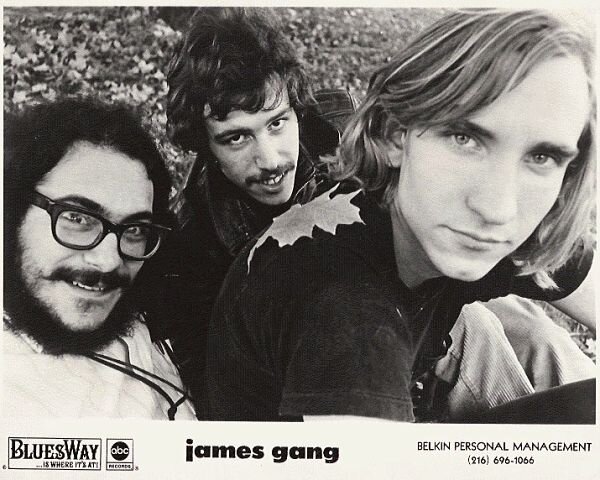
Dale Peters (The James Gang)


Among the heroes of the classic rock era, the James Gang brought attention to two bona-fide guitar heroes: founding member Joe Walsh, and the late Tommy Bolin.


Bassist Dale Peters, who came aboard for the band’s definitive platter Rides Again (1970), was a versatile player who also composed, sang, and doubled on keys, guitar, and percussion.


To my ears, Peters’ extended bass improve as heard on “Lost Woman” from Live In Concert (1971) proves that excess is not necessarily a bad thing!


From KYBP Readers:


Dale, thanks for all the great bass lines. I’m still learning from your playing 35 years later. Dan O’Brien


“My Door Is Open” has the best bass track of all time. Absolutely the most overlooked track in ROCK AND ROLL HISTORY! The drummer banged it out pretty good too. I imagine these guys had a lot of fun playing this song together. Loji


Dale Peters Sound & Vision…


“My Door Is Open” https://youtu.be/m5eV7SgoNIY


“Lost Woman” https://youtu.be/zcap1-J-V58


“Walk Away” https://youtu.be/zo0vBdlWQs0