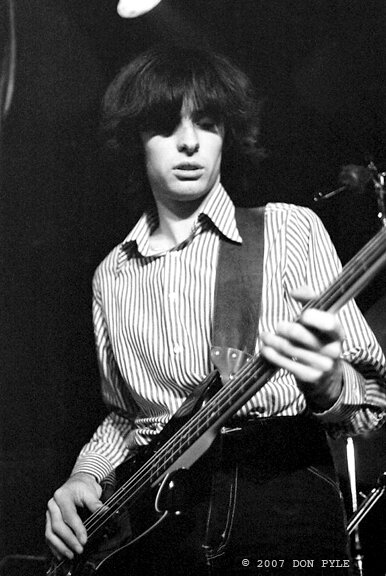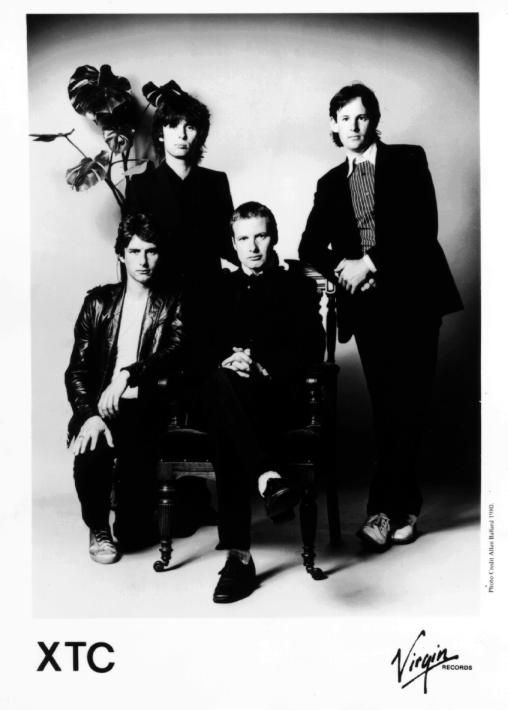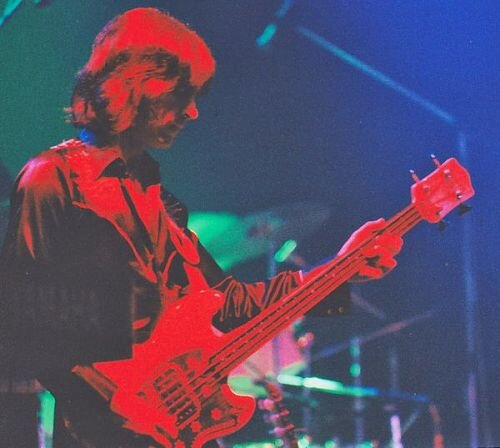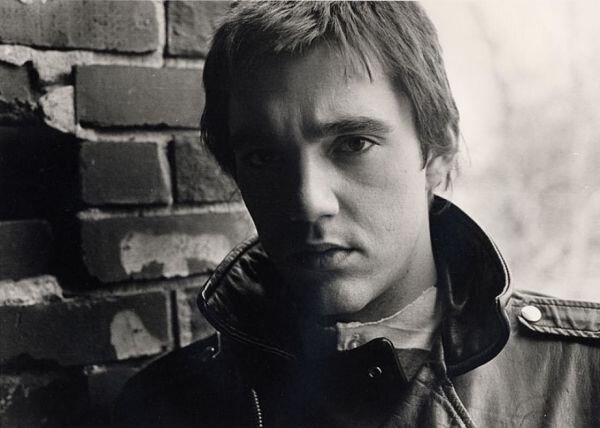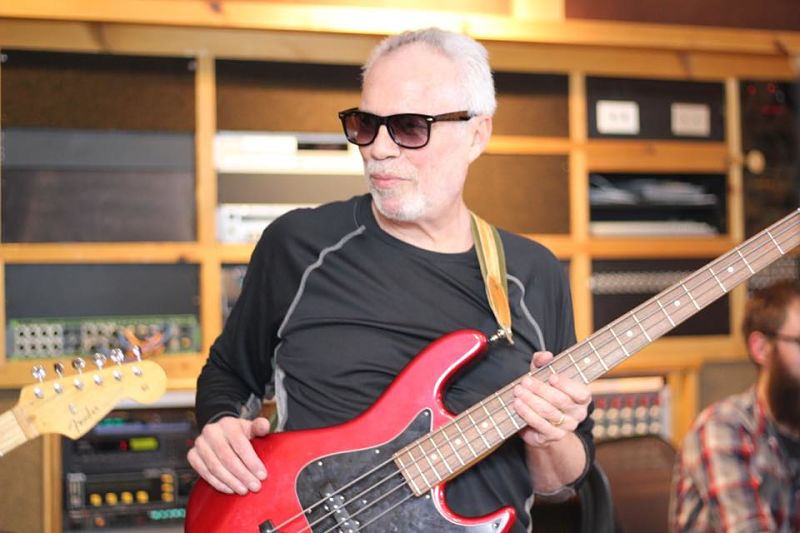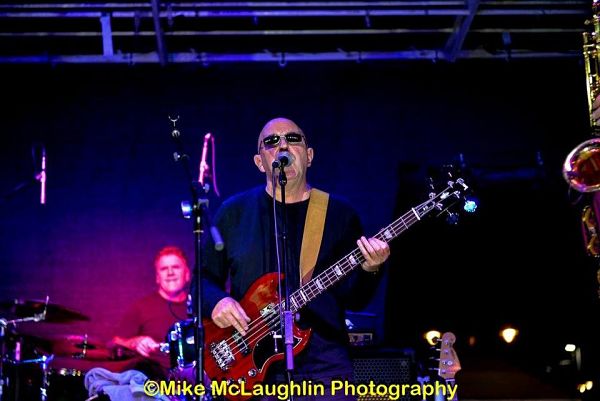
Colin Moulding (XTC)

Photo by Don Pyle – Courtesy of Ape UK Net

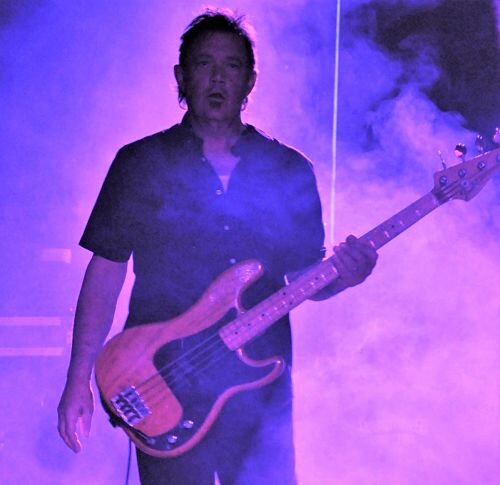
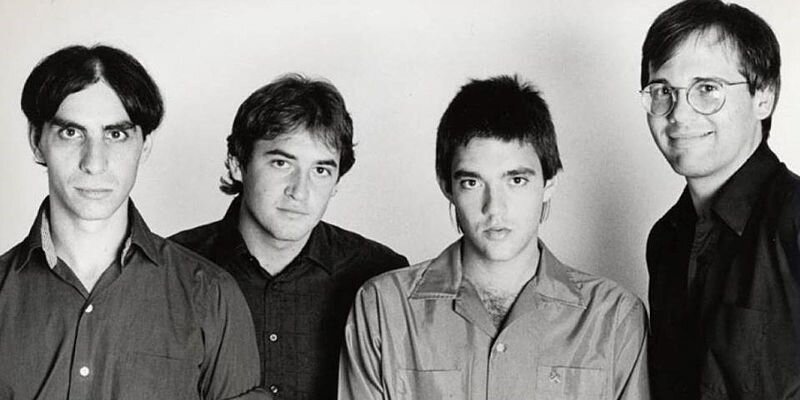
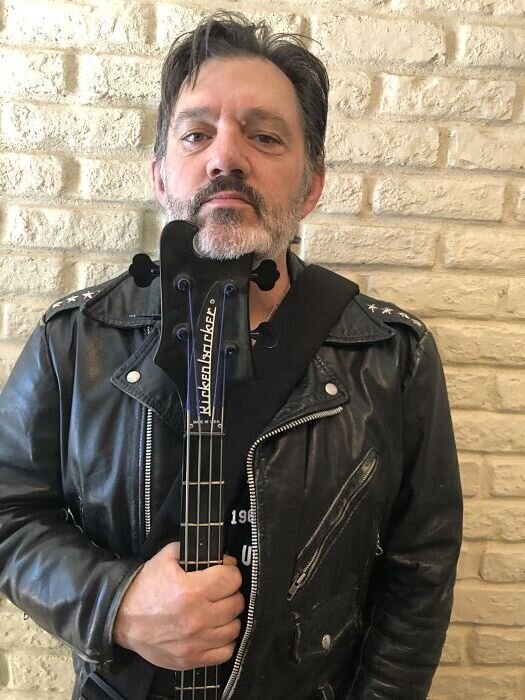
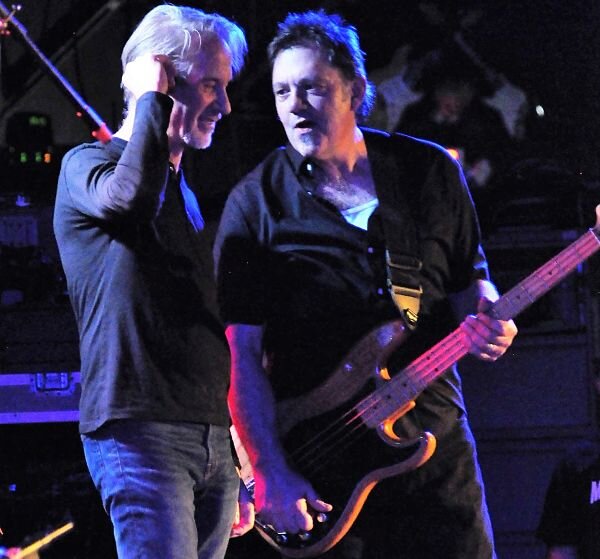
Colin Moulding’s bass artistry within the context of XTC – a multifaceted pop rock collective which he founded with Andy Partridge – is testimony to the fact that a bassist can play any note over any chord as long as it has a purpose!  


A self-taught player, a prolific composer and vocalist – Moulding’s approach to the instrument seamlessly melds supportive and countermelodic passages akin to Sir Paul, Brian Wilson, and Chris Squire, to reference three icons.


From XTC’s power punk beginnings as evidenced on White Music (1978), their forays into mainstream song-craft as found on Black Sea (1980) and English Settlement (1982), on through to their psychedelic pop masterpieces Skylark (1986), Oranges & Lemons (1989), and Nonsuch (1992) – and the band’s trippy side-project The Dukes of the Stratosphear – Colin and XTC  combine The Kinks’ intelligent British disposition with The Beatles and Beach Boys mastery of melody and studio recording.


Methinks if XTC had not refrained from touring early in their career, they would have achieved enduring, worldwide commercial success.


In 2017 Colin and former XTC drummer Terry Chambers under the moniker of TC& I waxed a self-titled EP and commenced to live performances.


Colin Mounding NOTES FROM AN ARTIST Interview with co-host David C. Gross 


Colin Moulding Sound & Vision…


With XTC:

“Making Plans for Nigel” https://youtu.be/mfsYSPCNWCw

“Senses” https://youtu.be/hzGfKu6_loI

“Summer Cauldron” https://youtu.be/HJQnaMWlQdQ

“Generals & Majors” https://youtu.be/p-JeQduJ0f8

“Mayor of Simpleton” https://youtu.be/5Da9sc6YDBo

“Ballad of Peter Pumpkinhead” https://youtu.be/pYupSHWEJxA


With Dukes of the Stratosphere:

“My Love Explodes” https://youtu.be/HfWDNwdjm60


With TC & I:

“Scatter Me” https://youtu.be/Zkh_0ejs12Y


John Gustafson (Roxy Music, Ian Gillan)

John Gustafson_opt_opt (1).jpg John Gustafson_opt_opt (1).jpg

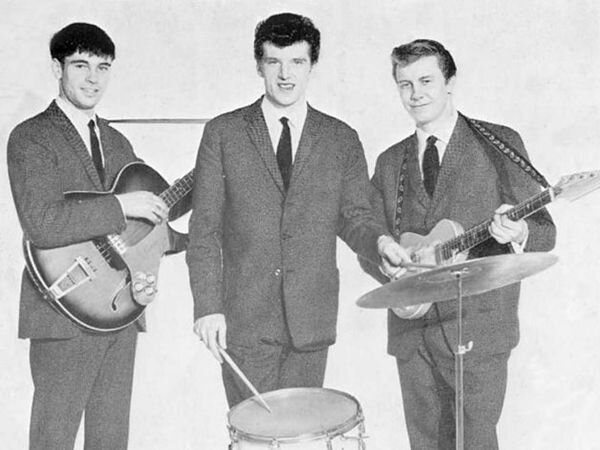
A contemporary of the Beatles by way Liverpool ensembles such as The Big Three, which were managed by Brian Epstein on the recommendation of John Lennon, and The Merseybeats, the late John Gustafson was among the classic rock era’s most versatile and in-demand bassists / vocalists as a band member, session cat, and collaborator.


Gustafson excelled at plying inventive passages in a wide array of styles as evidenced by his work with the jazz-fusion incarnation of the Ian Gillan Band. John was also a groove master with Roxy Music, working the pocket on such seminal sides as Stranded (1973), Country Life (1974) and Siren (1975), including Ferry’s signature composition “Love is the Drug.”


An accomplished singer and solo recording artist, John was the voice of “Simon Zealotes” on the original Jesus Christ Superstar (1970) and rendered the vocals to “Watch Out for the Bat Now”  for Roger Glover’s  rock opera The Butterfly Ball and the Grasshopper’s Feast (1974). Gustafson also anchored scores of seminal sides with Quartermass, Kevin Ayers, Ian Hunter, Rick Wakeman, Yvonne Elliman, Gordon Giltrap, Phil Manzanera, Steve Hackett, and Shawn Phillips, to cite a very, very select few.


John Gustafson Sound & Vision…


The Merseybeats “I Think of You” https://youtu.be/xroTLNvW2D4


The Big Three “I Got It” https://youtu.be/X0sJ8tVsHm0


Jesus Christ Superstar “Poor Jerusalem” https://youtu.be/VYfAIt1spGo


Quartermass “One Blind Mice” https://youtu.be/dWyIoBzaPAg


Ian Gillan “Live at the Rainbow” 1977 https://youtu.be/p9oElP5QVpQ


Roxy Music “Love Is The Drug” https://youtu.be/LIMJAuKl9Ko


“Watch Out for the Bat” from Butterfly Ball live 1973 https://youtu.be/dhiHrtRl1bo


With Ray Fenwick “Tight White Shirt” on bass and vocals https://youtu.be/7r317_RwVQk


Ian Hunter “Lounge Lizard” https://youtu.be/lQ7Mm_TkJOE


Says Paul Page, Ian Hunter and The Rant Band bassist: He did the bass track on “Lounge Lizard” from the 1st IH solo album. I’m still intrigued by it whenever it pops up on the set list and I actually borrowed elements from his version when we did the MTH version for the MTH ‘74 shows. It’s just so slippery and groovy.

The Big Three The Big Three

The Big Three

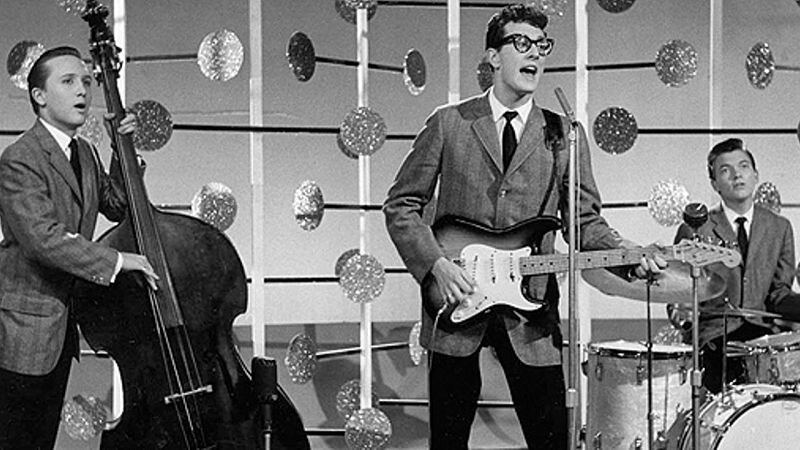
Joe B. Mauldin (Buddy Holly & The Crickets)

Imagine a world sans Buddy Holly and The Crickets – not gonna happen!

Among the greatest influencers in the history of rock ‘n’ roll – including a group of Liverpool lads who amended their moniker from The Quarrymen to “Beetles” in homage of Charles Hardin Holly’s agile collective – bassist Joe B. Mauldin and drummer Jerry Allison set the enduring template of the rock ‘n roll rhythm section as it exists today – working the pocket with fervor and melody.

Following Buddy’s tragic death in 1959, Maudlin continued with various incarnations of The Crickets, and later worked as a recording engineer at Gold Star Studios in Los Angeles.

The Rock ‘n’ Roll Hall of Fame afforded the late, great Joe Mauldin and The Crickets their due honor in 2012 by special committee.

“Peggy Sue” https://youtu.be/bfu_gfPBPWc

“That’ll Be The Day” https://youtu.be/iL5oeiLv4aY

“The Crickets” Baby My Heart https://youtu.be/9mq-GDsDqNE

Buddy Holly & The Crickets 1958_opt.jpg Buddy Holly & The Crickets 1958_opt.jpg

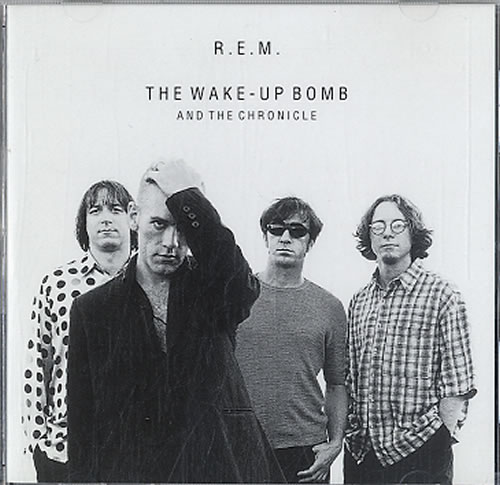
Mike Mills (R.E.M., Hindu Love Gods)

Mike MIlls.jpg Mike MIlls.jpg

“Mott the Hoople and the game of life….yeah, yeah, yeah, yeah…”


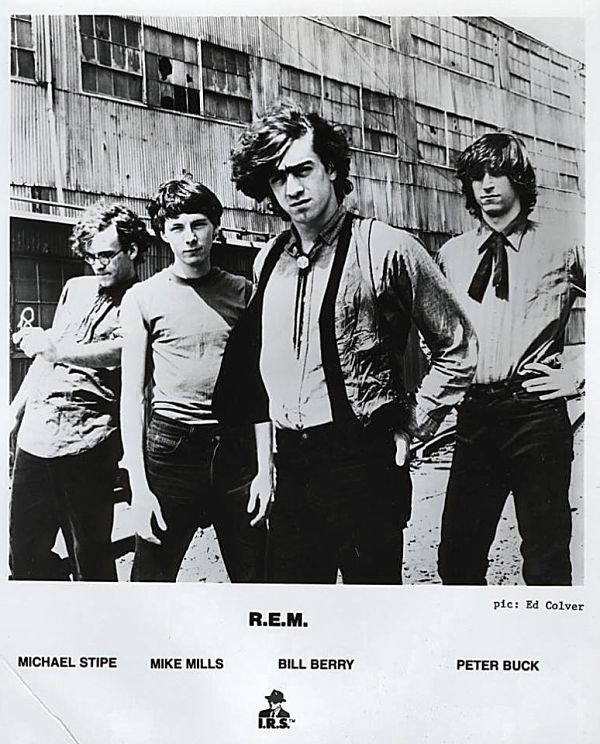
He was a founding member of a groundbreaking Rock ‘n’ Roll Hall of Fame ensemble that essentially brought “alternative” rock to the masses, and continues to inspire scores of indie bands. A bassist and prolific composer, Michael Edward Mills was REM’s musical workhorse, often doubling on keyboards and providing harmony vocals while laying the harmonic foundation for his higher profile band-mates.


Mills’ modus operandi was to work in the pocket with a melodic mindset to serve the songs sung by Michael Stipe and brilliantly fortified by the defining guitar artistry of Peter Buck.


Courtesy REM Com Courtesy REM Com

Courtesy REM Com

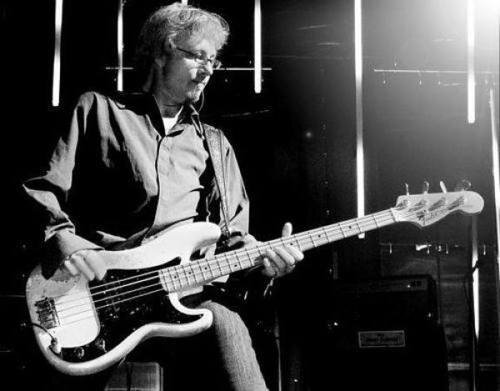
On the final two woefully under-appreciated REM studio efforts, Accelerate (2008) and Collapse Into Now (2011), Mills flexed his formidable chops with thrilling results, rendering motifs high in the mix that grabbed the listener ala Jack Bruce, Sir Paul, and The Ox.


Mills’ primary weapon of choice, especially in REM’s latter years, was the Fender Precision, though he did record and perform with a Rickenbacker 4001 and Hofner among others.


Following REM’s retirement, Mike toils in several low-key projects including the Baseball Project, and collaborateed with artists including Drive By Truckers, Hindu Love Gods (with Warren Zevon) and Joseph Arthur.


Mike Mills Sound & Vision …


“Discoverer” https://youtu.be/z7q5DLS1rAU


“Living Well is the Best Revenge” https://youtu.be/rj55GSeXYuI


“Man Sized Wreath” https://youtu.be/mzNOtYyiu1c


“Supernatural Superstitious” https://youtu.be/IkQPkZuNjvc


REM Live 2003 https://youtu.be/f4_Gulqaj6c


“What’s The Frequency Kenneth” / “Crush with Eyeliner” https://youtu.be/pbi4LXDPkCI


“Man on the Moon” https://youtu.be/CgR7mQlus4k


“So. Central Rain” https://youtu.be/msWi0c4tHV8


“Driver 8” https://youtu.be/wuFId1RYSZE


Dig Mike taking the mic on “Don’t Go Back to Rockville” https://youtu.be/uWRawTxpD4E

Mile Mills 2_opt.jpg Mile Mills 2_opt.jpg

Mike Mesaros (The Smithereens)

Photo by Gayle Miller Photo by Gayle Miller

Photo by Gayle Miller

The furtive rumble of the bass beneath the power chords, vocal melodies, and a stealthy backbeat…

When the topic of rock and roll’s greatest rhythm sections arises, producers, engineers and assorted journos often cite Sir Macca / Richard Starkey MBE, Wyman / Watts, Ward / Butler, Benjamin / Jamerson, The Ox / Moon, Tallent / Weinberg, Bruce / Baker, McVie / Fleetwood, Taylor / Deacon, Blaine / Kaye, and Quaife / Avory – among the select few – as “elite.” 

KYBP hereby renders an addendum to the aforementioned revered cadre of icons – as reported by Joe Gagliardo! Enter Messrs. Mesaros / Diken!

Photo by Kat Wolfe Photo by Kat Wolfe

Photo by Kat Wolfe

By Joe Gagliardo

Talk about a bass player and drummer being locked in!

Mike Mesaros and Dennis Diken of The Smithereens have been friends since the third grade. They spent their formative years spinning records together long before they started playing music.

Jim Babjak, The Smithereens’ guitarist – wasn’t far behind. Friends since the fifth grade – the three musical pals joined with Pat DiNizio of in 1980, and thus emerged The Smithereens.

At seventeen, Mike picked up the bass. Jim had already been playing guitar for about five years, and drummer Dennis was a working musician by the 8th grade.

Mesaros’ decision was driven, in part, by his love of doo wop music, and the significance of the bass vocal—just check out “Blue Moon” by The Marcels. Recalling his first bass as “a $15 piece of junk,” Mesaros quickly upgraded to a mid-70s Rickenbacker 4001.

After Jim Babjak showed Mike a few notes and songs on his instrument, Mesaros was off and running.  The budding bassist studied classic 50’s cuts including the work of Guybo Smith, who played on most of Eddie Cochran’s records.

When soaking up the sounds of that era, Mike paid particular attention to the left hand of the legendary piano players on records by Chuck Berry, Little Richard, Fats Domino and Jerry Lee Lewis – just listen to Jerry Lee’s during the piano break on “Great Balls of Fire” to understand where Mesaros is coming from!

This work ethic affected Mike’s development in multiple ways.  He practiced hard so that he could rise to the occasion and play with musicians who were far more advanced than him at the time.

The ability of Mike to play an unrehearsed bass riff at the end of a song, and have Dennis do a supportive roll on the drums, or vice versa, is part of what makes Mike and Dennis such a formidable rhythm section.

Because the band plays songs which leave room to stretch out, they each respond instinctively to what the others are playing.

Renowned E Street Band bassist Gary W. Tallent described The Smithereens as a two guitar, bass and drums rock and roll band.  He went on to say that they had obviously taken the time and effort to study the music that came before them, but they then took that music to a place that was true to its roots, but in a way that gave it a completely unique identity.

Tallent’s description of the band also applies to the development of Mike Mesaros’ bass playing.  The Mesaros household resonated with the sounds of swing and big bands, country, and Frank Sinatra, Jerry Vale, Al Martino, and the other popular vocalists of the day.

Mike was also absorbing the AM radio music coming out of New York, which was eclectic— back then the Top 40 charts included Sinatra, Dean Martin, Louis Armstrong, alongside The Beatles, Stones, surf instrumentals, and the soulful sounds of Motown, Stax and Atlantic.  Mike’s most significant musical influences came from the 45s and LPs Dennis Diken would spin for him over the many years they spent hanging out together.

In October 2019, the band had the esteemed honor of being inducted into the New Jersey Hall of Fame.  The Smithereens joined legends, including Frank Sinatra, Tony Bennett, Sarah Vaughan, Count Basie, Bruce Springsteen and The E Street Band, Steven Van Zandt, Jon Bon Jovi, and Frankie Valli and The Four Seasons, among others.

Mike’s studying of bass players carried on with players of the 60’s and beyond:  Paul McCartney, John Entwistle, Brian Wilson, Ronnie Lane (Small Faces/Faces), Jack Bruce, James Jamerson, Carl Radle (listen to his slide on one string in “After Midnight”, which makes a simple bass line sound interesting), and Joe Osborne. Osborne’s playing on “Midnight Confessions” (The Grass Roots) and San Francisco (Scott Mackenzie), are just a few examples Mike cited.

Although he rarely plays with a pick, Mike absorbed the aggressive pick playing of Dee Dee Ramone, Andy Shernoff (The Dictators) and JJ Burnel (The Stranglers), as well as the melodic playing of Graham Maby (Joe Jackson), Gary Tallent (E Street Band), Bruce Foxton (The Jam), Bruce Thomas (The Attractions) and Andrew Bodnar (Graham Parker And The Rumour).

Mike describes his playing style as “a musical soup of his influences,” but just as Gary Tallent described the band, Mike has taken those influences and created a unique sound.  He has a broad musical vocabulary, and while he plays with power and energy, his goal is to have his bass lines be a song within the song.

He wants his bass lines to lock in with the drummer’s foot pedal so that it sounds like the bass drum is playing notes.  Mike strives for accurate and consistent notes and tone, and understands that what you don’t play is as important as the notes you play.  Mike practices daily, and he switches it up to keep it interesting.    He is a proponent of using scales as a warmup.  After that, he likes to play along with records–20s and 30s Jazz, Motown, or whatever is on his mind that day.

He also works on Smithereens’ songs to keep them fresh, and in his head.  Mike is driven about growth; always wanting to be better tomorrow, than he is today.  That drive has led him to studying legendary upright players, including Ray Brown and Oscar Pettiford.  He feels that through those listening experiences, he has added an upright element to his playing on the electric bass, including the expanded use of walking bass lines, using half steps.

In terms of his gear, his go-to basses are three Fender Precision basses from the ’73-75 era, as well as two Rickenbacker Blackstar basses.  The Precision basses have been modified with DiMarzio pickups and Badass bridges.  He prefers dead flat wound strings, and believes you can’t beat the E string on a P bass.  In contrast, the Rickenbackers are great for playing octaves and in the upper register, as well as for hammer-ons and string bending.  The Smithereens records were recorded primarily with the Fender Precision basses.

Photo by Cindy Mesaros Photo by Cindy Mesaros

Photo by Cindy Mesaros

Mike’s philosophy is that 80% of a bassist’s sound is driven by the bass itself, and his/her hands.  He plays primarily with his fingers, and uses no pedals or effects, choosing to change the sound of the bass depending on how he uses his fretting hand to create vibrato to make the note ring out, or create a ghost note.  While he anchors his right hand on the E string and his pinky on the bridge, he also changes his sound by moving his plucking hand closer to the pickup and neck.  For his bass rig, he wants to just cleanly amplify the sound he is creating with his bass and hands.  His go-to rig to get a punchy, clean and articulate sound is a Gallien Krueger 800RB, running through 2 4×10 Hartke cabinets with aluminum cones.

When it comes to constructing bass lines, Mike believes songs are like movies, and that the bass lines should all be different.  He listens to the song to figure out whether it is subdued or ebullient, and to identify the places where he can accentuate the vocal or hook of the song.  His goal is to have the bass line build and change as it moves through the verses, choruses and solos.  Prior to entering the studio to record, Mike would take Pat DiNizio’s demo tapes, and using his 4-track tape machine, he would play along with the demo and record different bass lines.  He could then pick out the lines that he thought would work best with each song and Dennis Diken’s drumming.

While there have been many memorable events for The Smithereens since their formation in 1980, Mike counts among his favorites:  the band’s first tour, which was with The Ramones; its 1990 appearance on Saturday Night Live; and its 2019 induction into the New Jersey Hall of Fame.

A personal highlight for Mike goes back to the late 70s, when he and Dennis had a band called The Targets, and they were playing at Kenny’s Castaways on Bleecker Street.  After a set, accomplished bassist Doug Lubahn (KYBP https://bit.ly/2ZWb5bZ ), who played on three Doors LPs, as well many other projects, called him over to the bar to compliment his playing.

Bassists Graham Maby and Mike Mesaros at the Stone Pony - Photo by Gayle Miller Bassists Graham Maby and Mike Mesaros at the Stone Pony - Photo by Gayle Miller

Bassists Graham Maby and Mike Mesaros at the Stone Pony – Photo by Gayle Miller

You can catch Mike and The Smithereens live, and you can check out his playing here, on some of his favorite Smithereens songs.

Also check out his commentary about the songs:

“Blood And Roses” https://youtu.be/vqML7WbOun8

This song changed my life.  Pat came up with the basic bass line, let me develop it, and he built the song around it.  A great gift from Pat to me.

“Deep Black” https://youtu.be/j3PauBeJkNI

I improvised about 50% of the bass lines in the studio, thinking I would go back and redo them.  To my surprise, I liked how I played, and left them unchanged.  Definitely, a confidence booster.

“Strangers When We Meet” https://youtu.be/nfecRUgOGVc

This song has a Beach Boys feel, so I tried to fuse how I thought Brian Wilson would approach the song, with my idea of punch and energy.

Everything Changes” https://youtu.be/ymetDT29iyQ

This has an ominous sound, reminiscent of The Stranglers, so I played with a pick, trying to capture the sound of JJ Burnel.

Photo by Kat Wolfe Photo by Kat Wolfe

Photo by Kat Wolfe

John Lodge (Moody Blues)

​John Lodge photo Dana Grubb

By Joe Gagliardo based on a conversation with John Lodge 


“A thousand pictures can be drawn from one word, only who is the artist, we got to agree….”


For five decades and counting John Lodge has been a successful bassist, songwriter, recording artist, producer, bandleader, collaborator, vintner – and he’s “just singer in a rock and roll band!


He has been cited among the “10 Most Influential Bass Players on the Planet,” and has been the recipient of numerous accolades, including an ASCAP (American Society of Composers and Publishers) Award, and an Ivor Novello Award for Outstanding Contribution to Music, to name just a few. 


And the honors keep rolling in! John and The Moody Blues were inducted into the Rock and Roll Hall of Fame in 2018. In 2019, he was inducted into the Birmingham Walk of Stars for his contribution to his home city’s cultural heritage. Also in 2019, John was honored to receive the Lifetime Achievement Award at the Prog Awards for his work with the Moody Blues and his solo canon: big accomplishments for a kid who grew up in the West Midlands of England whose primary interests were soccer, a desire to design cars!


There were no singers nor musicians in John’s family, and no instruments, other than a broken-down piano that sat at his grandparents’ house.  Things changed for John around the age of eleven when he saw Rock Around the Clock.  That movie is considered to be one of the first (and finest) rock and roll musicals, starring Bill Haley and the Comets, Alan Freed, the Platters, and Freddie Bell and the Bellboys. 


While that movie generated John’s interest in music, it was another rock and roll movie, The Girl Can’t Help It, which nailed it for him.  That film featured his heroes, Little Richard, Gene Vincent and The Blue Caps, Eddie Cochran, and Fats Domino, among others.  His love for music was further cemented upon hearing Buddy Holly’s “That’ll Be The Day” on a call-in television show wherein viewers voted for their favorite songs. These cumulative experiences made John want to play music.


A chance happening enabled John to get hold of his first guitar.  His neighbor’s son had returned from Germany with an inexpensive steel-stringed acoustic guitar, and the neighbor asked John’s mom if she was interested in buying it for John, which she did.


As the American rock and roll stars John idolized on the silver screen reached iconic status in England; skiffle music was also massively popular in his home country.  John taught himself skiffle (a genre of folk music with influences from blues, jazz, and American folk), but after seeing Buddy Holly perform live at the Birmingham Town Hall, he learned all of Buddy Holly’s songs.  From Holly’s repertoire, John gained an understanding of chord and song structure and songwriting.    


Lodge’s move to the bass guitar happened upon attending a concert by two performers that starred in the movies he loved, Jerry Lee Lewis and The Treniers. 


Although Jerry Lee cancelled, the show went on with The Treniers, and John was there.  While the band was playing, he noticed one of the members toward the back of the stage who appeared to be playing a white guitar akin to   Holly.  Then realized it only had four strings!


That was his first encounter with a bass guitar, and he immediately  realized that the selections he chose as he dropped the coin right into the slot of the Rock Ola jukebox were songs that he liked because of the driving force of the left hand of piano players – namely Jerry Lee Lewis, Little Richard, Fats Domino and Johnnie Johnson, who tinkled the ivories for Chuck Berry.  In fact, John later composed a song about that experience, “Those Days in Birmingham.”    


Lodge started off with a Dallas Tuxedo which was one of the first basses mass-produced in the United Kingdom. He commenced to learning blues and boogie licks, especially focusing on the left hand of his favorite piano players.  John’s training came primarily from listening to American recordings. Among his favorite passages is from “Crossfire” by Johnny and the Hurricanes. 


His next bass was a Hofner President, but he found his quintessential instrument on a visit to Jack Woodruff’s music store on a Saturday morning in 1960.  Approaching the venue, he noticed a bright and shiny brand-new sunburst Fender Precision bass in the window, with a sign that proclaimed, ‘Direct from the USA.”  The cost was the equivalent of $500, and at the time, you could buy a new car for the equivalent of $600.  John discussed the situation with his Dad, who agreed to co-sign for John finance that hallowed slab of wood, wire, and strings. 


Why is this bass quintessential? It has been used on every song recorded by John as a member of The Moody Blues!


Previous to the Moody Blues, John and Ray Thomas worked a band called El Riot and The Rebels: Ray was “El Riot” and Lodge was one of the “Rebels.”  Their moniker echoed popular bands of the era with names such as Nero And The Gladiators, and Johnny Kidd and The Pirates.  Recalls John  “and they all wore these great costumes. So, we had sombreros and it seemed to work for us very well.” That band lasted for four years.


In 1962, John was asked to be one of Gene Vincent’s Blue Caps on a tour of England.  While that didn’t happen, John did write a song for Gene in the early ‘60s that, just a few years ago, was recorded for the Gene Vincent Appreciation Society.


When The Moody Blues were being formed, John was initially asked to join the band.  Their intention was to be “professional” hence their move to London, the musical epicenter of the UK. However, John still had eighteen months of college to complete, and as John likes to finish things he starts, he declined.  He told Ray Thomas he was going to fulfill his educational ambitions, and then “see what happens.”


While completing school, John anchored the John Bull Breed, a band that gigged at the Star Club in Hamburg, Germany, six weeks following The Beatles.  It was a hard-working unit that played six grueling sets a night, and covered Ike Turner’s “Can’t Chance a Breakup” for Polydor records in 1966.


According to John, Ray Thomas contacted him about a year later, after the Moody Blues’ song “Go Now” had been a hit, and Denny Laine and original bassist, Clint Warwick, had left the band.


Ray asked John if he had finished college.  When John replied the affirmative Ray commanded “well, get in the car and come down to London, we’re putting the old band back together!”  Note that pre-Moodies, John, Ray and Mike Pinder had played in El Riot and the Rebels together.


John joined the band, followed shortly after by Justin Hayward. At that juncture, the band decided to make its own music: no more covers! 


John, Justin and the band collaborated on what many consider to be the first progressive rock album, Days Of Future Passed.  Back then, studio time was usually used in three-hour increments. However their imprint Decca not only manufactured records, but also gramophones, and the label was looking for a record in full-frequency stereo that would help sell both of its products. 


As such, Decca allowed the Moodies the unprecedented opportunity to book a studio for seven days, twenty-four hours a day.  When the recording was first played for the company, a number of the execs were confounded by it, but, luckily there were two people, one from London Records in America and the other from Decca Records in London who understood the band and their recording and got behind it. 


The Moody Blues went on to sell over 70 million albums, which includes eighteen platinum and gold LPs. The forged Top 10 singles in three different decades.   


Rock and Roll Hall of Fame: In their induction speech, Heart’s Ann Wilson discussed the impact the band had on her and her friends, and how the Moody Blues’ music could take you on a trip, and bring you back the same day.  Ann told the audience “let’s not overlook the simple fact that The Moody Blues, are, and have been, a kick-ass rock band.” 


Ann Wilson’s RRHOF Speech: https://youtu.be/s1HesvYu4LU   


As a member of the Moodies, John has written several of the band’s classics. John composed “Ride My See-Saw” on his very first, steel-stringed, acoustic guitar. “Ride My See-Saw is about the fact that you’re going up and down—you learn a bit and you lose a bit. It was written about what you think life is growing up, and what life turns out to be….”  


“I’m Just a Singer in a Rock and Roll Band” emanated from the signature bass riff.  John likes playing that song because that’s who he is!  He loves the energy and excitement of it, but the song came about because it was a strange time in the world in the 1960s, with the Vietnam War and everything else that was going on.  People around the world were looking for answers, and “I suddenly thought…just a minute…I’m only a musician. I didn’t know the answers to the questions that people were seeking. I wanted to say that.”


Another interesting tale is the story behind “Isn’t Life Strange.” Among John’s friends was Lionel Bart, who wrote major musicals including Oliver. All of Bart compositions were done on on a baby grand piano, and he suggested that John buy one for writing purposes.  


One night during dinner with his wife and friends, and he suddenly heard a melody in his head. In the middle of the meal, he excused himself and went to the piano and wrote the music and came up with the title for “Isn’t Life Strange” in about fifteen minutes. He calmly resumed his meal to proclaim, “I think I’ve written a song.”


Then the next morning, he played it again and authored the lyrics. “The song is all about how life sort of keeps repeating itself…isn’t life strange? You can’t really ask what the future’s got for you. You just turn the page over, move on, and see what happens…”


In addition to his work with The Moodies, John and Justin Hayward released the Blue Jays LP in 1975 while The Moodies were on hiatus following their Seventh Sojourn album.  That collection included Lodge’s “Saved by the Music,” a hard-rocking track with stellar hooks and a beautiful, catchy chorus.  That song was considered by many to be a highlight of the record. John still plays this song live today – and it garners instant crowd participation.


John has also released several solo collections.  The first, Natural Avenue was released in 1977, and featured Chris Spedding on guitar and Mel Collins on sax and included the powerful ballads “Say You Love Me” (recently included in the film Private Life) and the anthemic “Who Could Change.”  


In the Spring of 2016, John released his second solo album, 10,000 Light Years Ago.  The album arrived as vinyl records were making a comeback.  For John, “vinyl” is the sound. “You get a beautiful sound from vinyl records, that is totally different than CD, or downloads….”  John loves the feeling of placing a vinyl record on the turntable and reading the liner notes. With that ritual in mind, this album is available in 180-gram double vinyl LP, a gatefold cover, and complete liner notes. 


That recording also reunited John with special guest contributions from former Moody Blues bandmates, Ray Thomas and Mike Pinder, on the song “Simply Magic.”  The song “In My Mind” was nominated “Rock Anthem of the Year” by Prog Magazine.


John embarked on a UK tour to support the album and recorded and filmed the final concert at Birmingham Town Hall, an iconic venue in England.  When John was growing up he saw all his American superheroes–Eddie Cochran, Gene Vincent, and Little Richard there. As noted, the first show he saw at that venue was his hero, Buddy Holly. 


John was thirteen years of age and was in the front row of the balcony looking down on the ‘50s rock idol.  He thought, standing on stage looking up at that balcony again, he could see a young Johnny Lodge up gazing at Buddy Holly, and maybe a kid sitting in that same balcony would be inspired by John, the way he was inspired by seeing Buddy.  It was a very special moment for him.


More recently, John released B Yond, The Very Best of John Lodge.  This album contains three new tracks, and the remaining cuts were chosen by John covering the very best of his career.


John has continued touring with his 10,000 Light Years Band (up until the 2020 pandemic) and appeared on several thematic music cruises. “It’s a really special period of time because people are there for the music!”


What keeps him going? “I love music, and I love playing.”  According to John, he has his guitar, bass and a grand piano sitting in his house, and every time he walks past, he picks an instrument and plays. 


In fact, he plays every day.  In particular, the bass has been an incredible vehicle in his life, taking him to places he could not have ever imagined.  In the end, The Moody Blues are an integral part of his life, and he will always be one of The Moody Blues. 


While John has played his first P Bass with flatwound strings on every Moody Blues record, he does not take it on the road. Today he has a custom-made replica of a ’63 Jazz Bass, with added electronics and GHS Roundwound strings.  He runs that into a Line 6 Helix.


When John first received his Tuxedo Bass he found that the then-popular Watkins amp wouldn’t deal with the bottom end, so he found a Celestion speaker, built a cabinet for it, and added a Linear 100-watt valve amp.  In need of a bigger amp, John found a Linear Gold 200-watt valve head. He then found a magazine that told him how to make a bass cabinet with inch and a half thick chipboard, a big sound hole at the bottom, and a Celestion 15” speaker.  The cabinet was about five feet tall, and it needed wheels because it was so heavy.


Unfortunately, the first time he played it live, it rolled across the stage because of the vibration.  After that, he went with Vox; then Marshall 200-watt amps with 2 4×12 Marshall cabinets.  Then he moved onto Hi-Watt—2 400-watt amps with 4 4×12 cabinets and 2 2×15 cabinets. And then moved to Sunn heads and cabinets.  These days, John prefers valve amps, so he got some Ampeg SVT Pro amps, 300 watts each. He has two of those, one driving 4x10s, the other driving 1x15s, and a solid-state amp driving them both in case either amp goes down.


With The Moodies, the bass speakers were put right under the drummer, so that the bass and the bass drum would be focused, and he made sure the snare was right in the back of his head.


John’s playing philosophy is that a great bass line supports the song, but also moves it along.  He said “you realize that the right bass part can carry a song, without anyone else playing.”  He cited Carol Kaye and James Jamerson as examples of that playing style.


In addition to recording his own music, John has produced several artists, including the great English rock band Trapeze, which included Glenn Hughes (Deep Purple) and Mel Galley (Whitesnake).  John helmed the band’s Trapeze and Medusa LPs.


Though John wrote “Send Me No Wine” for The Moodies, nowadays he doesn’t need anyone to send him wine.  A number of years ago he began a boutique wine label, ‘Krisemma Wine’, hoping to share his favorite wines from around the world. 


To date, he has produced three wines, a red from Napa Valley, California, and another from Bordeaux from France, and a white from the Elgin region of South Africa.  This Elgin Chardonnay recently won a gold medal and two Trophies in the International Wine Challenge 2016, including Trophies for Best South African Chardonnay, and Best Elgin Region Chardonnay.


John Lodge Sound and Vision…


Check out John’s playing, along with his thoughts about the bass lines:


The Moody Blues:


“Candle of Life” https://youtu.be/0Ts3L4pN-M4 

For John, this is an interesting bass part for the chord sequence.


“Tuesday Afternoon” https://youtu.be/5xvb9Udzc6M 

“This song is in two parts.  I play the cello bass in the verses, and the regular bass in the bridge.”


“I’m Just A Singer (In A Rock And Roll Band)”  https://youtu.be/N_J-hmyAS6c 

“It’s me being James Jamerson playing my Tamla/Motown inspired riffs!”


“Nights In White Satin”  https://youtu.be/iVusUjyby18 

“I think you can sing Nights just to the bass part, and I love playing it!”


“Ride My See Saw” https://youtu.be/ExqvK56GiS0


“Isn’t Life Strange” https://youtu.be/AXKPtFzwPmg


“Saved By The Music” -The Blues Jays-John Lodge and Justin Hayward https://youtu.be/RNpCpgX564E 

“The bass part in the verses just interprets the song, and I use a walking bass line in the chorus.”


Solo John Lodge:


“Say You Love Me” https://youtu.be/BfFIIKlmPJg


“Who Could Change” https://youtu.be/zPGCj_FzSQk


“Simply Magic” https://youtu.be/AgkWhX07t_8


“In My Mind” https://youtu.be/b4GD8TEldnk


Neil Jason (Bryan Ferry, SNL, Brecker Bros.)

Courtesy of Neil Jason Facebook

As reported by Frank Beacham, Neil once proclaimed from the stage of the P & G Bar in New York City “how hard can it be, it’s only four strings!”


A session giant who excels in every genre, Neil Jason’s place in bass history would be secure if it had begun and ended with his remarkable artistry on the Brecker Brothers’ live masterpiece Heavy Metal Be-Bop (1978). A former member of the Saturday Night Live Band (1983-85) and deputy for Will Lee with Paul Schaffer’s World’s Most Dangerous Band and the CBS Orchestra, Mr. Jason has also distinguished himself as a composer, multi-instrumentalist, singer, and producer.


Neil’s body of work is as expansive as it is stylistically diverse, encompassing seminal sides and concert dates by Diana Ross, Don Cherry, Harry Chapin, David Sanborn, John McLaughlin, Roxy Music, Nils Lofgren, John Lennon, Cyndi Lauper, Billy Joel, Hall & Oates, Peter Criss, Gene Simmons, Mick Jagger, Sir Paul, Grace Slick, Harvey Mason Jr., David Johansen, Aldo Nova, Janis Ian, Gato Barbieri, Bryan Ferry, Michael Franks, Deodato, and Carly Simon to cite a very select few.


Neil Jason Sound & Vision:


Brecker Brothers:


“Some Skunk Funk” https://youtu.be/YeUgLV9C0j8


Dig Neil taking the lead vocal on “East River” https://youtu.be/wnfhHamrULc


Bryan Ferry: “Lost” https://youtu.be/_Ikpk1pTRsE


Roxy Music:


“Oh Yeah” https://youtu.be/so9OscJ2eUg


“The Main Thing” https://youtu.be/ib4-Lyxxyw0


“Eight Miles High” https://youtu.be/6ZAfAsN75T4


David Sanborn “Anything You Want” https://youtu.be/KhxqFOQt9Ww


Deodato “Shazam” https://youtu.be/FGNKZmpUWN8


Hall & Oates “Hard to Be In Love With You” https://youtu.be/BZ_O313vtnM


Steve Bingham (Slim Chance, Geno Washington)


He played bass for one of rock’s greatest bassists – Ronnie Lane – on stage and on record (Anymore for Anymore). “It was in 1974 that I received a call from former Joe Cocker drummer Bruce Rowland who invited me to meet Ronnie Lane at his farm in the Welsh borders with a view to joining the band Slim Chance. I was amazed to arrive in the middle of nowhere to find Ronnie and his family happily living amongst dogs, cats, chickens and ducks, in a small cottage surrounded by old barns with a fantastic mobile recording studio parked outside!”

Akin to countless musicians who chose their life’s profession upon discovering The Beatles at the dawn of their popularity, all this jovial Warwickshire lad ever wanted to do in life from that moment on was to play bass – which is exactly what Steve is doing with soul icon Geno Washington, and the “reformed but unrepentant” Slim Chance with original members Charlie Hart and Steve Simpson.

A master pocket player and melodic foil, Steve was also a member of Colin Blunstone’s early 1970s band wherein he waxed the classic Ennismore (1972) with The Zombies crooner.

Dig Steve Bingham in Season One (2014)  and Season Tres (2019) of Know Your Bass Player on Film https://bit.ly/2YBFB9C


Ernie Brooks (Modern Lovers)


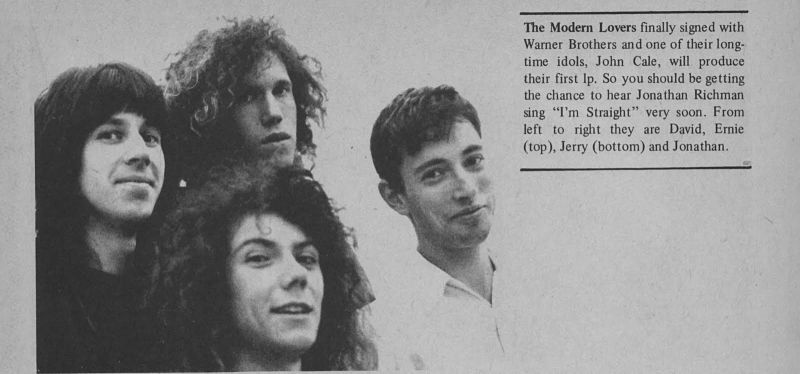
He was an “alternative” rock innovator years before the genre was officially tagged. Ernie Brooks is that rare bassist who can effortlessly move from in-the-pocket to contrapuntal to improvisational to experimental – sometimes within the same composition! Mr. Brooks made (belated) history as a founding member (with future Talking Head Jerry Harrison) in one of rock’s most influential ensembles: The Modern Lovers, by way of their seminal self-titled debut as produced by John Cale.


Though that record hit the shelves nearly five years after it was waxed, it was, and still is, ahead of its time. Rendering bass passages that groove, weave through a melody, and consequently push a composition, Brooks has distinguished himself as a long-time collaborator on stage and on record with Elliott Murphy.


Ernie also contributed to essential sides by David Johansen (Here Comes the Night – 1981), and Jerry Harrison (Walk on Water – 1990) among many others.

Ernie Brooks continues to ply his bass artistry with Murphy, Gods and Monsters, and Peter Zummo, to cite a select few.


Watch Ernie Brooks on Know Your Bass Player on Film Season One, 2015 New York City, Euphoria Studios https://bit.ly/31CV4s3

Bernie Calvert (The Hollies)

Cou Cou

By Thomas Semioli

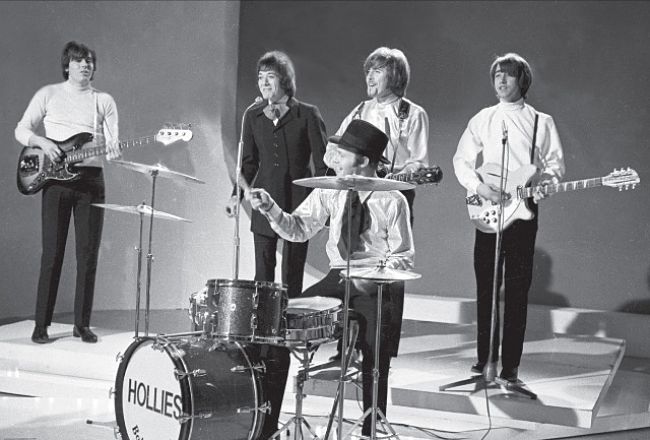
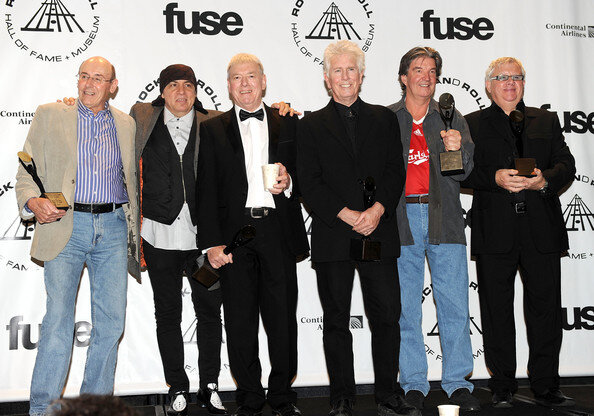
Jazz icon Ray Brown praised him for his work on “Bus Stop.” Akin to numerous bassists in the early days of the instrument, Bernard Bamford Calvert started his musical journey at the keyboards. Calvert, who took up the bass at the behest of The Hollies’ Tony Hicks, toiled with several groups before joining the aforementioned Rock ‘n ‘ Roll Hall of Fame ensemble in 1966 commencing with the album For Certain Because which was renamed Stop! Stop! Stop! for the U.S. and Canadian markets.

Though not as harmonically and rhythmically adventurous as the band’s previous bassist – Eric Haydock -Calvert’s supportive artistry drew from a wide array of influences ranging from jazz, blues, dance hall, soul, and folk. As such, he deftly negotiated The Hollies diverse canon which spanned Merseybeat, AM pop, psychedelic, MOR and every permutation thereof. Bernie Calvert departed The Hollies in 1981 and is still on the bandstand with church groups in his native Lancashire.

Dig Bernie on “Bus Stop” https://youtu.be/YCFvXAbSXUQ

Dig Bernie on “He Ain’t Heavy” https://youtu.be/iPDl9yKSnDE

Dig Bernie on “The Air that I Breathe” https://youtu.be/Cwt65tG2GI8

Dig Bernie playing keyboards on “Ye Olde Toffee Shoppe” https://youtu.be/2vVG1CPw3vc

Courtesy of Rock and Roll Hall of Fame Courtesy of Rock and Roll Hall of Fame

Courtesy of Rock and Roll Hall of Fame