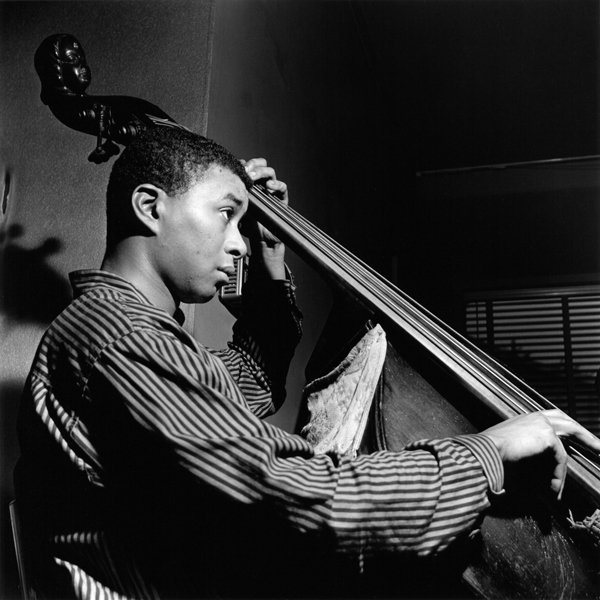
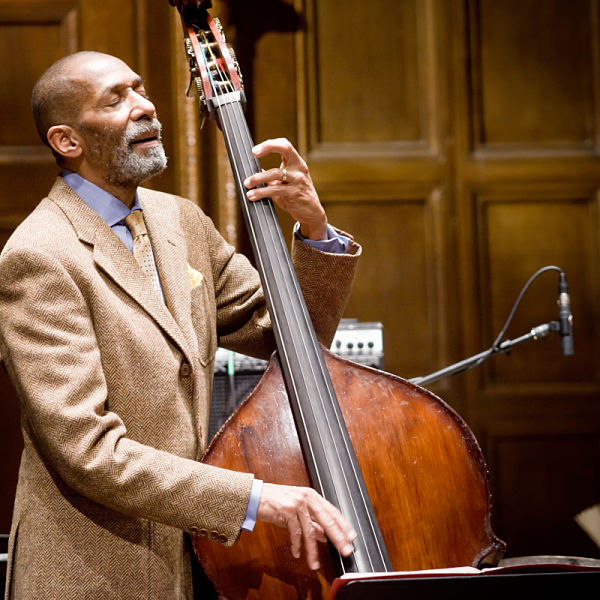
Ron Carter (Miles Davis) VIDEO INTERVIEW
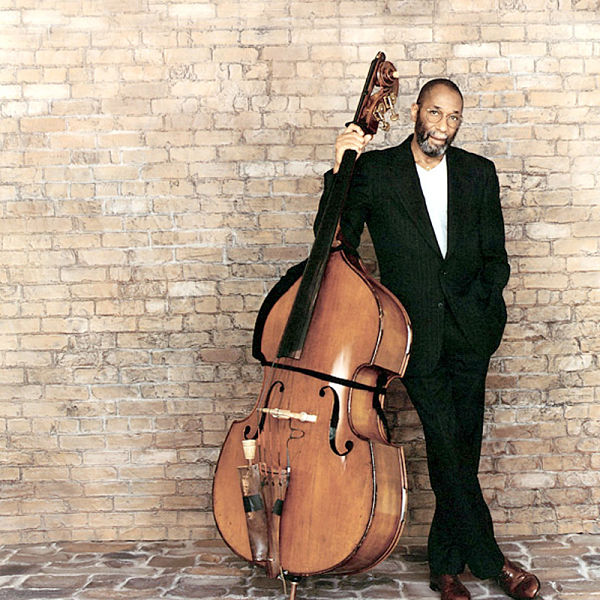
Courtesy of Ron Carter Net

“I think that the bassist is the quarterback in any group, and he must find a sound that he is willing to be responsible for…” Ron Carter


Ronald Levin Carter is the most recorded jazz bassist ever with over 2,500 albums to his credit. His rich tone, soulful rhythmic phrasing, and harmonic flexibility, which draws from classical, jazz, and rhythm & blues, along with his extensive body of work as a leader, collaborator, and sideman on CTI, Milestone, Blue Note, Impulse, and Prestige, among many other imprints, is, in a word – unmatched!


Carter’s enormous contributions to recordings by Miles Davis, George Benson, Paul Simon, Herbie Hancock, Wayne Shorter, Freddie Hubbard, McCoy Tyner, Andrew Hill, Joe Henderson, Gil Scott-Heron, Herbert Laws, A Tribe Called Quest, Tony Williams, Wes Montgomery, Donald Byrd, Jim Hall, Roberta Flack, Bill Frisell, and Kenny Burrell, to cite a very, very few, are all worthy of exploration.


Ron Carter’s tenure with Miles Davis is likely his most recognizable work. Ron propelled Miles second greatest quintet which spanned the hard bop of E.S.P. (1965) to the fusion filled Filles de Kilimanjaro (1968). As told to this writer along with David C. Gross “Miles may have been the bandleader…but I led the band!”


An educator, and revered and prolific composer, if you had to bestow the title of the world’s greatest living bassist …look no further than Ron Carter.


Ron Carter Sound & Vision:


Miles Davis:


“Eighty One” https://youtu.be/WN-hXbeI6vQ


“Four” https://youtu.be/Ce2S2LkTjKI


“E.S.P.” https://youtu.be/lRhqn21-xeg


“Filles De Kilimanjaro” https://youtu.be/7hBJ4664bNQ


Roberta Flack: “Compared to What” https://youtu.be/wDUk9Lsy_yQ


Herbie Hancock / Tony Williams / Ron Carter: “Third Plane” https://youtu.be/9hKFkCtiFZs


Tribe Called Quest “Verses from the Abstract” https://youtu.be/FGB6pWGI_kE


Chuck Rainey (Steely Dan, Quincy Jones)

Courtesy of Chuck Rainey Com


Huffington Post (2016) – Tom Semioli: Eleven More Bass Players Who Belong in the Rock and Roll Hall of Fame https://bit.ly/2gPVZgK


“The bass line/part is the one element in music that causes the listener to feel and hear the lyric, dance and above all enables the lead instrument to function.” Chuck Rainey


Word to all electric bassists: if you don’t know Charles Walter Rainey III, put down your instrument!


Along with James Jamerson, Carole Kaye, Duck Dunn, Bob Babbitt, and Jerry Jemmott, Mr. Rainey established the electric bass in the recording studio and on the bandstand. He is among the instrument’s most fervent and innovative practitioners.


When Quincy Jones, for whom Rainey often worked under, proclaimed that the development of the electric bass was among the most significant events in 20th Century music – he was referring to Chuck and the above referenced bass guitar icons.


Chuck commenced his musical journey as a trumpet player. He made the transition to baritone horn while studying the classics at Lane College. In the military Rainey switched to guitar, and then to bass where his talents flourished. He moved to New York City at the dawn of the studio era and emerged as a first call session player. In ’72 Chuck made the trip out west to Los Angeles with Quincy Jones where his legend was further established. 


In addition to scores of television and film soundtracks, you’ve heard Chuck’s signature bass artistry enhance the work of Steely Dan, Aretha Franklin, Laura Nyro, Lena Horne, Donald Byrd, the Pointer Sisters, Tom Jones, Tim Buckley, The Rascals, Al Kooper, Diana Ross, Ray Charles, Paul Simon, Bette Midler, Peggy Lee, Robert Palmer, Marvin Gaye, Lowell George, Dionne Warwick, and Rickie Lee Jones – just to skim the surface.


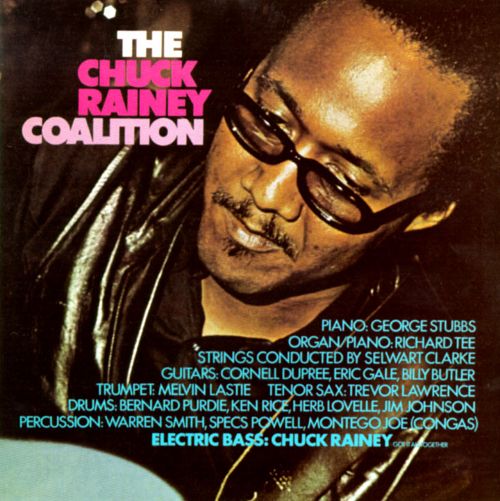
An educator, author, clinician, bass loving vinyl collectors are advised to seek out Chuck’s groovy debut solo gem entitled The Chuck Rainey Coalition (1972 / Skye Records) which never made it to compact disc for reasons unknown.


Chuck Rainey Sound & Vision…


Steely Dan “Josie” https://youtu.be/R-BipyU4WXs


Chuck Rainey Coalition “How Long Will It Last” https://youtu.be/i5aBtSdtum0


Aretha Franklin “Until You Come Back to Me” https://youtu.be/Nbokg0KM-n8


Laura Nyro “Eli’s Comin” https://youtu.be/SaFD-s66VG8


From The Wrecking Crew “Chuck Rainey Meets Tommy Tedesco” https://youtu.be/4X3WuGobeD0


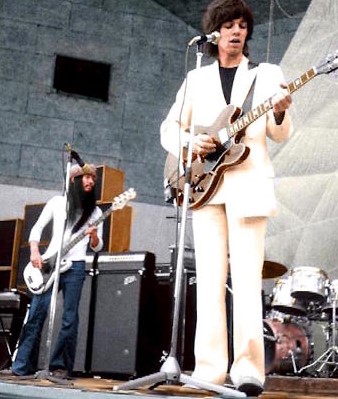
Wilbur Bascomb (Jeff Beck, Alphonse Mouzon, Grace Jones)


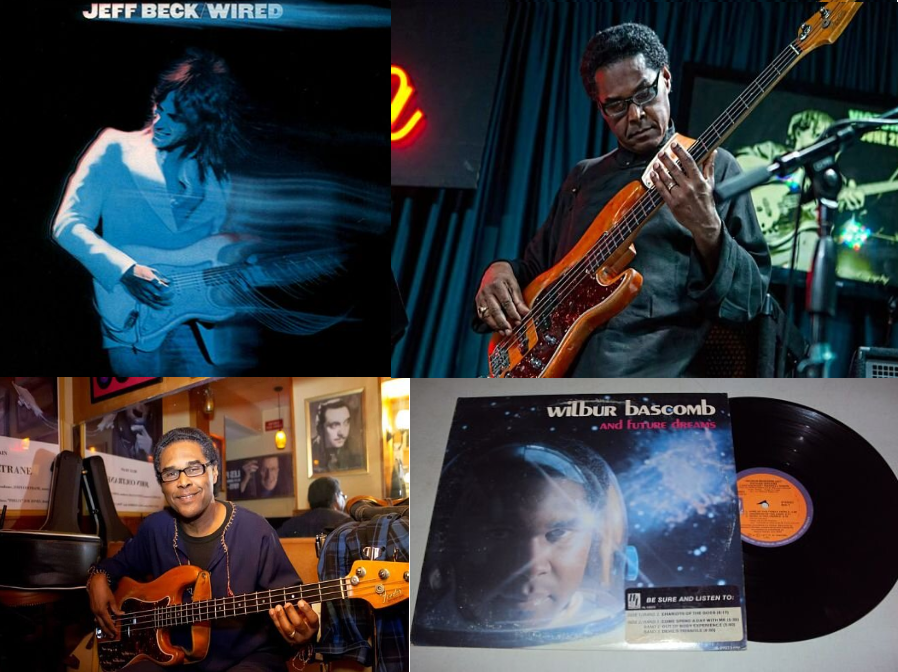
He anchored one of the most influential and essential albums of the classic jazz rock fusion era: Jeff Beck’s Wired (1976).


Son of noted jazz trumpeter “Dud” Bascomb (Duke Ellington, Erskine Hawkins) Wilbur waxed several sides and performed with a wide array of artists including Alphonse Mouzon, Idris Muhammad, Andy Bey, Grace Jones, Roy Ayers, Bobbi Humphrey, Galt MacDermot’s New Pulse Band with Bernard Purdie, BB King, the original soundtrack to Hair, Mick Taylor, and James Brown, among others.


In addition to his high-profile jazz fusion / funk-soul pedigree, Wilbur is a renowned studio player (TV, film soundtracks) and has also led his ensembles under his own name, including Bad Bascomb.


Wilbur Bascomb Sound & Vision….


Jeff Beck: “Head for Backstage Pass” https://youtu.be/ZYmZnVR51SQ


Jeff Beck: “Sophie” https://youtu.be/KU2u07G_XLc


Tony Senatore’s rendition of Jeff Beck’s “Come Dancing” https://youtu.be/Xs8zeiKITHI


Wilber on the bandstand with Free / Bad Company drummer Simon Kirke, and session ace G.E. Smith, and keys man Jeff Kazee:


“Johnny Too Bad” https://youtu.be/UW-5wblHJnA


“All Right Now” https://youtu.be/AkveK6DScKY


“Heartbreaker” https://youtu.be/WQpq1jWxIGA


Bad Bascomb “Black Grass” https://youtu.be/XFcEBz_m4y0


Grace Jones “Pull Up to the Bumper” https://youtu.be/Tc1IphRx1pk


Idris Muhammad “Moon Hymn” https://youtu.be/XpiSUBwFNfU


Wilbur Bascomb “Out of Body Experience” https://youtu.be/pZlaO9uUn20


Roy Ayers “Sensitize” https://youtu.be/eSbkeCBo8fw

Phil Chen (Jeff Beck, Rod Stewart)

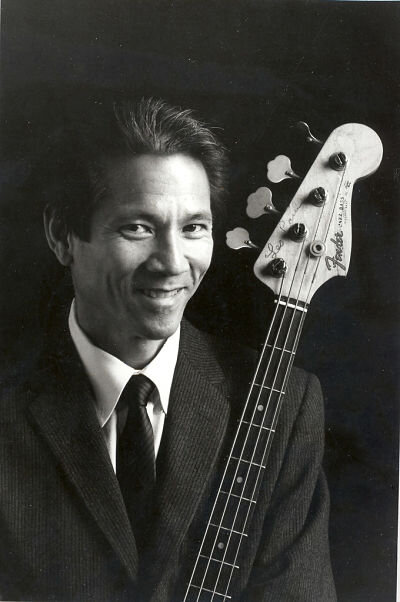
A session giant who waxed seminal sides in the UK and LA, this Kingston, Jamaica born bassist brought his reverence of Motown and reggae to rockers and fusion artists alike.


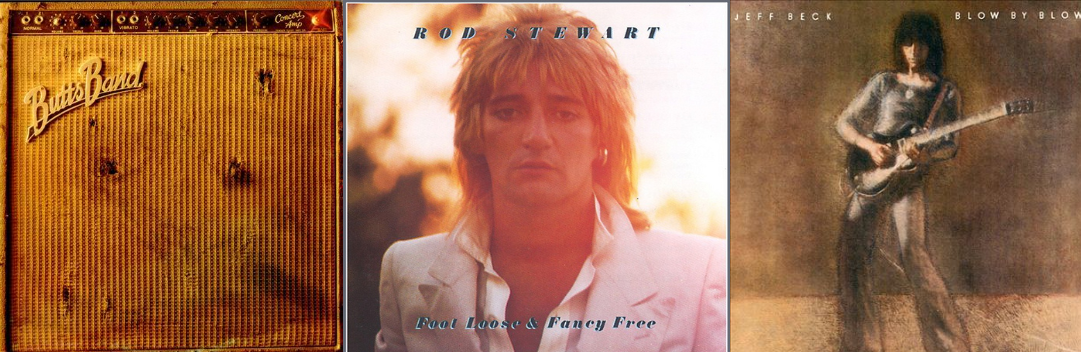
Though Phil Chen missed the opportunity to assume Ronnie Lane’s position with The Faces in 1973 – he garnered attention aplenty anchoring The Butts Band – which featured ex-Doors Robbie Kreiger and John Densmore.


A staunch Fender Precision / Jazz devotee, Phil’s economic approach was the perfect choice to anchor Jeff Beck’s historic Blow By Blow (1975) album.


When Rod the Mod opted for Hollywood, Phil and drummer Carmine Appice made the most of Stewart’s pop inclinations, blending rock, funk, disco, and blues on several chart topping sides.


Chen’s impressive resume also includes sessions / gigs with Brian May’s Star Fleet Project, Jackson Browne, Pete Townshend, Eurythmics, John Lee Hooker, Dave Edmunds, and Joan Armatrading, among, many, many others.


Phil Chen’s home country honored the bassist in 2014 with the Order of Distinction for his musical accomplishments.


Phil Chen Sound & Vision….


Phil with The Butts Band on the Old Grey Whistle Test https://youtu.be/It0j_898rR0


Jeff Beck “Constipated Duck” https://youtu.be/4INHP7WlN1M


Rod Stewart “Hot Legs” – short, simple, and sweet!  https://youtu.be/AHcjjxYbgNM


“This Old Heart of Mine” live with The Rod Stewart Band: https://youtu.be/W8cokK7GbjE


Joan Armatrading “Travel So Far” https://youtu.be/ovMYVD_W6M4


Eurythmics “The Last Time” https://youtu.be/YhwX41CDUMc


Dion “King of The New York City Streets” https://youtu.be/z5jyoz0h6GU


Dig this insightful and humorous interview – courtesy of Lauren Scheff wherein he offers his strong opinions on light gauge “cheese cutter” bass strings! https://youtu.be/j8aN168gRfc


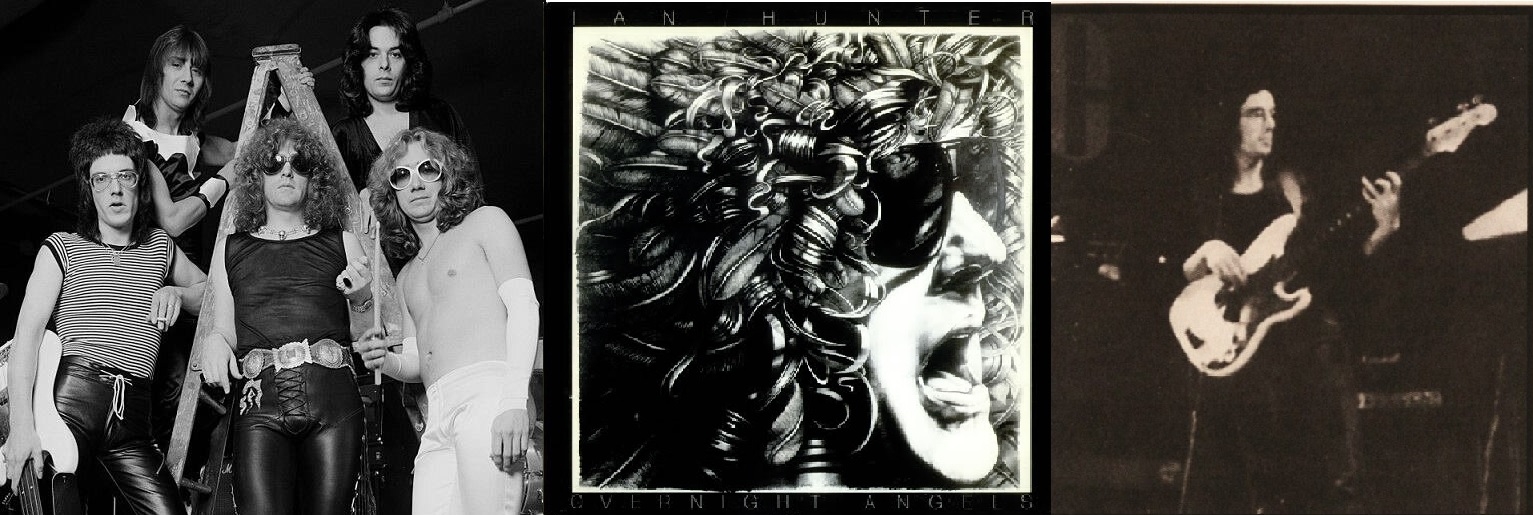
Rob Rawlinson (Ian Hunter’s Overnight Angels)


Whenever I mentioned the slab Overnight Angels (1977) to Ian Hunter during our four or five interviews since 2000, the usual reaction was a groan, or a grimace, or a combination of thereof.


At the London 02 Arena VIP room immediately following the final “original” Mott the Hoople gig (Martin Chambers substituted for the ailing Dale Griffin) in 2013, I met Def Leppard singer Joe Elliott and congratulated him for his tribute – on record and on stage – to Ian’s Angels by way of his Mott / British Lions / Hunter repertory ensemble Down ‘n’ Outz. He thanked me profusely, and noted that I was among the few who “got it!”


Though it was an album out-of-time, out-of-touch, and somewhat out-of-tune thanks to producer Roy Thomas Baker’s misdirection, the songs and bass playing on Overnight Angels are, to my ears, astonishing.


Rare is the player who can overplay – yet play to the song. Yet that is exactly what Rob Rawlinson achieved on this collection, which, incidentally, was only available as an import in the United States upon its release.


“Golden Opportunity” https://youtu.be/xOgI42s53uA


“Overnight Angels” https://youtu.be/HzYBO4Uw92o


“Wild and Free: https://youtu.be/KwFFEw5BtOo


“Miss Silver Dime” https://youtu.be/qzADr4fkbUQ


Rawlinson’s nimble fingered fretwork, which was given to strategic rapid fire grace notes, chords, harmonic extensions, and glissandos – were obviously inspired by Jaco Pastorius – who forged electric bass history on Ian’s previous album All American Alien Boy.

Ironically,  Rob once replaced Jaco on a session helmed by Roy Thomas Baker.


Rawlinson didn’t appropriate Jaco’s tonal character – which was custom among many players of the era who were bitten by the Pastorius bug. Instead, Rob rounded out Hunter’s ensemble, which also included Earl Slick, with a traditional Fender Precision bass resonance which held the tracks together.


“Shallow Crystals” https://youtu.be/7stOZSXUFU4


“To Love a Woman” https://youtu.be/Hb4mTJnPFrQ


“Justice of the Peace” https://youtu.be/PjWzp2gb-yU


Rawlinson, who went on to found Atomic Studios in London, also anchored sessions and gigs with Freddie Mercury, the Climax Blues Band, the Lloyd Langton Group, Rick Astley, and Alison Moyet, among others.


Over the years, Ian’s stance on Angels has softened, likely due to Elliott’s remake / remodel of one of rock’s most intriguing flawed gems – as he has been known to perform a track or two from this album with The Rant Band with Paul Page on bass.


Dig Down ‘n’ Outz interpretation of “Overnight Angels” https://youtu.be/o-lrlcmNxLY

Paul Chambers (Miles Davis, John Coltrane)


Courtesy of Blue Note Com


He rendered one of the most recognizable bass motifs in jazz history “So What.”


“Mr. P.C.” was a player whose bass-lines danced as he bridged be-bop and modal jazz with uncanny flexibly. In a career which spanned a mere 15 years, Paul Chambers’ impact on modern jazz is incalculable. If it were only for his masterful work on Miles’ Kind of Blue (1959) Paul would be considered an icon nonetheless.


With influences ranging from Charlie Parker to Charles Mingus, Chambers boundlessly extended the role of the bass with harmonic forays which redefined the instrument beyond its function as a timekeeper. Chambers was a major catalyst in landmark recordings by Davis, John Coltrane – including Giant Steps (1960),  Cannonball Adderley, Kenny Burrell, Gil Evans, Wynton Kelly, Wes Montgomery, Red Garland, Lee Morgan, Art Pepper, and Bill Evans to cite a very few.


In addition to being one of the most in-demand jazz session players of his era, equally enthralling is Paul’s solo and collaborative canon on Blue Note, among other labels, wherein Chambers helmed recordings with many of his former bandleaders on the sessions.   Paul Chambers early passing at age 33 in 1969 left a tremendous void in the art-form that is American jazz.


Paul Chambers Sound & Vision…


Miles Davis “So What” https://youtu.be/ylXk1LBvIqU


John Coltrane “Giant Steps” https://youtu.be/KwIC6B_dvW4


Paul Chambers Quintet “Softly As In a Morning Sunrise” https://youtu.be/EzVy-Y0zaXY

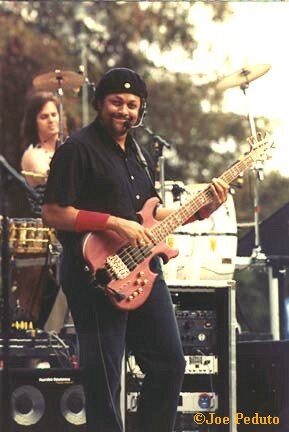
Tiran Porter (Doobie Brothers)

Photo by Joe Peduto - courtesy of Doobie Brothers Com Photo by Joe Peduto - courtesy of Doobie Brothers Com

Photo by Joe Peduto – courtesy of Doobie Brothers Com

They are a quintessential American band whose excellence as songwriters, instrumentalists, and recording artists was so profound that their generation took The Doobie Brothers for granted!

From the time he hooked up with the San Jose collective in 1972 until he departed the band shortly before they split in 1980, Tiran Porter’s bass artistry was a staple on FM and AM radio.

An accomplished backing vocalist greatly inspired by Sir Paul, Tiran rendered a unique, funky plectrum plied attack coupled with a penchant for purveying melodic motifs which defined several rock standards including “China Grove,” “Listen to the Music,” “Long Train Runnin,” “Minute By Minute,” and “Takin’ It to the Streets” among others.

Tiran, who waxed a solo album in 1995 entitled Playing to an Empty House, is still on the bandstand in the Bay Area. His weapons of choice included Alembic, Fender, and Gibson.

Dig some of Tiran’s classic performances….

“Takin” It To the Streets” https://youtu.be/5o_umKOTXIs

“Long Train Runnin’ https://youtu.be/m4tJSn0QtME

“Listen to the Music” https://youtu.be/DkytJLoxGmQ

Dig Tony Senatore’s redition of “It Keeps You Runnin’” https://youtu.be/XZsWolQbxp4

Dig Tony Senatore’s rendition of “For Someone Special” https://youtu.be/4KMr3jqoImE

My guess is that most folks assumed that The Doobie Brothers were already in the Rock ‘n’ Roll Hall of Fame until the “powers that be” granted them honors in 2020!

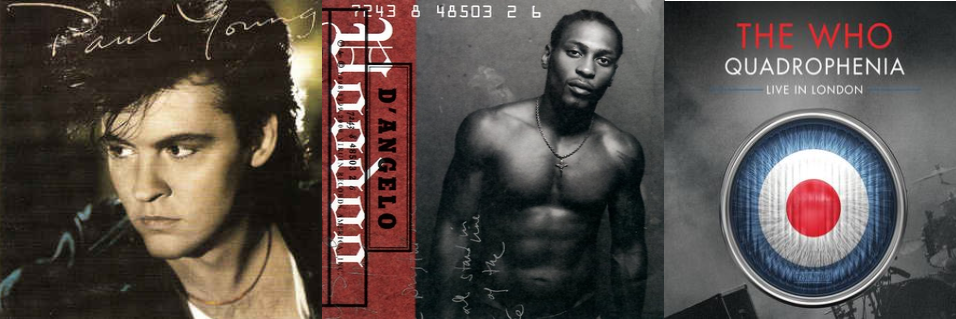
Pino Palladino (Paul Young, D’Angelo)

Fretless Pino Courtesy of Music Man Com              Fretted Pino Courtesy of Fender Com

He’s the cat who orchestrated the fretless takeover of the instrument in the 1980s / ’90s. Then he commandeered the triumphant return of the fretted Fender Precision in the 21st century.


For nearly forty years and counting, the chameleonic Giuseppe Henry “Pino” Palladino has been among the most in-demand session and touring bassists on the planet. Greatly inspired by classic rhythm & blues and American soul music, Pino mostly plies his craft with frets nowadays, utilizing a vintage 1961 Precision which has been replicated for the masses by way of Fender’s signature bass series.


Pino’s genre traversing work spans Paul Young, D’Angelo, John Mayer Trio, Don Henley, Adele, David Gilmour, Jeff Beck, Nine Inch Nails, The Who, and Herbie Hancock, among many other high-profile artists.


Palladino’s use of a an “octaver effect” (Boss Octave O2 pedal) on his fretless MusicMan Stingray set a precedent for the instrument in a pop context throughout the Regan / Thatcher years. On the hits (such as Melissa Etheridge’s “Come to My Window” and Paul Young’s “Every Time You Go Away”) and the album tracks – Pino almost always rendered an upper register motif which severed as a main or secondary hook to the composition.


His work on D’Angelo’s Voodoo slab in 2000 reignited interest in the fretted Fender Precision bass which continues well into the present day.


Pino Palladino Sound & Vision…


Pete Townshend “Give Blood: https://youtu.be/VfggghQENsU


D’Angelo “Chicken Grease” https://youtu.be/m4XI6LXCsH8


Paul Young “I’m Gonna Tear Your Playhouse Down” https://youtu.be/EiJWXjz1uks


“Every Time You Go Away” https://youtu.be/nfk6sCzRTbM


Melissa Etheridge “Come To My Window” https://youtu.be/Gk4CwPQCbAE


Gary Numan “Music for Chameleons” https://youtu.be/_586NoZSr-Y


Erykah Badu “Cleva” https://youtu.be/XO0KY6Fry5M


Eric Clapton “Bad Love” https://youtu.be/qY2vjv8aEas


The Who Quadrophenia Live https://youtu.be/9NEQb6LdHGQ


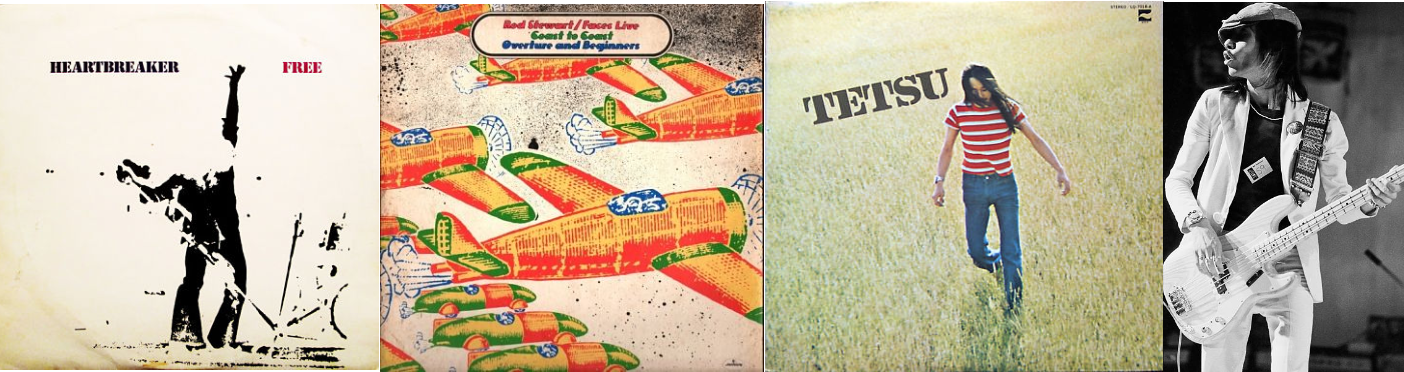
Tetsu Yamauchi (Free, The Faces, Allan Merrill)

Tetsu with Allan Merrill

He commenced his career with Samurai featuring Mickey Curtis and followed not one but two bass legends in two seminal bands at the height of their popularity: Andy Fraser in Free, and later, Ronnie Lane in the Faces – all within the span of a year!


With Free, Fukuoka, Japan native Tetsu Yamauchi retained the template set by Fraser, distorting the sound of his Fender Telecaster / Precision basses while leaving space aplenty for Paul Rogers, Simon Kirke, Rabbit Bundrick, and an ailing Paul Kossoff to do their thing as they rendered their final masterpiece – Heartbreaker (1973), a stunning slab that slipped under the radar at the time of its release.


With The Faces, Tetsu ‘s recorded output was brief though his alcohol intake was legend: a few singles and the Coast to Coast: Overture and Beginners (1974) live platter wherein Tetsu, Kenny Jones, Ian MacLagen, and Ronnie  “I’ve Got My Own Album to Do” Wood and guest guitarist Jesse Ed Davis were relegated to second billing to Sir Rod – a decision made by promoters and record suits. 


In addition to his aforementioned high-profile gigs, Tetsu was a top UK session player and sideman (Alan Merrill), waxed a fine solo slab, and anchored the one-off gem Kossoff, Kirke, Tetsu & Rabbit (1972).


Tetsu Sound & Vision…


With The Faces Live 1974 https://youtu.be/rK_wPCQCVRY


Kossoff, Kirke, Tetsu, Rabbit  “Bluegrass” https://youtu.be/XE62APVho78


Free “Wishing Well” https://youtu.be/AdWz2fbiSno


Allan Merrill & Arrows “Come On Come On Baby” https://youtu.be/2djMoPl7FCk


Doug Yule (Velvet Underground)


For all the hipster hosannas heaped upon the Velvet Underground – and deservedly so, one essential member who is oft overlooked is bassist / multi-instrumentalist / singer / composer Doug Yule. Yule joined the ranks upon John Cale’s dismissal in 1968 and played a major role in the Velvet’s evolution. Doug anchored two seminal slabs and several archival and live releases which have inspired generations of rockers.


Unlike Cale, who was somewhat indifferent to the instrument, Yule was a fluid player and vocalist who complimented Lou’s gravitation from the avant-garde towards the then burgeoning singer-songwriter movement.


Though The Velvet Underground & Nico (1967) and White Light/White Heat (1968) were critically acclaimed groundbreaking efforts; to my ears Velvet Underground (1969) and Loaded (1970) both with Yule, represent the band’s most enduring works.


When VU finally split following Lou’s departure and the recording of Squeeze (1973), which was essentially a Yule solo album under the VU moniker to fulfill contractual obligations / management shenanigans –  Doug founded American Flyer with Steve Katz (Blood, Sweat & Tears), Eric Kaz (Blues Magoos), and Craig Fuller (Pure Prairie League).


Despite critical acclaim the Flyers’ two Americana flavored releases, produced by George Martin, failed reach a wide audience. In addition to a tour or two with Lou, Doug anchored the cut “Billy” from Reed’s only Top Ten album – Sally Can’t Dance (1974) and appears on the 30th Anniversary edition alternate takes from Coney Island Baby (1975). Doug also waxed tracks with Elliott Murphy which were released on his stellar platter Night Lights (1976).


When the Velvet’s reunited for a money grab tour and live twofer in 1993, Yule was not invited despite the insistence of Sterling Morrison.


And Doug’s omission from the Velvet Underground’s Rock ‘n’ Roll Hall of Fame induction is inexplicable – especially given the fact that the majority of the band’s signature tracks feature Yule on bass and vocals! 


Tom Semioli / Huffington Post 2015  Doug Yule “Eleven Bass Players Who Belong in the Rock and Roll Hall of Fame: Doug Yule” https://bit.ly/2VpzRyy


Doug Yule currently lives in Seattle, and plays, restores, and makes violins. Follow him at www.dougyule.com


Doug Yule Sound & Vision…


Velvet Underground:


“Candy Says” https://youtu.be/O4rbTBKRedE


“New Age” https://youtu.be/Z_-NAdntfqk


“Lonesome Cowboy Bill” https://youtu.be/MdqdietRww8


“Mean Old Man” (from Squeeze / 1973) https://youtu.be/0qh3rXu5cNY


Lou Reed: “Billy” https://youtu.be/U2WUlRDFmAI


American Flyer: “Lady Blue Eyes” https://youtu.be/0SzaJD5MhsU