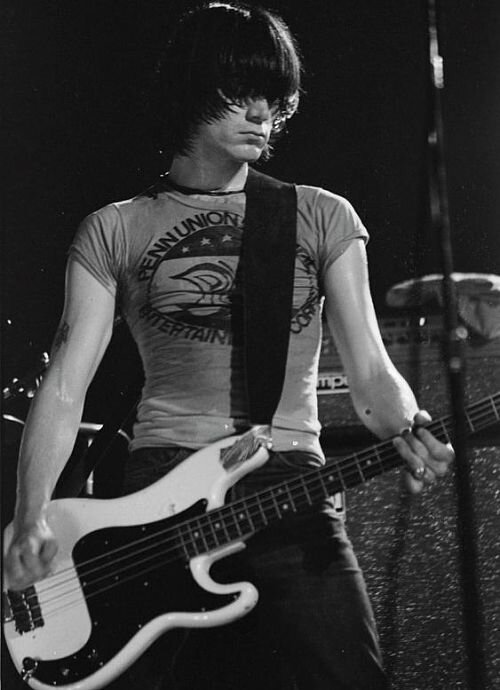
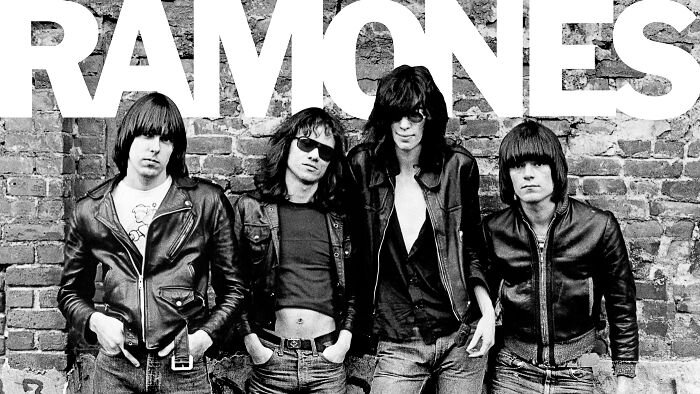
Dee Dee Ramone (The Ramones)
Courtesy of The Ramones Com Courtesy of The Ramones Com

Courtesy of The Ramones Com

“I’d like to congratulate myself and thank myself and give myself a big pat on the back.”

Greatest Rock and Roll Hall of Fame ceremony acceptance speech ever – by way of Douglas Glenn Colvin aka Dee Dee Ramone in 2002!

Though Dee Dee essentially rendered indistinguishable bass passages sans any significant semblance of harmonic or rhythmic variation throughout his entire career as a founding member and primary songwriter of The Ramones – he played exactly what was needed – serving the almighty song!

His execution and attitude anchored one of the greatest forces in the history of popular music, which continues to inspire generations long after his passing, and the passing of his band mates.

As I recall, the rock and the jazz police respectively were appalled by The Ramones nihilistic approach and feral aesthetic, which made them even more appealing.

Dee Dee’s technique necessitated his fashionably knee-level low hanging bass and right hand position as his the rapid fire 16th / 32nd notes necessitated the flexibly of his wrist rather than his rigid forearm – fact is, you can’t play that fast and that steady any other way! And he utilized only one weapon of choice – the mighty Fender Precision.

In the most hallowed tradition of their forefathers Berry, Penniman, Lewis, and Presley – Dee Dee and The Ramones’ body of work exudes the very essence of the art form that is rock ‘n’ roll: their eternally youthful vibrancy; their unabashed reverence for the past while pushing forward; their stark individuality; their instantly recognizable collective sound; their uncanny ability to threaten the status quo; and their enduring and expansive effects on pop culture represent just a few of the reasons why these revolutionary outcasts from Queens County Long Island New York will be relevant, and always sound fresh.

The Ramones in all their 1978 glory: https://youtu.be/-WgdD3F73CY
Courtesy of The Ramones Com Courtesy of The Ramones Com
Courtesy of The Ramones Com

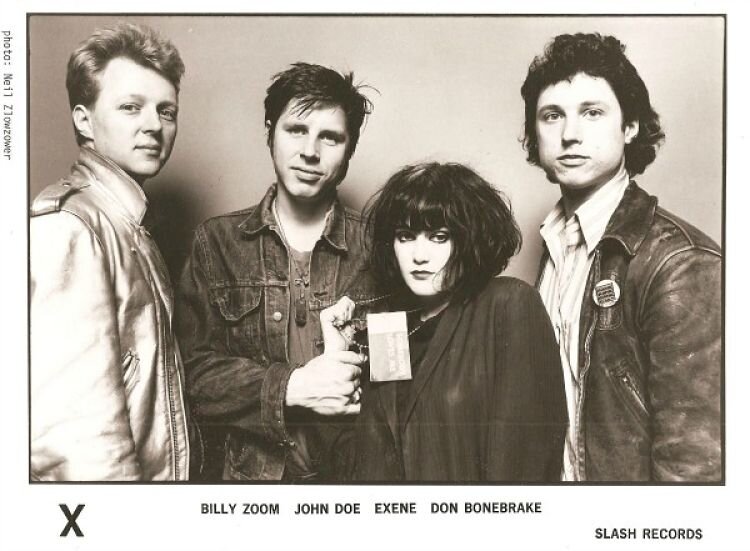
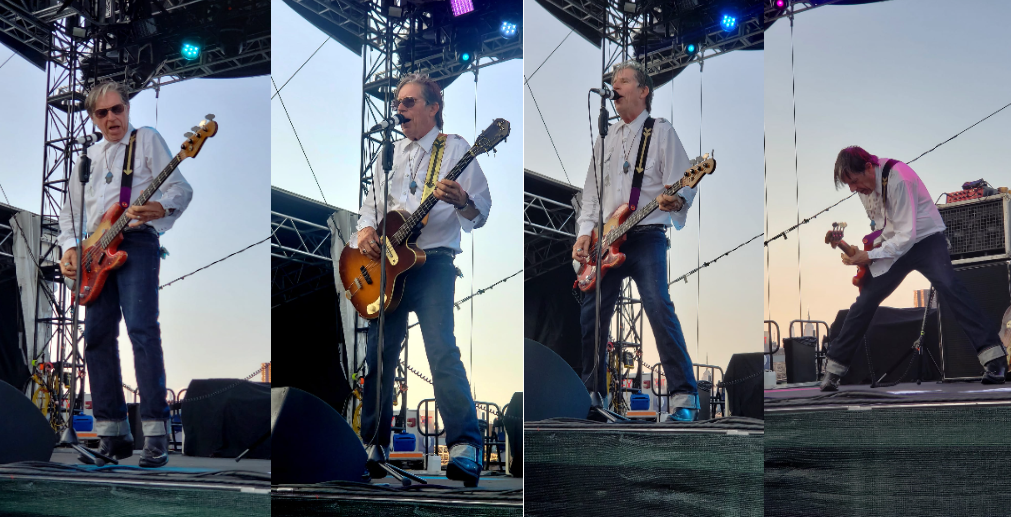
John Doe (X)

Photos by Jamie Moroni

His official bio states that “John Doe” was born in 1977 – the same year his band formed in Los Angeles, California.


Bassist, composer, actor (over 50 films and television productions), poet, recording artist, and author, among other endeavors, the former John Nommensen Duchac anchors one of the America’s greatest rock ensembles – X.


A collective of “cerebral punks” with a romantic, reverential, and most visceral disposition for American roots music, X could actually sing and play their instruments with proficiency at a time when musical prowess and homage for that which came before them were not in vogue.  


X waxed seven slabs between 1980 and 1993, after which they spilt to embark on various projects. The band first reunited in ’97, and since 2004 have been active on the concert circuit. Their latest platter featuring all original band members Alphabetland, was released in April 2020.


Primarily a Fender Precision devotee, Doe’s bass passages quote Bill Black and Willie Dixon – drawing from blues, rockabilly, and folk and permutations thereof.


A prolific solo artist, Doe has cut eight platters under his own name and collaborated with Patty Griffin, Dan Auerbach, Aimee Mann, Don Was, Kathleen Edwards, The Knitters, Jill Sobule, The Sadies, and Greg Liesz among others.


John Doe Sound & Vision

X….


“4th of July” live at Farm Aid 1986 https://youtu.be/VEW-Uo097kU


“White Girl” https://youtu.be/emY12SGdrIM


“True Love” https://youtu.be/WeFLHarwPjY


“Los Angeles” https://youtu.be/Exs-mcKApxI


“See How We Are” https://youtu.be/ADmUT7dCDi8


Solo…


“Get On Board this Train” https://youtu.be/2ug3IBfgOhs


“Don’t Forget How Much I Love You” https://youtu.be/4nmuqUig9BA


John B. Sparks (Dr. Feelgood)


Opined The Independent’s Nick Hasted “Dr. Feelgood are remembered in rock history, if at all, as John the Baptists to punk’s messiahs!”


Noted Motorhead’s Lemmy Kilmister … “three alcoholics and a speed freak … what could possibly go wrong?” This incomparable quartet of Canvey Island Essex lads: singer Lee Brilleaux, guitarist Wilko Johnson, drummer John “The Big Figure” Martin, and bassist John B. Sparks looked (and behaved) as if they were coming off a bank heist!


Along with Brinsley Schwarz,  Graham Parker & The Rumour, Ducks Deluxe, and Dave Edmunds….to cite a few, Feelgood emerged among the founders and finest practitioners of Britain’s hallowed pub rock genre.  Their golden era is represented by the fiery, first two incarnations of the band featuring guitarists Wilko Johnson (1971 – 1977) and the late Gypie Mayo (1977-1981). A raucous meld of old-school rock and roll with stripped down rhythm and blues, their influence was profoundly felt by artists that came to prominence during the punk era such as Paul Weller, Bob Geldof and the Boomtown Rats, Blondie, and Richard Hell among others. 


Dr. Feelgood’s bassist during their glory years was John B. Sparks – who rendered supportive pocket passages which fortified the frantic performances Wilko and Brilleaux. Sparks was a heavy handed plectrum player working a Gibson Ripper and/or Fender Precision. His passages quoted the Willie Dixon school of bass – keep it simple, keep it solid. 


Dr. Feelgood’s Wilko canon; Down By the Jetty (1975), Malpractice (1975), the #1 in the UK live set Stupidity (1977), and their select Gypie sides; Be Seeing You (1977) and Private Practice (1978) are essential, as is Julien Temple’s 2009 biographical film Oil City Confidential.


Nowadays a band working under the Dr. Feelgood moniker fervently / respectfully plays on and records with none of its original members. Brilleaux passed in ’94, but by then the band was a nostalgia act. However Wilko keeps the Feelgood flame burning hot. He waxed remakes of of the band’s signature tunes with Roger Daltrey in 2014 on their collaborative Going Home slab.  And his live shows, with bassist Norman Watt-Roy comprise a best-of Feelgood revue wherein the former Blockhead works the trail blazed by John B. Sparks. 


John B. Sparks Sound & Vision…


“She Does It Right” https://youtu.be/iHm7uIC84YM


“Back in the Night” https://youtu.be/nW1dF8YJ0CM


“Down at the Doctors” https://youtu.be/uvRNRiA_h34


“Going Back Home” https://youtu.be/vV0yYcN9QnE


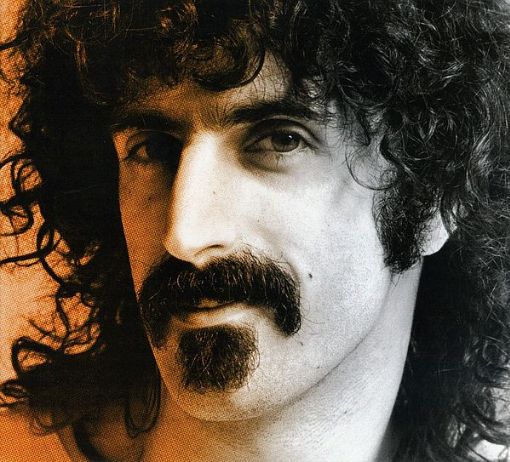
Frank Zappa’s Main Mothers: Roy Estrada, Tom Fowler, Jim Pons


Frank Zappa’s definition of rock journalism: “…people who can’t write, interviewing people who can’t talk, for people who can’t read….


The roster of accomplished bassists who have contributed to Frank Vincent Zappa’s iconoclastic canon is exhaustive. Most folks / music journos agree (myself included) that the landmark recordings from this great American composer, bandleader, and guitarist were with his ever-changing Mothers of Invention collective which spanned (roughly) 1964-75.


Frank waxed many solo slabs with Mothers members, and he sometimes revived the name – but for our purposes, the most representative era was that ten-year span.


Frank employed numerous bassists on his early Mothers sides including Carol Kaye, Jim Fielder (who played rhythm guitar on Freak Out) , Martin Lickert, and Alex “Erroneous” Dmochowski, among others.


The primary “band” bassists under the Mothers banner were; Roy Ralph Moleman Guacamole Guadalupe Hidalgo Estrada (1964-69), Jim Pons (1971-73) and Tom Fowler (1973-75).


Negotiating disparate genres with uncanny expertise, Estrada and Pons excelled during Zappa’s early experimental years which encompassed the composer’s collage-like interpretations of psychedelic rock, jazz, doo-wop, spoken word, scatological comedy, musique concrete, and cabaret. Fowler joined the Mothers as Frank’s artistry significantly veered towards progressive rock and jazz fusion.


All of the aforementioned players had remarkable careers outside of their tenure with Frank: Ray Estrada (Little Feat, Captain Beefheart), Tom Fowler (Jean-Luc Ponty, Steve Hackett, Ray Charles, ), and Jim Pons (The Turtles, The Leaves).


Ray Estrada on “Hungry Freaks Daddy” https://youtu.be/s0JTNVkhyS8


Jim Pons on a live version of “Call Any Vegetable” https://youtu.be/1BAu059IMYw


Tom Fowler on “Camarillo Brillo” https://youtu.be/eGo_4KGKDZ0


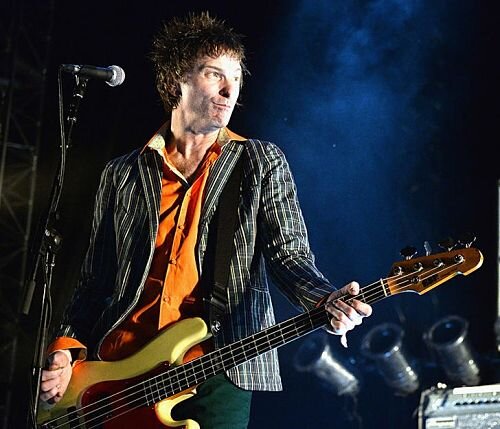
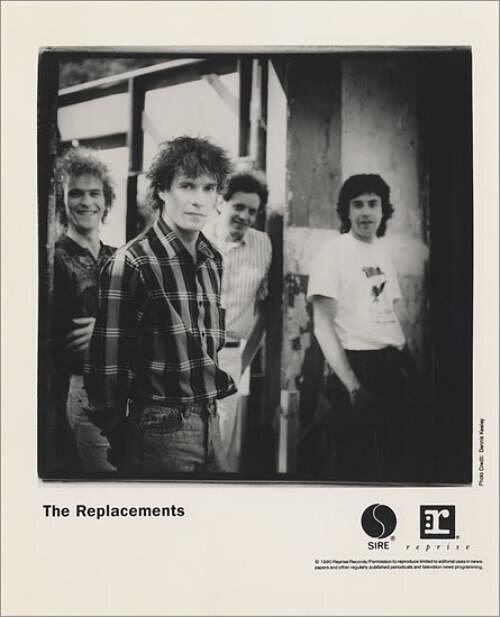
Tommy Stinson (The Replacements, Guns ‘n’ Roses)

Courtesy of Tommy Stinson Com Courtesy of Tommy Stinson Com

Courtesy of Tommy Stinson Com

By Thomas Semioli

He anchored one of America’s most influential and beloved indie rock bands: The Replacements.

His solo canon and assorted band projects (Bash & Pop, Perfect) are an uncompromising meld of traditional rock ‘n’ roll, roots, and pop punk.

He brought his formidable skills to Soul Asylum as a touring and recording bassist (Silver Lining/2006, Delayed Reaction/2011), and toiled in W. Axl Rose’s Hired Guns ‘n’ Roses (Chinese Democracy/2008).

A composer, recording artist, sideman, collaborator, band-member, guitarist; Thomas Eugene Stinson embodies that which is the essence of a rock bassist in a time-honored setting: he leaves space for the singer, he hangs on the root notes during the guitar solos and vocals, and he always locks in with the kick-drum whilst rendering lines that are austere, melodic, and most functional.

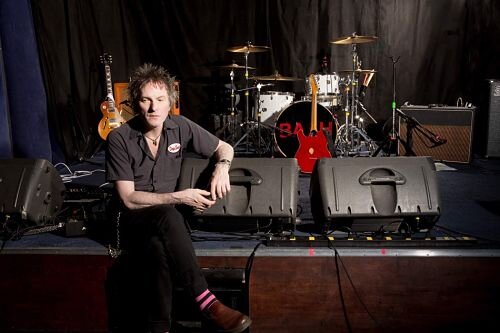
Courtesy Tommy Stinson Com Courtesy Tommy Stinson Com

Courtesy Tommy Stinson Com

Among Stinson’s bass-ic weapons of choice include ESP, Rickenbacker, and Fender.

When The ‘Mats make their long overdue entrance into the Rock ‘n’ Roll Hall of Fame, I expect them to tear the f—n’ place down!

Dig Tommy with The ‘Mats “I’ll Be You” https://youtu.be/n3XMC_Sk3QE

Dig Tommy crooning with GnR “Motivation” https://youtu.be/1PjtJGz1l20

Dig Tommy “Meant to Be” https://youtu.be/UmUQRMz_WNg

Stinson 3_opt.jpg Stinson 3_opt.jpg

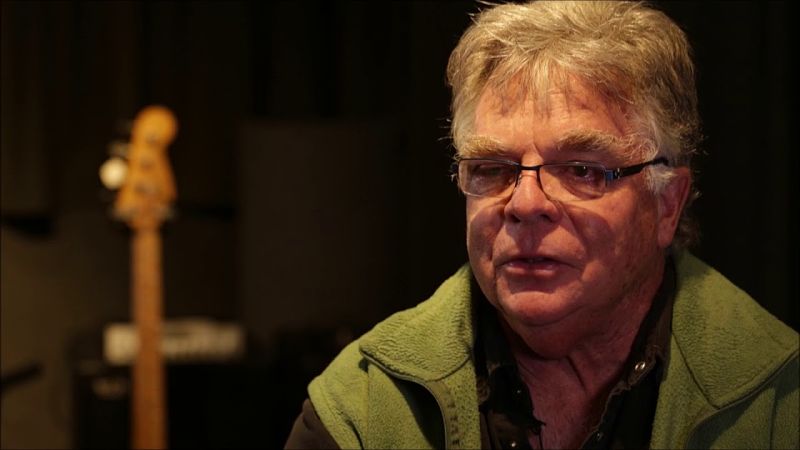
Ron McClure (Blood Sweat & Tears, Charles Lloyd)


Ron McClure’s extraordinary career as a bassist, composer, bandleader, collaborator, and educator spans Buddy Rich, Maynard Ferguson, Charles Lloyd’s “classic quartet with Jack DeJohnette and Keith Jarrett, Joe Henderson and Quest with David Liebman, to cite a very select few.


My former teacher, rock fans will recall Ron as the anchor for Blood Sweat & Tears from 1974-76, taking over the bass chair from Jim Fielder. Ron was nominated for a Grammy (“graminated for a Nommy” in his own words – see video below) for his composition “No Show” which appeared on the last listenable BST slab New City (1976).


Ron teaches at New York University nowadays.


Watch Ron on Know Your Bass Player on Film Season One, 2016 New York City, Euphoria Studios https://bit.ly/2YJyIDr


Sheryl Crow

The world knows her as a Grammy Award winning (that’s nine statues out of thirty-two nominations for those of you keeping score…) singer, songwriter, collaborator, and recording artist…


…however, following her multi-platinum bow Tuesday Night Music Club (1993), Sheryl Crow took to the stage to support her self-titled follow-up as a bass player! In fact, she’s waxed bass tracks on all her subsequent albums and singles to date.


With a yen for vintage instruments: Guild, ’54 Kay Pro, Fender Mustang, standard and customized MusicMan Stingrays, among others – Ms. Crow works the pocket with a decidedly laid-back, behind-the-beat feel that complements her folk / pop / classic rock canon.


Sheryl Crow Sound & Vision…


…with her vintage Fender Mustang with Joe Walsh: https://youtu.be/AqFD2ja-9Fs


Sheryl rendering Joe’s James Gang hit “Walk Away” on a customized Guild: https://youtu.be/OtSRaBtantQ


Live rendition of “My Favorite Mistake”  https://youtu.be/BwPfefKhIEk


Sheryl rockin’ Central Park with her MusicMan “There Goes the Neighborhood” https://youtu.be/uc4haaYZKv8

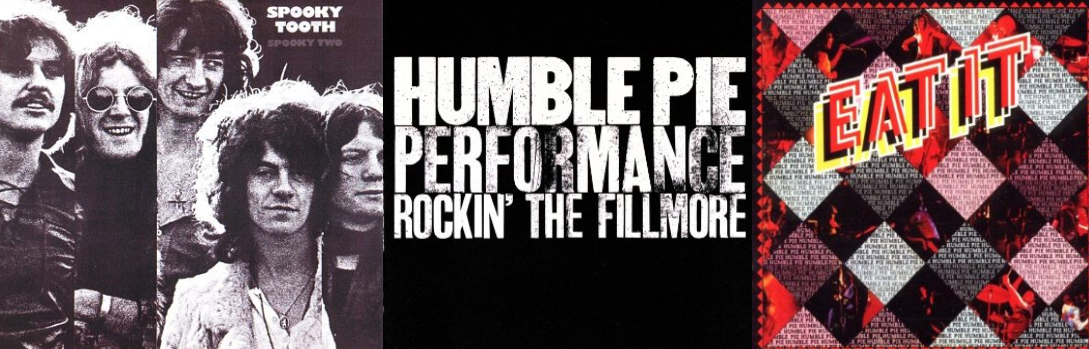
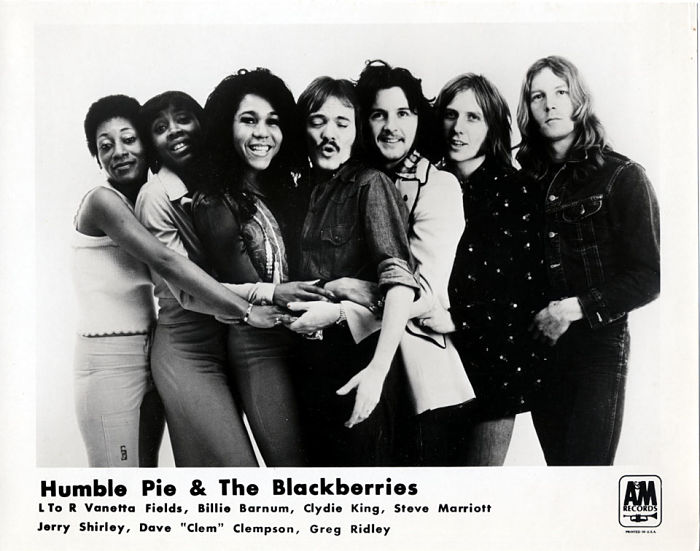
Greg Ridley (Humble Pie, Spooky Tooth)


“Ooohhhhh Stone Cold Fever, yeah, so hard to see…I’ve got trouble in my backbone…”


Among the most soulful players to emerge from the late 1960s –early 1970s wave of hard rocking British bluesmen, the late Alfred Gregory Ridley was a founding member of two legendary ensembles: Spooky Tooth and Humble Pie.


Unlike his peer bassists who toiled in the shadows, Ridley was a showman, gravitating towards center stage with his natural finish Fender Precision adorned with abalone inlays and a floral décor. Ridley’s bold, free-form style harmonic extensions were further bolstered by his Acoustic 360 –which was among the most powerful of the era.


A vocalist and songwriter, Ridley essentially vanished from the music business when Pie split in 1975, though he worked sporadically over the ensuing years with Steve Marriott.


At the time of his passing in 2003, Ridley anchored Tea, a blues band based in Spain where he resided. Greg also helmed “Greg Ridley’s Humble Pie” repertory ensemble, albeit briefly, which belted out the best of Pie.


Greg Ridley Sound & Vision….


With Spooky Tooth:


“Old As I Was Born” / “Cotton Growing Man” / “Waiting for the Wind” / “Moriah” https://youtu.be/nExtB4Nz4Kk


“That Was Only Yesterday” with Luther Grosvenor https://youtu.be/u7lTzEVVItA


Greg Ridley’s Humble Pie Live https://youtu.be/wsxXBlxYjas


With Humble Pie:


“The Sad Bag of Shaky Jake” https://youtu.be/cbJCCrcp5G8


“Bang” https://youtu.be/4kPN_OJMaAg


“Honky Tonk Woman” https://youtu.be/kV0uV2XyIHw


“30 Days in the Hole” https://youtu.be/sdXjm8pZMws


“I Don’t Need No Doctor” https://youtu.be/mSyrf-FYKVE


Martin Turner (Wishbone Ash)

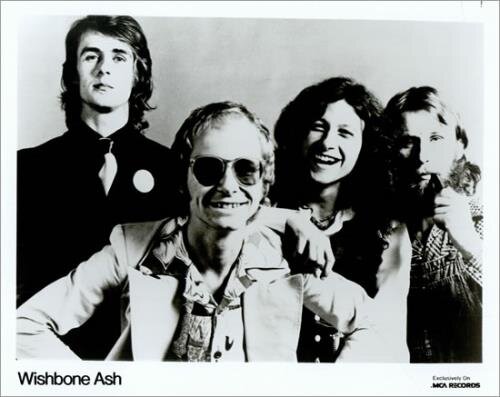
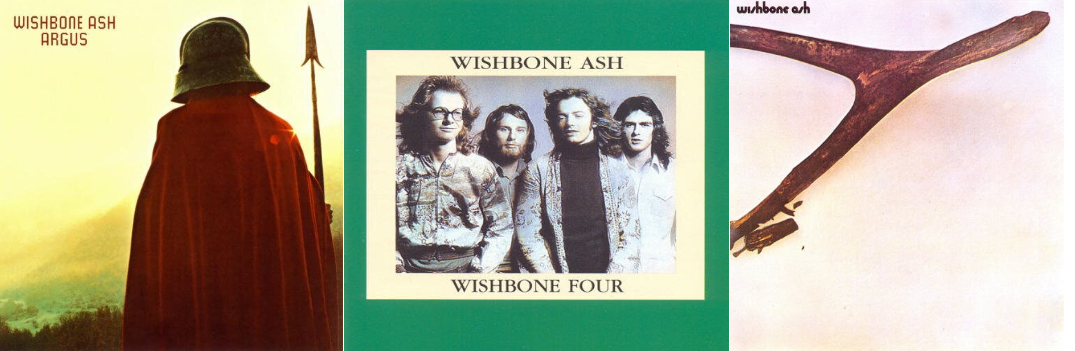
With a ravaged Gibson Thunderbird he purchased from Mott the Hoople’s Peter Overend Watts in the early 1970s (which he still  occasionally uses), Martin Robert Turner and Wishbone Ash were among the most pioneering ensembles of the classic rock era, employing the remarkable double guitar artistry of Ted Turner (no relation) and Andy Powell.


Martin Turner and Wishbone Ash’s crowning achievement was unquestionably the album Argus (1972), a classic collection wherein Ash’s progressive yearnings fully blossomed.  


Simultaneously utilizing his instrument as an anchor and a chordal counter-melodic vehicle, Turner, who was also the band’s vocalist, was far more organic than his progressive rock counterparts with bass lines that quoted jazz, blues, and boogie.

Turner split from Ash in 1979 when it was decided that the band’s fortunes would be better served with a more traditional lead singer.


Consequent reunions failed to rekindle the old Ash flame, hence Tuner works under the banner of “Martin Turner Plays The Music of Wishbone Ash.”


Turner’s latest slab waxed in 2015 is Written in the Stars – and is most evocative of his work with Wishbone Ash….


Martin Turner Sound & Vision…


“Handy” https://youtu.be/FNJqVW2L5is


“Written In the Stars” https://youtu.be/cV_6OgI_5Lc


“The Pilgrim” https://youtu.be/lMDslWG75yc


“Blowin’ Free” https://youtu.be/EeY9IRnVmk8


“Lonely Island” https://youtu.be/C6OOyiEH1GY


Louis Johnson (Brothers Johnson)

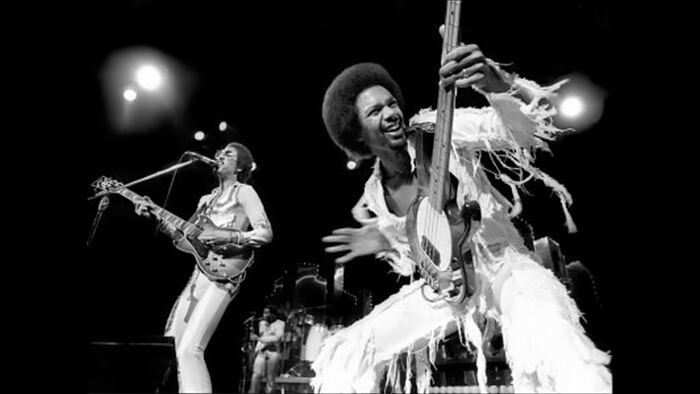
Courtesy of Brothers Johnson Com

A giant of the instrument, a master slap and melodic player…and among the most influential bassists ever…where to begin with the late, truly great Louis Johnson?


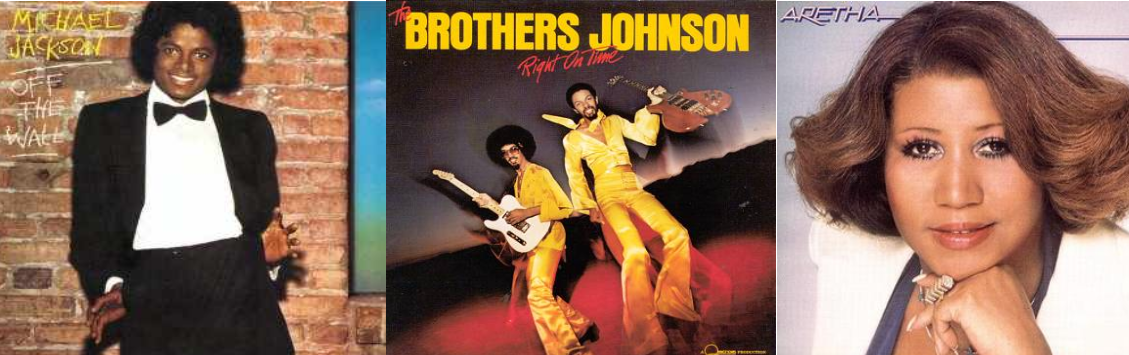
He was the bassist that brought the funk to Thriller (1983), and he was pretty impressive on Michael’s Off The Wall (1979) and Dangerous (1991) as well.


Louis Johnson on the title track to Off The Wall https://youtu.be/B3MFbhwfEXU


As co-bandleader of the multi-platinum Brothers Johnson, “Thunder Thumbs” Louis Johnson probably did more to further the acceptance of slap style bass than any other player of his generation.


Though he possessed tremendous dexterity and rendered flashy solos – Johnson’s genius was evidenced in his intuitive rhythmic prowess – which made him an asset in the studio for scores of session and sideman dates.


Dig Louis signature slap style the Brothers Johnson’s iconic interpretation of Shuggie Otis’ “Strawberry Letter 23” https://youtu.be/rquygdjf0d8


Louis’ bass artistry contributed significantly to several iconic albums and hit singles by Aretha Franklin, George Benson, Earl Klugh, Grover Washington Jr., Michael McDonald, Paul McCartney, Stevie Wonder, Stevie Nicks, Bjork, Quincy Jones, George Duke, and Kenny Loggins …. among many, many others.


Louis Johnson’s extraordinary 1985 instructional film, now distributed by Hal Leonard, is the absolute definitive tutorial on slap bass.


Check out the intro to Louis Johnson’s Star Licks instructional video https://youtu.be/xlzGsTMqZ8g