Courtesy of David Johansen Com
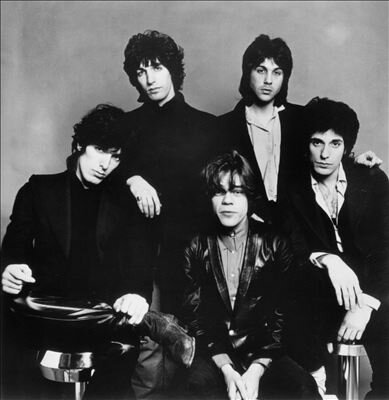
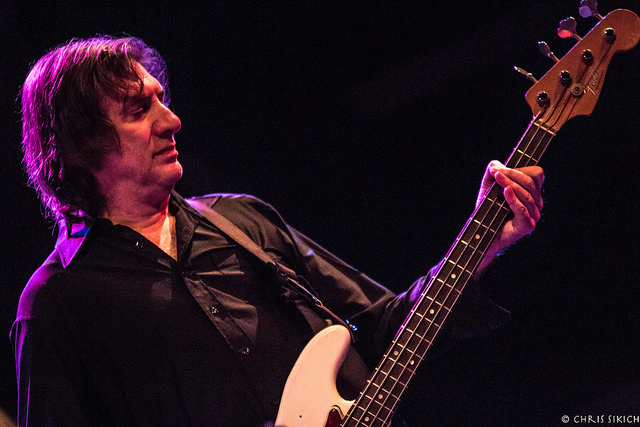
When David Jo first flew solo following the New York Dolls he assembled a streetwise ensemble for his first two releases which featured a core band of drummer Frankie LaRocka, guitarists Johnny Rao and Thomas Trask, and ex-Doll Syl Sylvain along with brilliant cameos by Ian Hunter, Dan Hartman, Stan Bronstein, Nona Hendryx, Scarlet Rivera, Sara Dash, Joe Perry, Felix Cavaliere, and producer/guitarist Mick Ronson to cite a distinguished few.
The bass player on those dates was the charismatic, pompadour coiffed Buzz Verno who laid the foundation pure, simple, and in-the-pocket to enhance David’s restlessly romantic character portraits set to three chords and a thundering backbeat.
Dig Buzz on stage with David for “Frenchette” https://youtu.be/08MuQAC5zpw
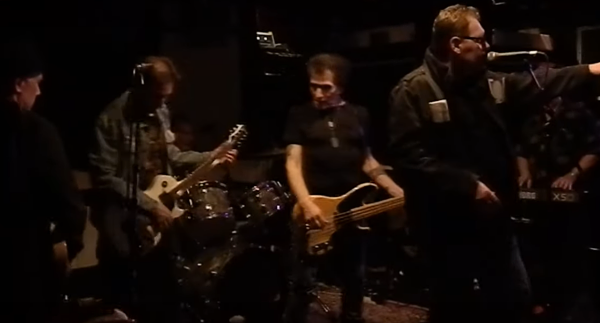
Buzz Verno with Joey Kelly
Dig the Buzz Verno Band with Joey Kelly…
Part One: https://youtu.be/vQ_UbAj7bhs
Part Two: https://youtu.be/wuAQaP59bPc


Akin to the icons who preceded and influenced him- namely Stanley Clarke, Jaco Pastorius, and Larry Graham – Marcus Miller has expanded the language of the instrument and the jazz fusion genre as a player, recording artist, producer, and composer. And like all the great ones, his tone – the Fender Jazz “scoop” – is instantly recognizable. In fact, Miller’s timbre is now universally acknowledged as a standard electric bass tone.
Born into a musical family in Queens County, New York 1959 – Miller was classically trained on the clarinet. Still in his teens, Marcus became a first call session cat – playing on scores of record dates, jingles, and soundtracks during the golden era of the New York City studio scene of the 70s -80s.
His first high-profile gigs were with Lenny White, David Sanborn, and Miles Davis. With Davis, during the jazz icon’s much heralded comeback in the 1980s, Miller served as the trumpeter’s musical anchor. Marcus composed and produced Davis’ final masterpiece, and one of the greatest cross-over jazz slabs of all time Tutu (1986).
Marcus’ Grammy Award nominations as a producer include Davis, Luther Vandross, David Sanborn, Chaka Kahn, and Wayne Shorter.
As a bandleader he nailed a Grammy for Best Contemporary Jazz Album in 2001 for M2, in addition to several nominations throughout his career. The list of major artists Marcus Miller has collaborated with is inexhaustible. Marcus has scored nearly thirty films, and he’s always busy on the concert circuit on every continent.
To bring the instrument to a new generation, Marcus teamed with Sire guitars for his affordable, signature bass. And in his spare time, Marcus is a Sirius/XM radio host of Miller Time which covers “360 Degrees of jazz, from hip-hop to be-bop!”
Marcus Miller Sound & Vision…
Grover Washington “Just the Two of Us” https://youtu.be/Bw68MDfeN9I
Selah Sue “Que Sera Sera” https://youtu.be/Ld6yvfsSMJY
Miles Davis “Tutu” https://youtu.be/0Jnqz62d9oM
David Sanborn “Let’s Just Say Goodbye” https://youtu.be/Bw68MDfeN9I
With Bryan Ferry at Live Aid 1985 https://youtu.be/FxXw8gZIfc4
Marcus pays homage to Jaco “Teen Town” https://youtu.be/bE2pAU9LIgI
Marcus Miller:
“Power” https://youtu.be/1X2tHJ5gUek
“Blast” https://youtu.be/S1Anp9WxD30


Courtesy of Fretless Monster Com
He is that rare bassist you can identify in one phrase!
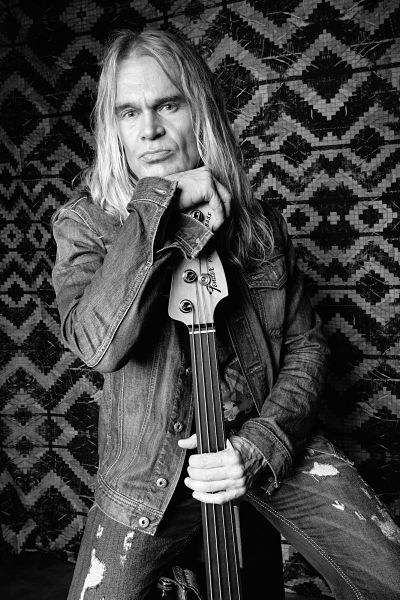
Along with Jack Bruce, Jaco Pastorius, Fernando Saunders, Sting, and Pino Palladino – Tony Franklin is among the most accomplished and recognizable fretless bassists to ply his craft in a primarily rock / pop context.
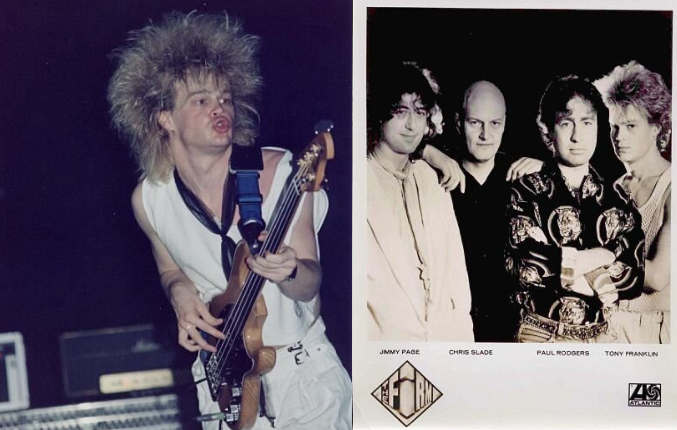
Franklin’s tenure with Jimmy Page, Chris Slade, and Paul Rodgers in The Firm profoundly augmented the language of hard rock bass – serving as a dual rhythmic foundation and harmonic catalyst. His mastery of sustain coupled with his resonant tone showed just how magnificent the fretless can be when given the opportunity!
A solo recording artist, composer, clinician, educator, and producer, among Tony’s top recorded works as a session cat / sideman / collaborator include platters with Glenn Hughes, Jimmy Page, David Coverdale, Roy Harper, Donna Lewis, Tony MacAlpine, David Gilmour & Kate Bush, and Graham Bonnet to cite a select few.
Drawing his inspiration from the greats – Sir Paul, Jaco, Jamerson, and Queen’s countermelodic master John Deacon, Tony and Fender created a signature fretless and fretted Precision bass replete with a Hipshot Bass Xtender, a jazz bridge pickup, and vintage tuners.
An engaging presence on social media – keep up with Tony via his YouTube Page: Tony Franklin – The Fretless Monster and his website www.fretlessmonster.com
Tony Franklin Sound & Vision:
Glenn Hughes “I’m The Man” https://youtu.be/IO-36XiGxa8
The Firm “Satisfaction Guaranteed” https://youtu.be/p4zbS8pciTU
David Coverdale “Don’t You Cry” https://youtu.be/p4zbS8pciTU
VHF “Backside of Your Eyes” https://youtu.be/SNe9nAlQMXk
Tony Franklin “Never Be The Same” https://youtu.be/xP0sGkwl8X4
Tony Senatore rendering Tony Franklin with The Firm “Radioactive” https://youtu.be/i_Fy_YTaIOc


“The Fender bass player Carol Kaye…could do anything and leave the men in the dust…” Quincy Jones
“Carol, you’re the greatest bass player in the world…” Brian Wilson
She is Paul McCartney’s favorite bass player…
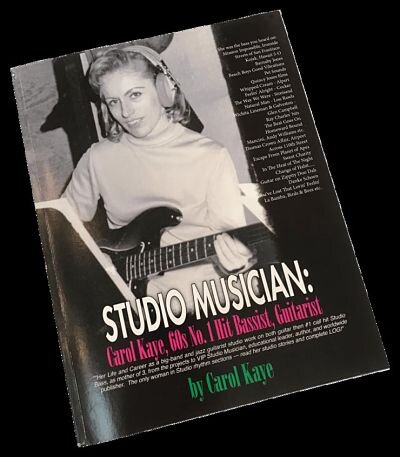
She was the primary anchor of “The Wrecking Crew” – a hitherto anonymous group of L.A. session musicians responsible for the instrumentation on thousands of recordings spanning pop records to television and film soundtracks.
If you lived in the 20th Century or listen to popular music in general, you’ve heard Carol Kaye on electric bass. By her own estimate, she has appeared on over 10,000 recordings in a six-decade (and counting as of 2020) career. I can’t imagine how many times she’s been sampled. To my ears, it’s impossible to categorize Carol with regard to style and tone as her bass artistry is purely chameleonic: Ms. Kaye assumes her role in any given musical situation with uncanny expertise.
She started out professionally as a be-bop guitarist in the late 1940s, working clubs in Los Angeles. In 1957 Carol broke into the studio scene, waxing sides with Sam Cook and other artists in Hollywood. Then one day in 1963, the “Fender” bassist failed to show up for a Capitol Records session date, and Carol took up the instrument and the rest, as they say is history….
In her 1960s heyday Carol’s choice of tools were a Fender Precision with flatwound strings and a plectrum which blended perfectly on seminal records by the Beach Boys, Ray Charles, The Righteous Bros., Johnny Mathis, Nancy Sinatra, Sam Cooke, Glen Campbell, Lou Rawls, Jan & Dean, Henry Mancini, The Lettermen, Paul Revere & Raiders, The Monkees, Sonny & Cher, Chris Montez, Andy Williams, Quincy Jones, Joe Cocker, Ike &Tina Turner, Mel Torme, Bobby Darin, Frank Zappa, Wayne Newton, Herb Alpert, Don Ho, Al Martino… her resume is exhaustive.
An educator, clinician, prolific author (Electric Bass Lines series, among others) , and bona fide pioneer of the electric bass, Carol Kaye’s sight-reading instructional materials are essential for all serious musos regardless of their chosen instrument! Do your homework at www.carolkaye.com
Carol Kaye Sound & Vision
Beach Boys “Good Vibrations” https://youtu.be/rQ-UFKxDq5o
Beach Boys “Sloop John B” https://youtu.be/MWJXTdCVsKI
Nancy Sinatra “These Boots Are Made for Walkin” https://youtu.be/rypT2qMO1RY
Glenn Campbell “Wichita Linemen” https://youtu.be/Q8P_xTBpAcY
Joe Cocker “Feelin’ Alright” https://youtu.be/zIIzp9cqyUk
Babs Streisand “The Way We Were” https://youtu.be/ifWOSnoCS0M
By Thomas Semioli
He’s had quite a life in rock and roll…and he’s still going strong on record and on the bandstand.
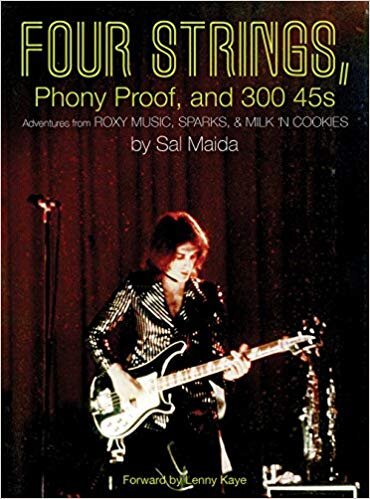
Salvatore Maida was among the stellar bassists employed by one of the most influential collectives in the history of rock ‘n’ roll, Roxy Music.
And he anchored one of the great lost glam pop ensembles of the 1970s – Milk ‘n’ Cookies.
Maida, who migrated to London from Little Italy at the onset of the glam rock movement to pursue his craft, shines on two stunning tracks which outstrip their respective studio versions – “Pyjamarama” and “Chance Meeting” – included on the iconic ensemble’s only live collection released during their 1970s reign as vanguards and innovators.
Utilizing a plectrum and a 1965 Fender Precision, and Dan Electro Longhorn, Sal lives for the pocket with a penchant for plying inventive upper register countermelodies.
Maida, who is also a writer/producer, additionally worked craft with the Sparks (Big Beat / 1976), David Lowery (The Palace Guards/ 2011), and Edward Rogers, among many others.
Sal was also a member of Cracker and appears on Greenland (2006) Sunrise in the Land of Milk and Honey (2009). Sal is married to singer songwriter, recording artist Lisa Burns, with whom he has collaborated with on several projects including her solo sides Unadorned (2004) and The Last Day of Winter (2014) by George Usher and Lisa Burns, among others .
But don’t let me tell you about Sal, read his extraordinary autobiography Four Strings, Phony Proof, and 300 45s: Adventures from Roxy Music, Sparks, & Milk N’ Cookies (Perfect Press)
Dig Sal Maida on Know Your Bass Player On Film Season One – 2015 New York City, Euphoria Studios https://bit.ly/3lp6Wpb
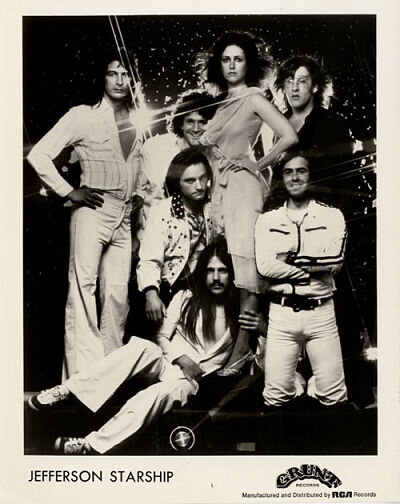
Pete with his Doug Irwin bass – Pete Sears Facebook

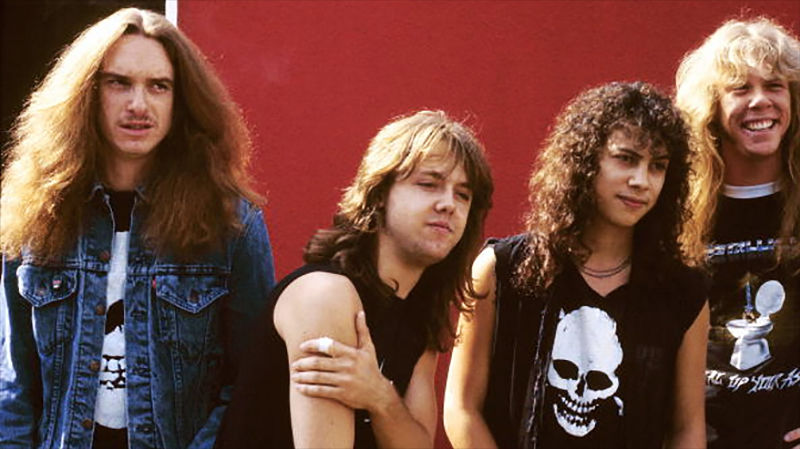
Cliff Burton was unquestionably among of the most innovative, singular instrumentalists in rock history.
He was a natural virtuoso who melded thrash with classical, blues, and jazz. We can only speculate on how the instrument would have evolved had the revolutionary metal master had not been removed from this mortal coil so young – and so tragically.
Akin to John Entwistle and Jaco Pastorius, two of Cliff’s influences, Burton profusely purveyed the “lead school” of bass with Metallica.
Utilizing sonically enhanced instruments – Rickenbacker and Aria Pro – wired though guitar amplification gear, Burton’s melodic improvisations were oft enhanced by wah and distortion effects. Hence, many listeners assumed that Cliff’s lines, rendered with a high end resonance, were guitar parts!
Burton’s right hand technique was baffling: somehow he was able to play with remarkable fluidity without anchoring his thumb on any part of the bass.
Unfortunately, Metallica’s decidedly juvenile behavior in the media early in their career hampered the band’ s acceptance by the rock establishment -which might have been the whole idea in the first place. As such Cliff was never afforded the respect he deserved outside the fervent fan-base of heavy metal and thrash during his lifetime.
Every track Cliff recorded with Metallica, including his bass solo composition “Pulling Teeth” (Kill Them All, 1983), and such works as “Orion” (Master of Puppets, 1986) and “Creeping Death” (Ride The Lightening, 1984), are worth exploring .
For the definitive history of Cliff Burton and Metallica, be advised to read Joel McIver’s tomes Justice For All: The Truth About Metallica (2014) and To Live Is To Die: The Life and Death of Metallica’s Cliff Burton (2016).
Cliff Burton Sound & Vision…
“Pulling Teeth” https://youtu.be/GhFMMiTmHb4
“For Whom The Bell Tolls” Live https://youtu.be/qdlQyNe_9tE
“Seek and Destroy” https://youtu.be/UzdDAd9EBOI
“Orion” https://youtu.be/aoO5LYx1Kxc
KYBP Adjunct Professor Tony Senatore’s Rendition of “Master of Puppets” https://youtu.be/0vU9-HFQVLY