Photo by Mark Polott
By Thomas Semioli
As I was witness, when Stanley Clarke emerged on the national music scene in the early 1970s the electric bass was not yet accepted by the jazz establishment. Perhaps it was because he also played the upright, perhaps it was due to the opened minded rock audiences of the day who gravitated towards electric Miles, Santana, and similar, or maybe the time was right for jazz to wake up to modern technology and young listener
….
Whatever the case, the jazz community paid attention to this Philadelphia whiz kid. Stanley applied the language of jazz to our instrument like no other before him. Note that Clarke was a product of his times – he was tuned in to Motown, the British Invasion, Philly soul, Muscle Shoals, and early electric jazz. He made no excuses for their influences in his music. In fact, he celebrated the pomp and circumstance of pop music – both on record and on stage. He was a star electric bassist – and remains so to this day.
In addition to his unparalleled technique and rhythmic and harmonic virtuosity as both an accompanist and soloist, and a prolific composer – Stanley fervently incorporated the languages of rhythm & blues, soul, funk, disco, and rock into to the jazz lexicon. By “legitimizing” those previously marginalized genres in a jazz context, Clarke profoundly changed American music – making it more inclusive, and more representative of the population.
Stanley’s canon, spanning his early days with Return to Forever to his extensive work in film soundtracks, to his innumerable collaborations are all worthy of exploration. He’s been cited by the Grammys, Bass Player, Downbeat, and various learning institutions with piles of achievement awards and honorary doctorates. While we’re at it, Stanley Clarke is long overdue for Kennedy Center honors.
Stanley paved the way for Jaco, Victor Wooten, John Patitucci, Christian McBride, Marcus, Tal, Esperanza and all the jazz lions and lionesses of the instrument who follow. Rock bass icons including Chris Squire and Paul McCartney (who worked with Stanley) revere him.
As long as the electric bass exists on the bandstand and in the studio, players will debate who is the GOAT. Fact: Stanley can carry the GOAT title in his back pocket!
He is the cat who kicked the door open to the evolution of instrument as we now know it. And he continues to celebrate the traditional role of the bass…
The most important electric bass player of all time? My vote goes to Stanley Clarke….
Stanley Clarke Electric Sound & Vision…
Solo Stanley:
“Journey to Love” https://youtu.be/w0QR-ZFs8FM
“Silly Putty” https://youtu.be/fVoGJ0FKttQ
“Lopsy Lu” https://youtu.be/rF4Y3uWKxvo
“School Days” https://youtu.be/dDveBbJkVqo
“Hello Jeff” with Jeff Beck https://youtu.be/h8eQCNiGuaw
“The Dancer” https://youtu.be/-1fCBRc2DAs
“Pop Virgil” https://youtu.be/adHsJPzuHzQ
Return to Forever: “Space Circus” https://youtu.be/gdsK9YIf3U4
Paul McCartney: “Somebody Who Cares” https://youtu.be/miemM-xFqWw
George Duke: “Louie Louie” https://youtu.be/XVfp-9lopKY
SMV at Montreal Jazz Festival 2012 https://youtu.be/qrXmblp9EBo
Keith Richards & Ronnie Wood New Barbarians https://youtu.be/FW8oAtBotI8
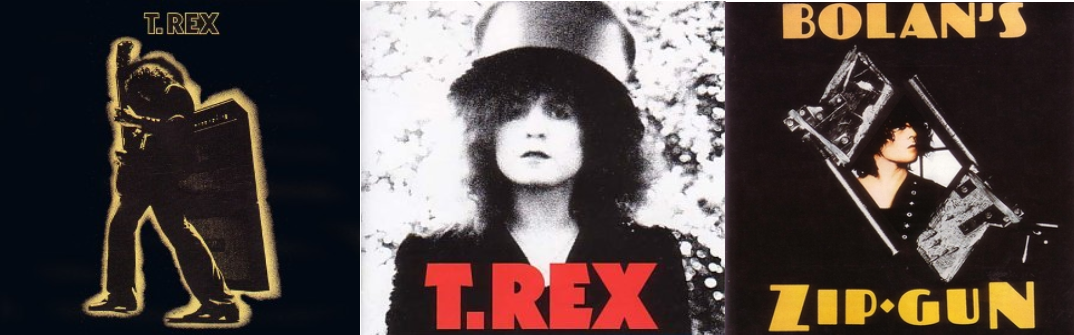
Courtesy of Reprise Records
Said Tony Visconti to this writer “Steve was one of the best bassists I’ve ever worked with…”
Though he is indeed a rock deity, the former Marc Feld also stood on the shoulders of producer Tony Visconti (a fine bass player), and his rhythm section comprised of drummer Bill Legend and the late bassist Steve Currie for his most enduring work under the T. Rex banner.
Currie, who possessed a plucky penchant for plying soulful passages, forged many a memorable groove on the album cuts as evidenced on “Mystic Lady,” “Till Dawn,” and “Ride My Wheels” to cite three.
Currie’s main weapon of choice was a maple neck Fender Precision.
Steve Currie Sound & Vision…
“Mystic Lady” https://youtu.be/T7XCzOdUoVk
“Till Dawn” https://youtu.be/SMm9lJ0-JLY
“Ride My Wheels” https://youtu.be/ARaI1XKE-vs

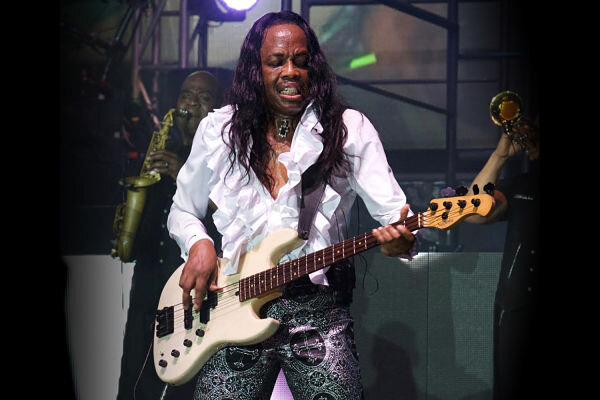
Courtesy of Verdine White Com
By Thomas Semioli
Shining star indeed!
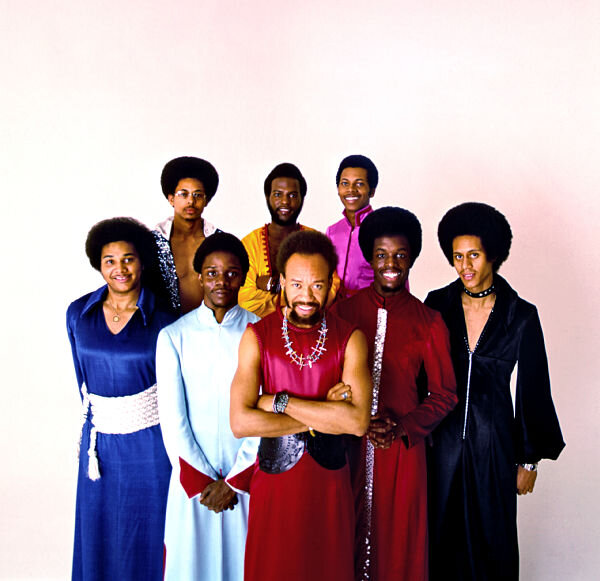
He anchors the ensemble named for the elements of our worldly existence. A showman, guru of the groove, Earth Wind & Fire bassist Verdine White incorporates his mastery of funk, soul, pop, rock, Gospel, rhythm & blues, disco and permutations thereof into an astonishing body of work.
Akin to Elvis, Miles, The Beatles, Frank Sinatra, Tony Bennett, Babs Streisand, Lena Horne, Ella Fitzgerald, Aretha Franklin, Prince, and Michael Jackson; EWF were among the rare class of artists who were not only the best of their generation, but also the most commercially successful.
A bassist who has inspired generations of players, White cites his heroes as session ace and EWF horn player Louis Satterfield (who was also his electric bass teacher), Sir Paul, and James Jamerson. Verdine studied upright with Radi Velah of the Chicago Symphony Orchestra.
A producer and composer, in addition to his tenure in EWF, White guested on slabs by Ramsey Lewis, Eumir Deodato, Jennifer Lopez, Kelly Clarkson, Flo Rida, Denice Williams, Gene Harris, and Solange to cite a select few.
White also created a foundation which bears his name to provide instruments and education to underserved youth.
Verdine was recognized by Bass Player magazine with a Lifetime Achievement Award and is listed among the 100 Greatest Bass Players of All Time. White’s primary weapon of choice during EWF’s glory years was the Fender Jazz bass. Nowadays Verdine works a Sadowsky Jazz, among other instruments.
Verdine White Sound & Vision…
“Serpentine Fire” https://youtu.be/XoI1XPqXQ90
“Keep Your Head to the Sky” https://youtu.be/qpD4siBSUOE
“September” https://youtu.be/Gs069dndIYk
“Reasons” Live https://youtu.be/0Qz_b1di3i8
“Mighty Mighty” https://youtu.be/NKljHXYTRy0
“Evil” https://youtu.be/CQ2AsBQCPeI
White’s legendary solo from California Jam 1974 https://youtu.be/sJbZht9Jp94
Verdine’s “floating” bass solo: https://youtu.be/-iymKkfhL0E
Rare clip of Verdine working the Fender Precision “Fantasy” https://youtu.be/gL2MsEbrtgI
Tony Senatore Renders Verdine White:
“Yearnin’ Learnin’ https://youtu.be/H1Yn8i-d1dY
“Shinin’ Star” https://youtu.be/LKIb67U6-gA
Courtesy Earth Wind & Fire Com
Courtesy of Sting Com
Thomas Semioli
Courtesy of The Police Com
Courtesy of Larry Graham Com
By Thomas Semioli
Courtesy of Jerry Scheff Bio
By Thomas Semioli
Courtesy Jerry Scheff Com

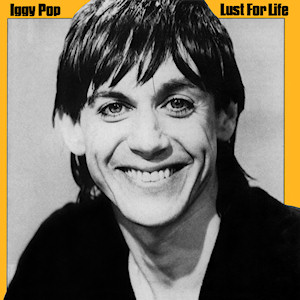
His overdriven, deep-in-the-pocket Bo Diddley / Armed Forces Signal Call inspired bass motif defines one of rock ‘n’ roll’s greatest anthems as rendered by the former James Newell Osterberg – “Lust For Life.”
Tony Fox Sales, son of the iconic comic Soupy, is among modern rock’s most inventive bassists. Given his show-business pedigree, Tony’s musical career took off at a relatively young age. With his drummer brother Hunt, Tony’s first band was aptly dubbed Tony and The Tigers, which featured guitarist Jon Pousette-Dart. They waxed a few singles and appeared on the Steve Allen Show, and Hullabaloo programs hosted by their dad’s famous pals.
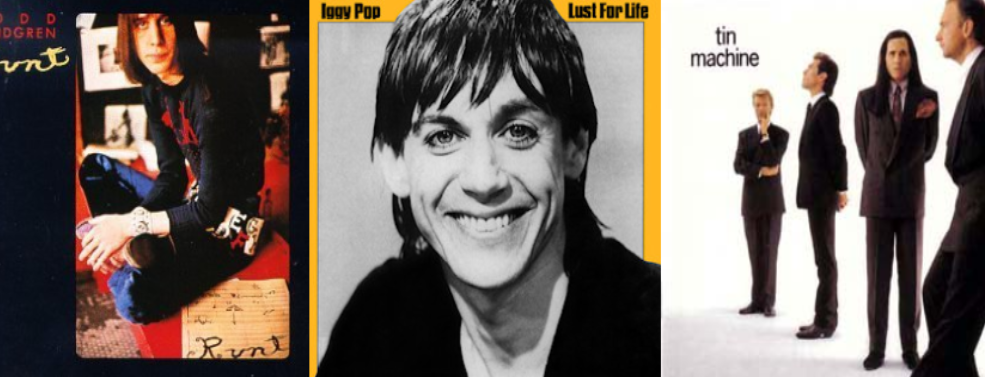
At 19, Tony and Hunt anchored Todd Rundgren’s Runt ensemble, which cut two extraordinary slabs: Runt (1970) and The Ballad of Todd Rundgren (1971).
The Sales brothers hooked up with Iggy for Kill City (1975), Lust for Life (1977), and TV Eye (1978) and several tours with Bowie and the former Stooge.
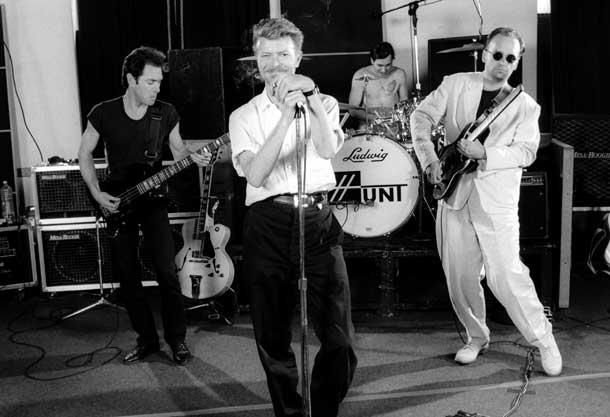
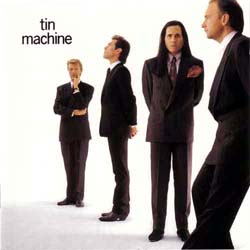
Anchoring the unfairly maligned, still ahead-of-its-time Tin Machine collective with Hunt, David Bowie (sax/vocals), and virtuoso guitarist Reeves Gabrels, Tony rendered bass passages that belied harmonic tradition yet propelled the ensemble’s quirky canon by way of old school rhythm and blues phrasing throughout their triumvirate of absolutely essential releases; Tin Machine (1989), Tin Machine II (1991), and the live set Oi Vey Baby (1992).
Among Sales additional collaborations of note included Checqered Past with Michael Des Barres, Steve Jones, Nigel Harrison, and Clem Burke; and Hired Guns with Hunt.

Tony Sales Sound & Vision…
Tony & The Tigers on Hullabaloo https://youtu.be/cRQiFwYtGRk
Todd Rundgren: “I’m in the Clique” https://youtu.be/0KXOEn_dE9U
Iggy Pop:
“Lucky Monkeys” https://youtu.be/CAgFa1YGrN4
“Lust for Life” https://youtu.be/jQvUBf5l7Vw
“The Passenger” https://youtu.be/-fWw7FE9tTo
Tin Machine
Video Compilation https://youtu.be/3H0hS1lxq4I
“Baby Universal” https://youtu.be/E7q3FDDmqmA
“You Belong in Rock and Roll” https://youtu.be/Ok5A8VoOMis
Checquered Past: “Underworld” https://youtu.be/xS-lbCFFZk4
Hired Guns:
“Shiftin’ Soul” https://youtu.be/oIhpY5dX8n0
“You Really Know How to Love” https://youtu.be/L6NQpBAL39c


No bass player defies categorization more so than the late, truly great, utterly unpredictable Hugh Colin Hopper, who was among the most prolific and adventurous recording artists to emerge from the England’s hallowed Canterbury progressive rock and experimental jazz scene of the late 1960s and early 70s.
Hugh seemingly never ran out of fresh ideas or novel ways to express himself on the instrument. Music fans of this era are most aware of Hugh by way of his groundbreaking work with Soft Machine wherein Hopper’s exploratory use of fuzz and various effects along with his extensive rhythmic and harmonic vocabulary was the glue that held multi-instrumentalist Robert Wyatt, keyboardist Mike Ratledge, saxophonist Elton Dean and other assorted Machine band mates together for an amazing run of releases during his 1968 – 1973 membership.
Dig Hugh and Soft Machine live in 1969 https://youtu.be/soQN0sMU0Ck
Of his massive solo and collaborative canon, be advised to hear his fusion avant-garde oriented forays 1984 (1973), Hopper Tunity Box (1977), A Remark Hugh Made (1994) and Numero D’Vol (2007).
Hugh also made several notable appearances as a valued sideman on such seminal releases including Syd Barrett’s Madcap Laughs (1969), Kevin Ayers’ Joy of a Toy (1969), Robert Wyatt’s Rock Bottom (1974) and Carla Bley’s European Tour 1977 (1978).

“Heart of Gold,” “Gotta Serve Somebody,” “Licking Stick”…
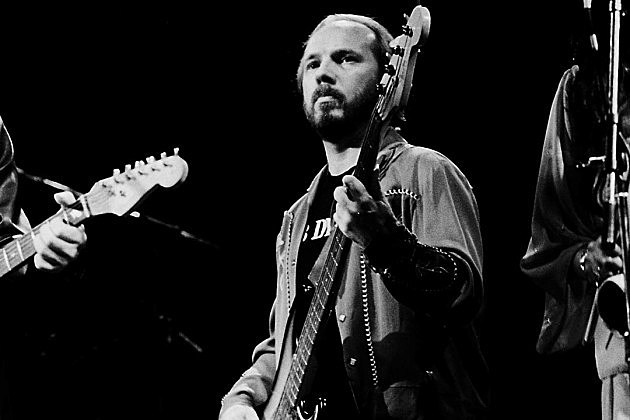
An undeniable Rock and Roll Hall of Fame worthy bassist as noted by this writer in Huffington Post, the late Timothy Lee Drummond’s studio and stage credits span rock, blues, folk, gospel, rhythm & blues, country, jazz, and countless variants thereof.
Huffington Post / November 2016: Tim Drummond: 11 More Players Who Belong in the Rock and Roll Hall of Fame https://bit.ly/2Eu35De
A master groove player who served the song first and foremost, Tim waxed classic sides and anchored historic tours with Crosby, Stills, Nash & Young in multiple configurations; Bob Dylan, Ry Cooder, J.J. Cale, James Brown, Hank Ballard, Beach Boys, Jewel, Roy Buchanan, Rita Coolidge, Neil Diamond, Bette Midler, and Hoyt Axton, among scores of others.
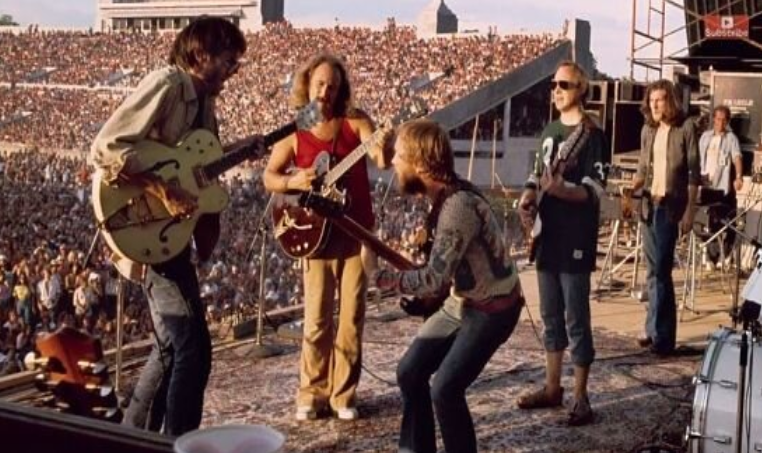
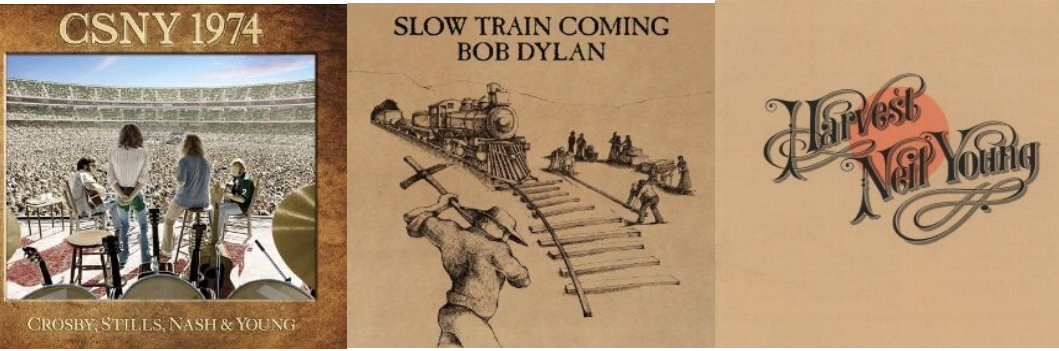
Be advised to check out Tim on the extraordinary CSNY 1974 (2014) live collection wherein his fluid lines and funky rhythms bridge the ample gaps between the oft contentious quartet of bandleaders on that historic Watergate-era trek across North America.
Tim Drummond Sound & Vision….
CSNY: “Almost Cut My Hair” from the ‘74 Tour https://youtu.be/Xiz2yZgD9B0
Bob Dylan: “Gotta Serve Somebody” https://youtu.be/0MzyBv4yOPU
Neil Young “Heart of Gold” https://youtu.be/X3IA6pIVank
James Brown “Licking Stick” https://youtu.be/6XC1H9X9R7U


For bass player Tim Drummond (4/20/40-1/10/2015) his musical path took him from local bands in central Illinois to Chicago to Cincinnati where he backed James Brown to Nashville to a lengthy career supporting Neil Young. Woven within that are some 300 album credits working with the likes of J.J. Cale, the Beach Boys, Don Henley, Charlie Daniels, Rick Danko, Stevie Ray Vaughan, Ry Cooder, Bob Dylan and others over his 30- year+ career.
It all started in Canton, a small central Illinois community about 200 miles southwest of Chicago. While in high school he was in a band called What For. When it came time to record, they opted to change their name in honor of the spot at the soda shop where they used to meet after school, becoming the Third Booth. When they cut their one and only record, the producer mis-titled the song “Sound Inc.” when it first got released on the local Thunder label. While it didn’t get any local airplay when they took it to Chicago, WLS DJ Art Roberts ended up liking the fuzz-laden B-side “Mysteries” and gave it airplay on his “Subterranean Circus,” the single climbing to #20 on the station’s chart. That generated calls from other labels and it finally got distributed nationally on the Independence label with “Sound Inc.” properly credited as “I Need Love.” The record never picked up steam and by the end of high school, the Third Booth was empty.
Drummond headed to Chicago to see where music would take him. In the early ‘60s he joined up with Eddie Cash and Company, a steady-working lounge band said to be booked 50 weeks a year. The lineup in that band included Jimmy Vincent (aka Jim Donlinger of Exceptions fame) and Chuck “Bing” Day on guitars, Billy Lowes on drums and Drummond on bass. “The two years with Cash would turn out to be a grueling test of endurance,” recalls Vincent as they travelled the country with one-night stands at various Air Force and Army NCO clubs along with the occasional week-long lounge gig. After two years, “The day came when our very solid bass player, Tim Drummond, decided that he had finally endured enough, between the grinding tour schedule and our bizarre Gestapo wannabe bandleader,” says Vincent. “He gave his two-week notice.”
Drummond found his next opportunity in Cincinnati with an eight-piece, all-white soul group called the Dapps. They recorded a number of singles for the King label in 1968-69. Slowly but surely they stripped down to a five-piece, and eventually a four-piece where they became the session band backing James Brown on his 1969 album I’m Black and I’m Proud (King 1047). While in Cincinnati he played rockabilly with Conway Twitty, funk with James Brown and vintage R&B with Hank Ballard before moving to Nashville where he played on sessions with Joe Simon, Fenton Robinson, Jimmy Buffett and Charlie Daniels, among others.
When Neil Young had traveled to Nashville to work on Harvest, Drummond visited the studio and became a member of the Stray Gators with the drummer Kenny Buttery and pedal steel guitarist Ben Keith. Drummond would continue to record and tour with Young on albums and concerts that did not involve his primary backing band Crazy Horse. Since the early ‘70s he’s been backing Neil Young even as Young’s support group migrated through various musicians as the Stray Gators, Shocking Pinks and International Harvesters. Drummond can be heard on Young’s albums Harvest, On the Beach, Comes a Time, Hawks & Doves, etc.
He was part of Crosby, Stills, Nash and Young’s infamous 1974 “doom tour” and had continued working with CSN even after Young left. In 1979, he was out on tour with Bob Dylan for his Slow Train Running and Saved tours. Working with Dylan, he co-wrote material to his next album including the lead track “Saved.” He also co-wrote material with J.J. Cale, Ry Cooder and Tracy Nelson.
After re-uniting with Young’s “Harvest” crew for the Harvest Moon record, Drummond ended his two-decade-long tenure with Young with their 1993 “MTV Unplugged” performance.
Drummond became an in-demand session player, teaming with drummer Jim Keltner as Tim and Jim. Throughout the ‘80s he could be found on Building the Perfect Beastfrom Don Henley, Lonnie Mack’s Strike Like Lightning, Fenton Robinson’s Mellow Fellow and Bette Midler’s Beast of Burden. In the ‘90s he can be heard on Victim of Romance from Michelle Phillips, Paula Abdul’s Spellbound, Jewel’s Pieces of You and John Hammond’s Got Love if You Want It. The next decade found him ranging from Was (Not Was)’s Boo! to Judy Henske’s Loose in the Woods to Bobby Whitlock’s It’s About Time.
Sadly, Drummond passed away in 2015. Fortunately, the Neil Young catalog pays homage to Drummond with the 2019 Tuscaloosa, Volume 4 of the Neil Young Archives Performance Series with a recording of the Stray Gators at the University of Alabama from February 5, 1973 https://youtu.be/x0L9iY4SUj4.
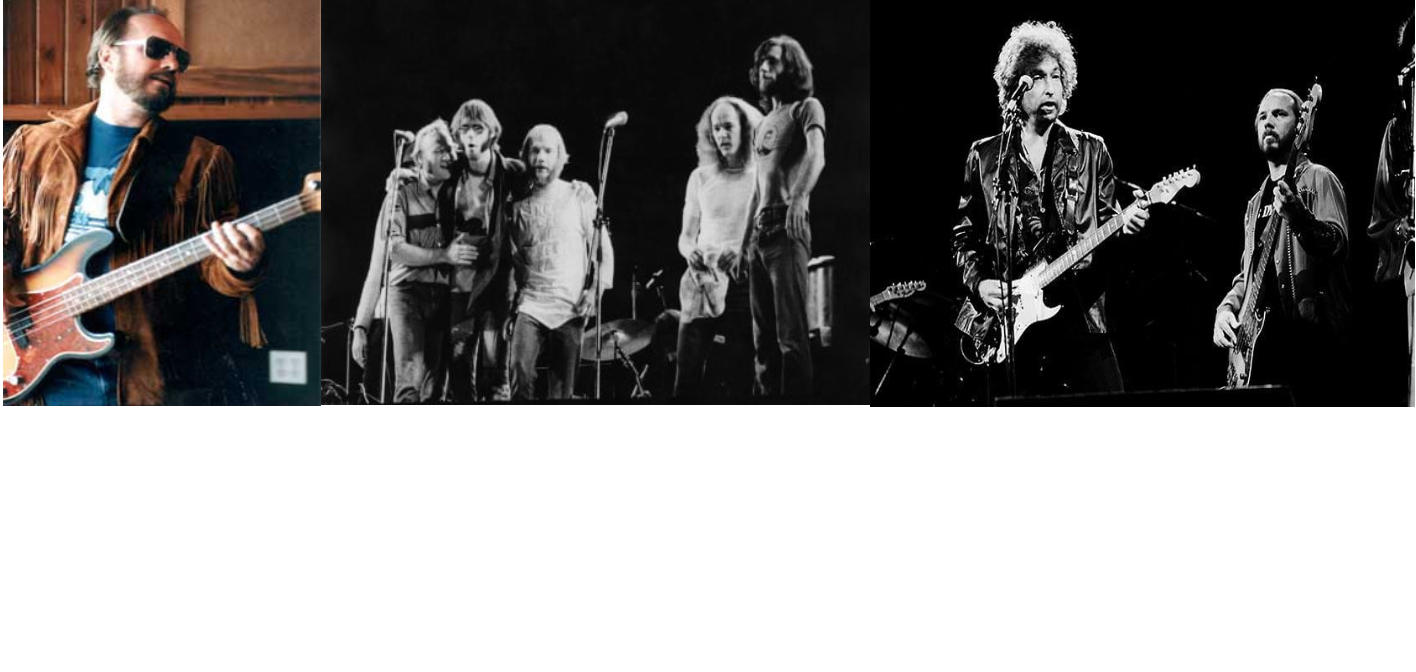
Photos: Tim Drummond (third from left) with Crosby, Stills, Nash and Young in 1974. (Photo by Mick Gold) and Drummond on stage with Bob Dylan at the Poplar Creek Music Theater in Hoffman Estates, June 10, 1981 (Photo by Paul Natkin)

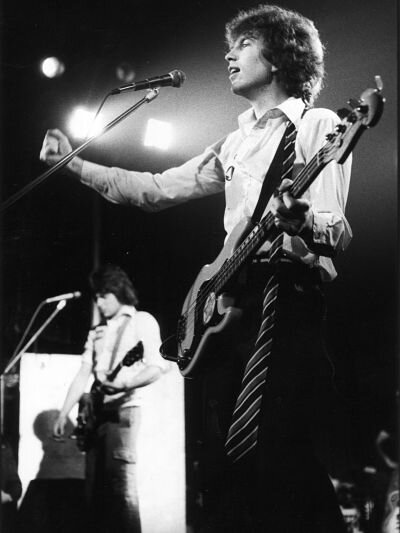
Bassist and bandleader of the highly influential Tom Robinson Band (TRB) which spanned the years 1976-79, Robinson possesses that rare gift of combining an activist, intellectual libretto with great songs and melodies.
Anthems including “Up Against the Wall,” “Ain’t Gonna Take It,” “Glad to Be Gay,” “Blue Murder,” “Right On Sister,” and “2-4-6-8 Motorway” remain as relevant today as they did four decades ago.
As a bassist who came to the instrument out of necessity, Robinson – with his signature Fender P, was a solid pocket player.
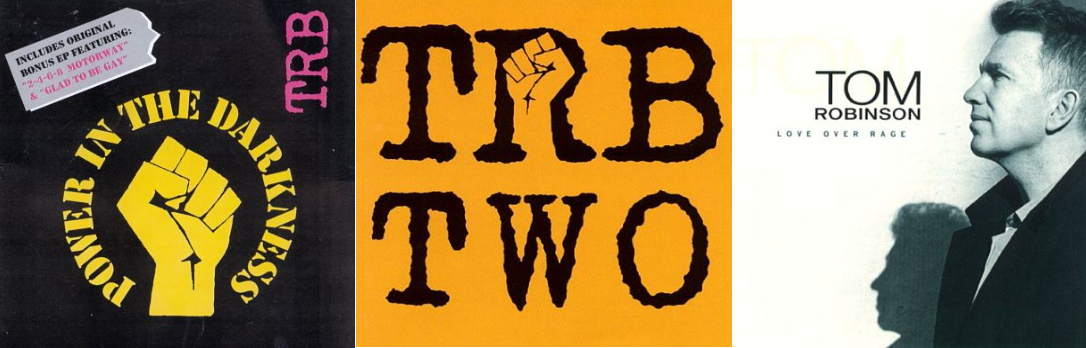
Though his band was branded punk, Tom and the TRB were much more expansive – incorporating blues, jazz, soul, cabaret, dance-hall, and reggae motifs into their two essential albums: Power in the Darkness (1978) and TRB II (1979). Ever since he split TRB, Tom fronts his solo projects as a guitarist.
Tom Robinson Sound & Vision:
“Up Against The Wall” https://youtu.be/-kZMfLULwHA
“2-4-6-8 Motorway” https://youtu.be/kGrnEc_3mYo
“Bully For You” https://youtu.be/RIavik9iv_A