Flea (Red Hot Chili Peppers)
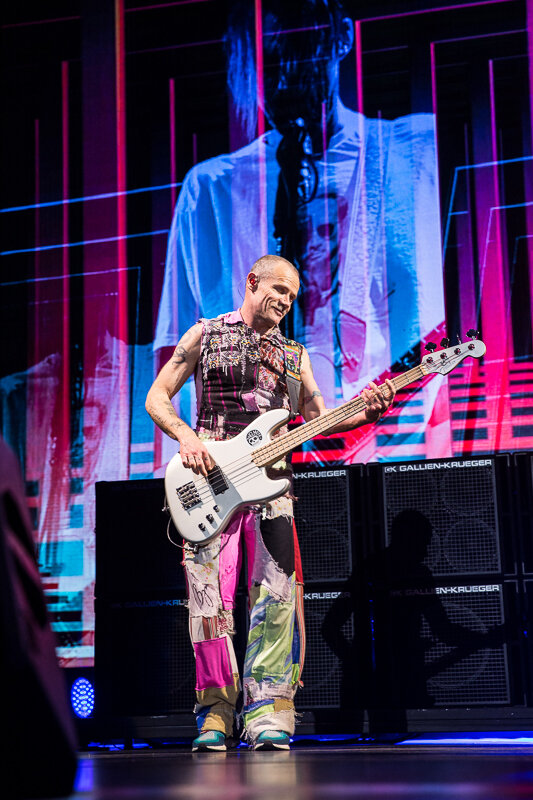
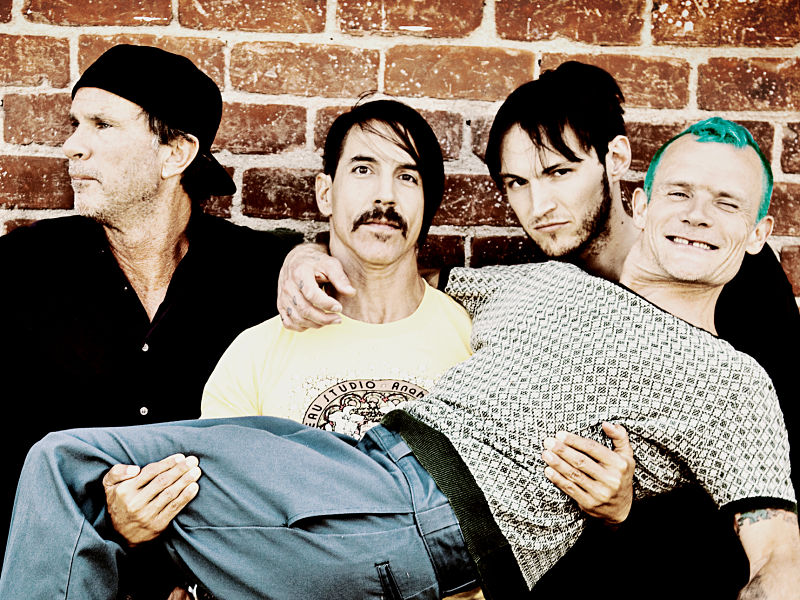
Courtesy of Red Hot Chili Peppers Com


“Any instrument is just a vehicle to express who you are and your relationship to the world. No matter what level you’re doing it on, playing music is an opportunity to give something to the world.” Flea


Akin to Bootsy, Jaco, Sting, Duck, Macca, Marcus, and Jamerson, you only need utter one name and everyone knows who it is… Flea!


When the former Michael Balzary was queried as why he commenced advanced music studies following more than two stadium-filling, Grammy Award winning, Rock and Roll Hall of Fame decades with the Red Hot Chili Peppers – he simply responded: “I went to school and studied music for a year at USC, which unlocked a bunch of doors for me in terms of my relationship to music.”


Melding his love for Jaco, Miles Davis, David Bowie, Duke Ellington, Charlie Parker, and Dizzy – with hardcore punk – notabley Black Flag, and others on the LA scene, Flea’s voice and approach to the instrument is unique – you can hear him quote be-bop lines and heavy metal riffs in his passages.


A melodic slap and finger player – go figure how Flea is able to play with such precision and grace given his gravity defying onstage aerobics.


When’s he’s not touring the planet, Flea occupies his time as an actor, activist and philanthropist (Rock the Vote, Vote For Change, Special Olympics, co-founder of the Silverlake Conservatory of Music for underserved youth, among many others), and he’s a recent author – Acid for the Children (2019).


Flea’s collaborations span Joshua Redman, Johnny Cash, Young MC, Alice Cooper, Slash, Tom Waits, Joe Strummer, Jane’s Addiction, and John Lee Hooker – to cite a very, very, very select few.


Note that, in Flea’s words, “any instrument is just a vehicle…” As such, Flea has used many instruments throughout his career – his gear list is exhaustive. To cite a few:


MusicMan Cutlass 1, Fender Precision, Spector NS-2 Teisco Del Ray NB-4, Wal Mk 2, MusicMan Stingray 4 and 5, Alembic Epic, various Modulus signature basses, 1961 Fender Jazz, and Fender’s fantastic FleaBass! And his rig is usually Gallien- Krueger.


Flea Sound & Vision


“Californication” https://youtu.be/YlUKcNNmywk


“Dani California” https://youtu.be/Sb5aq5HcS1A 


“Give It Away” https://youtu.be/Mr_uHJPUlO8


“Scar Tissue” https://youtu.be/mzJj5-lubeM
 

Alphonso Johnson (Weather Report)

Courtesy of Embama Com Courtesy of Embama Com

Courtesy of Embama Com

He is a giant of the 1970s jazz fusion era who also expanded his artistry into rock and pop music. Alphonso Johnson began his musical journey on trumpet, then on to upright bass, then to the electric where his virtuosity shone brightest.

Barely into his 20s, Alphonso was in the studio and on stage with Weather Report, taking over the bass chair from Miroslav Vitous. His three slabs with the band: Mysterious Traveller (1974), Tale Spinnin’ (1975) and Black Market (1976) which he split with Jaco – are world music touchstones. Johnson’s Fender Precision tone was cited by Darryl Jones in this testimonial: https://youtu.be/ltDn-gZzeF0

An educator, solo recording artist, collaborator, bandmember, and clinician, Alphonso also brought the Chapman Stick to the forefront, and has recorded extensively on extended range and fretless.

I highly advise you visit Alphonso’ website wherein he explains his approach to the instrument – and his latest releases and live dates.

He is among the handful of bassists you need to experience live! http://embamba.com/

My choice Alphonso tracks which span funk, world, soul, rock, pop and every permutation thereof:

“Cucumber Slumber” from Weather Report’s Mysterious Traveler (1974) https://youtu.be/5gsk-ae_y8I

“Man in the Green Shirt” from Weather Report’s Tale Spinnin’ (1975) https://youtu.be/gdstJfWHqx0

“Hip Pockets” from Billy Cobham – George Duke Band Live on Tour in Europe (1976) https://youtu.be/PK4Ox-EJeOE

Title track from Flora Purim’s Open Your Eyes You Can Fly (1976) https://youtu.be/L-yYZg-DQYQ

“Stump” from Alphonso’s Moonshadows (1977) https://youtu.be/F8VM8NZPcmw

“Children Are the Spirit” from Dee Dee Bridgewater’s Just Family (1978) https://youtu.be/v9St6i68Eok

“Book of Rules” from Bob Weir’s Bobby & the Midnights Live (1981) https://youtu.be/YjAhM6e1D-o

“I Missed Again” from Phil Collins’ Face Value (1981) https://youtu.be/yr-SNCtoyPk

“Brotherhood” from Santana’s Beyond Appearances (1985) https://youtu.be/kOjaaIPYahk

“Fountain of Salmacis” from Steve Hackett’s Genesis Revisited (1997) https://youtu.be/VwFZd0i0nb8

Jazz Is Dead’s Laughing Water (1999 ) https://youtu.be/UzpeMhtxrF4

“Waters of March” from Sergio Mendes’ Encanto (2008) https://youtu.be/PwrtN3l7-xQ

Courtesy Sony Legacy Com Courtesy Sony Legacy Com

Courtesy Sony Legacy Com

Gail Ann Dorsey (David Bowie)

Courtesy of David Bowie Com Courtesy of David Bowie Com

Courtesy of David Bowie Com

This fab Philly born singer, bassist, side-woman, multi-instrumentalist, composer, solo recording artist, among other titles has rocked stages and anchored slabs with Tears for Fears, Gang of Four, Lenny Kravitz, Bryan Ferry, Indigo Girls, Jane Siberry, Gwen Stefani, Seal, David Bowie, and John Ashton’s Satellite Paradiso, to cite a very, very, very select few.

Where to begin: In the service of David Jones, Gail Ann Dorsey brilliantly utilized the lower register of her extended range which revitalized her bandleader’s classic canon in concert.

Dig every minute of Gail at Bowie’s 50th bash https://youtu.be/GlEwkZ14n7k

Gail’s presence on David’s latter day works – Earthling, Reality, Storytellers, A Reality Tour, and The Next Day – contributed greatly to Bowie’s artistic and commercial resurgence.

Primarily a StingRay MusicMan player, though I have seen her on stage with Fender and various boutique instruments; Ms. Dorsey adapts her style to whomever she plays with – yet her identity emerges by way of her phrasing and rhythm – my guess is that her Philadelphia roots ingrained soul into her soul!

Dig Gail on her own from the album I Used to Be “Always True” https://youtu.be/JIGo7SqaZO0

Me’Shell Ndegeocello


A genre bending bassist, composer, and recording artist – Me’Shell Ndegeocello’s astounding body of work embraces soul, jazz fusion, rhythm & blues, rock, trance, dance, funk and permutations thereof.


The former Michelle Johnson continually alters her tonal character – mixing and matching a myriad of bass sounds and techniques ranging from a classic flat-wound thump, to a Jaco-esque treble tweaked growl, to a sharp Louis Johnson inspired slap attack, to old school Brill Building / Wrecking Crew plectrum picking. And her activist libretto speaks truth to power on a wide range of issues.


A student at Duke Ellington School of The Arts, Me’Shell honed her skills on the Washington D.C. club circuit. Though she failed an audition to replace Muzz Skullings in Living Colour, she was among the first artists signed to Madonna’s Maverick Records.


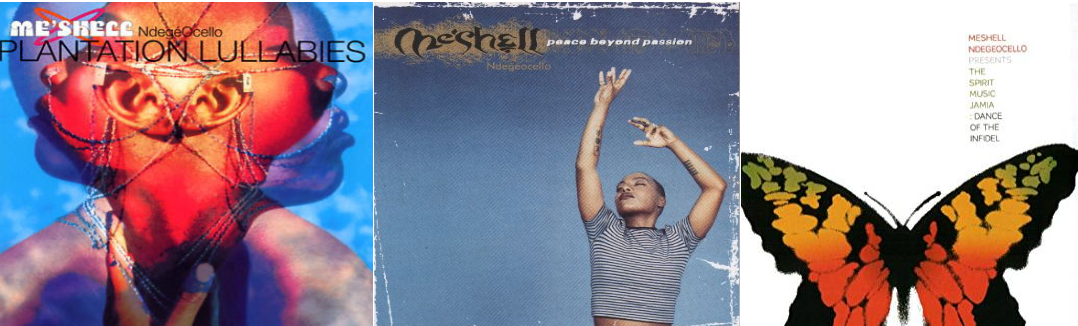
Her debut solo slab Plantation Lullabies (1995) is rightly considered among the classics of the era, melding hi-hop, rock, soul, and rap. 


An in-demand, highly revered session player, collaborator, Me’Shell can also be heard on numerous film, television, and theatrical soundtracks.


Me’Shell Ndegeocello Sound & Vision…


“If That’s Your Boyfriend” https://youtu.be/UpdzEpGIqtY


“Who Is He and What Is He To You” https://youtu.be/K0ov9082a1c


“Call Me” https://youtu.be/qw6zr9YHVpQ


“Loyalty” https://youtu.be/eG-kMf2uhQ0


Dig Me’Shell’s funky bass and vocal duet with John Cougar Mellencamp on Van’s “Wild Night,”  https://youtu.be/1aoywIHLqbs


Rolling Stones: “Saint of Me” https://youtu.be/xcMQWfMTfJ8


Alanis Morrissette: “So Unsexy” https://youtu.be/aoh2P0yndcQ


Zap Mama: “African Diamond” https://youtu.be/wbjn_vXu1NE


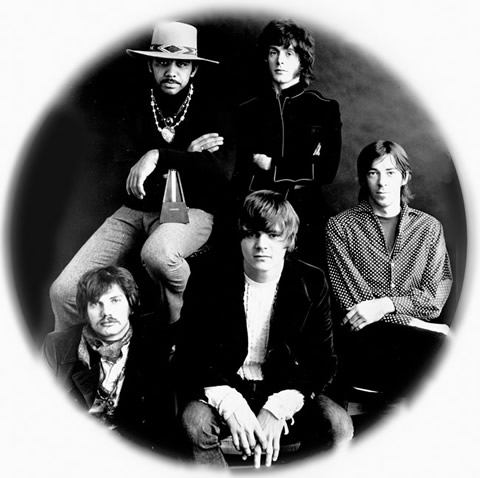
Lonnie Turner (Steve Miller Band)

Courtesy of Steve Miller Com


“Somebody get me a cheeseburger….”


Lonnie Turner was a founding member of the Steve Miller Band from their humble beginnings as a Bay Area psychedelic blues-rock ensemble to their emergence as a 1970s hit-making, arena filling, platinum- album selling machine that could rock with the best of them!


Whereas many bassists accompanying a guitar icon tend to play it safe on the bottom end, Turner was particularly adept working the upper and lower registers with equal dexterity and creativity, and he was a master pocket player.


Turner, who passed in 2013, was primarily a Fender player. He switched to a prototype 1976 Fender Music Man bass with a deep resonance which he tempered by fluid finger-picking near the bridge of the instrument.


An accomplished backing vocalist, Lonnie also shined on albums with Dave Mason, Eddie Money, Albert King, Tommy Tutone, and Terry & the Pirates. 


Lonnie Turner Sound & Vision:


Steve Miller Band


“Space Cowboy” https://youtu.be/ELcTJZLxhFU


“Pushed Me To It” https://youtu.be/YF7MRal3xPA


“Living In the USA” https://youtu.be/6_rKPuqxFtA


David Brown (Santana)


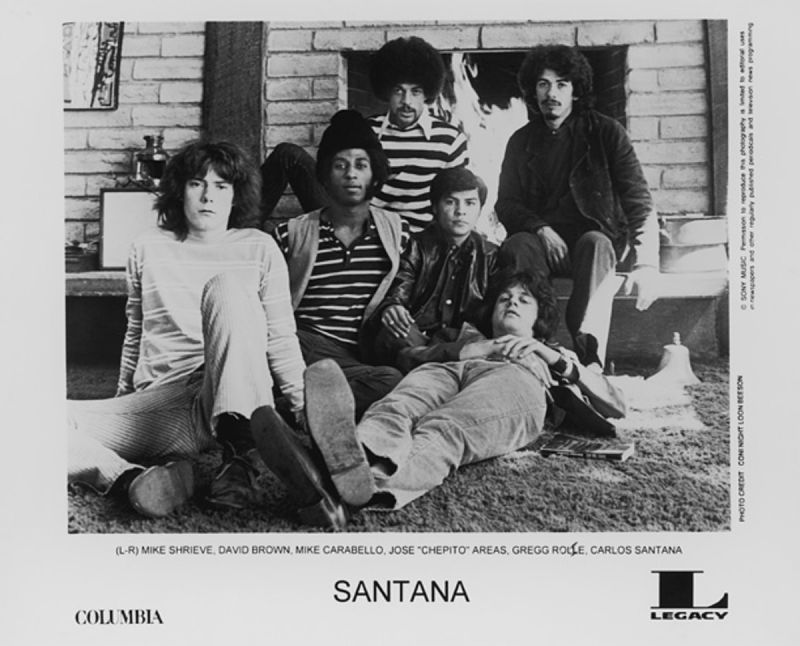
If Know Your Bass Player employed a statistician, we’d discover that likely a billion people (and counting) have grooved in the past 50 years (and counting) to the Latin jazz fueled passages rendered by the late David Brown, founding member of Santana (1966-71, 1976).


As Carlos was a fervent practitioner of the multi-layered rhythmic modus operandi of electric Miles – and James Brown which utilized the art of repetition to the max, Brown intensely followed suite, digging deep in-the-pocket with hypnotic lines that grew more intense upon their reiteration with gradual harmonic embellishments.


David’s earthy tone was “pure” Fender Precision (though he occasionally used a Fender Jazz) – which he articulated by anchoring his thumb on the pick-up plate and either finger-picking by the bridge, or at the base of the neck– thereby eliciting the instrument’s signature “grrrrrowl” when he plied one of his rare and riveting fills.


Brown was a “feel’ player who was replaced on a few occasions in the Santana collective by more “accomplished” players, David passed in 2000, however not before he stood with his former bandmates at his Rock and Roll Hall of Fame induction. Carlos speaks very well of David in his must-read autobiography The Universal Tone: Bringing My Story to Light (2015 Back Bay Books).


David Brown Sound & Vision…


“Soul Sacrifice” from Woodstock  https://youtu.be/AqZceAQSJvc


“Evil Ways” https://youtu.be/HPmPFY9PcCs


“Incident at Neshabur” https://youtu.be/338TDhTN7HQ


“Everybody’s Everything” https://youtu.be/Qj9-jqOAikY


“Everything Is Coming Our Way” https://youtu.be/7iRDRgr40NE


“Dance Sister Dance”  https://youtu.be/lUwCUITkGwo


“Gitano” https://youtu.be/haiVzvjKKCU


Nick Lowe (Brinsley Schwarz, Rockpile)


The New York Times, in a rare display of accuracy, once noted that “his songs are better known than he is!”


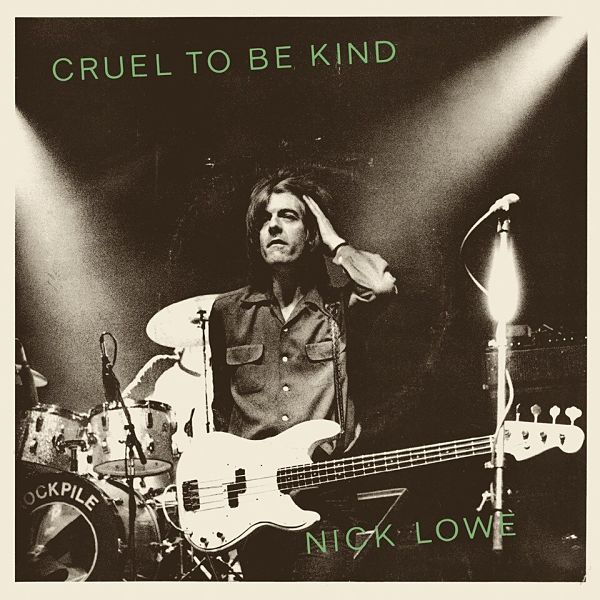
Most revered as a composer and producer (Elvis Costello, Graham Parker, The Damned, his ex-wife Carlene Carter, and Dave Edmunds, among many others) Nicholas Drain Lowe is also an extraordinary bassist as evidenced by his stellar work in the pub rock super-groups Brinsley Schwarz, Rockpile, and Little Village, and on his impressive canon of solo releases.


Akin to Sir Paul, Lowe’s bass artistry stems from the fact that every note he plays serves the song.


Nick’s 1978 debut masterpiece – which arrived under the title of Jesus of Cool in the U.K. and Pure Pop for Now People for us provincial god-fearing Yanks in the USA – is his most recognized work. The album’s undeniable centerpiece featuring one of the great pop rock bass grooves of all time “I Love the Sound of Breaking Glass” – wherein Lowe afforded the bass duties to Andrew Bodnar! 


An all-time high for Lowe is his composition made famous by the former Declan McManus “(What’s So Funny ‘Bout” Peace, Love and Understanding” which Nick first waxed with Brinsley.


Among the most prolific cats of any era in popular music, the lowdown on Lowe is best found on his website: http://nicklowe.com/


Nick Lowe Sound & Vision…


“Music for Money” https://youtu.be/wLqw5PtWPjA


Rockpile “Cracking Up” https://youtu.be/_0moGRwhYxU


“And So It Goes” https://youtu.be/YEpr8kaczck


“Nutted By Reality” https://youtu.be/Lr5Q26E-Esw


“No Reason” https://youtu.be/tVAd1Qvuujg


“They Call It Rock” https://youtu.be/y-qxJYOJbgY


“Cruel to Be Kind” https://youtu.be/b0l3QWUXVho


Brinsley Schwarz:


“What’s So Funny ‘Bout Peace Love & Understanding)” https://youtu.be/N3r-TuIcK2k


“Surrender to the Ryhthm” https://youtu.be/lMYc5U_jIdc

Andrew Bodnar (Graham Parker & The Rumour)


“Watching the Detectives,” “Local Girls,” “I Love the Sound of Breaking Glass…”


Britain’s punk / pub-rock era of the late 70s – early 80s brought us three bona fide rock bass virtuoso / stylists: Norman Watt-Roy (Ian Dury and the Blockheads), Bruce Thomas (Elvis Costello and The Attractions) and our man here – Andrew Bodnar (Graham Parker and The Rumour).


A groove player with a decidedly busy yet supportive disposition, Bodnar was an early adopter of the MusicMan Stingray bass, though early in his career, and in his most recent years, Andrew opts for the classic Fender Jazz.


 In addition to his tenure with GP, which has thrived on-and-off for nearly a half-century, Andrew was an in-demand session cat, working sides and stages with Garland Jeffreys, The Pretenders, Nick Lowe, and Carlene Carter among others.


Andrew Bodnar Sound & Vision…


Graham Parker and The Rumour:


“Watch the Moon Come Down” https://youtu.be/RYnY5IiLpns


(Fretless Bodnar) Get Started – Start a Fire” https://youtu.be/HUb_1rFWZag


“Protection” https://youtu.be/lSzJNQSkbi8


“Local Girls” https://youtu.be/taXvBivGcMo


Nick Lowe: “I Love the Sound of Breaking Glass” https://youtu.be/BDbUEydkuR8


Garland Jeffreys: “96 Tears” https://youtu.be/1kq7L0-P1Q8


Carlene Carter: “Between You and Me” https://youtu.be/4GeAZ_mNbC8


The Pretenders: “Line Between Love and Hate” https://youtu.be/k17CU1SAGVk


Elvis Costello sans The Attractions “Watching the Detectives” https://youtu.be/VxzC7G1_Ui8


Graham Maby (Joe Jackson Band)

Rare is the bass player whose passages and presence are so definitive on a recording– that to hear the song or the artist without them is inconceivable.


Enter Graham Maby of the Joe Jackson Band. Graham is among Britain’s eminent class of players who achieved prominence during the groundbreaking U.K. punk / new wave era – a distinguished motley which includes Bruce Foxton (The Jam), Andrew Bodnar (Graham Parker & The Rumour), Norman Watt-Roy (Ian Dury & The Blockheads), Bruce Thomas (Elvis Costello & the Attractions), and Harry Kakoulli and John Bentley (Squeeze).


A master of plying instantly recognizable motifs, Maby is most noted for his plectrum attack and sharp tone, but he’s equally adept at finger-style and slap – whatever the situation warrants. 


Most fans are familiar with Maby’s stellar work on Jackson’s hit albums Look Sharp (1979), I’m the Man (1979), Night and Day (1982).


Be sure to check out the lesser known Jumpin’ Jive (1981) and oft neglected Body and Soul (1984) collections wherein Graham brings his versatile jazz, soul, funk and show tune talents to the forefront.


Graham has also  anchored slabs and worked as a sideman to Ian Hunter, Darden Smith, Joan Baez, Dar Williams, Regina Spektor, Freedy Johnston, Natalie Merchant, and Marshall Crenshaw among others. 


Dig Graham Maby in Know Your Bass Player on Film Season One – New York 2016 https://bit.ly/3hA4QAA


Francis Rocco Prestia (Tower of Power)

What is hip?


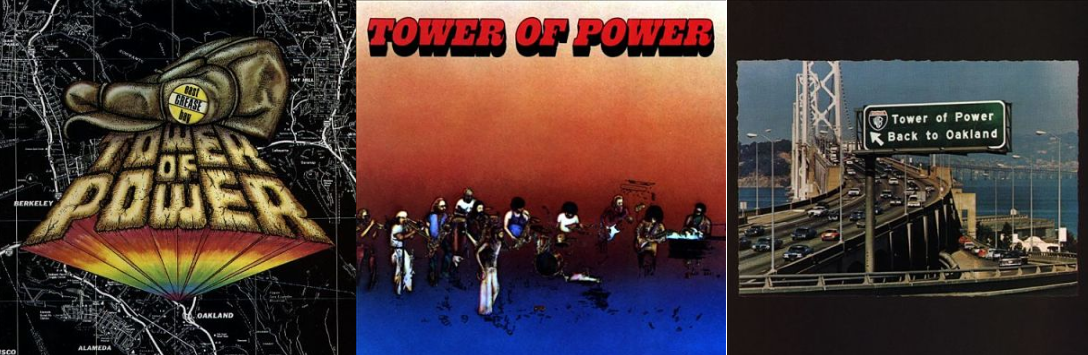
The bass mastery of the great Francis Rocco Prestia and Tower of Power, that’s what’s hip! The incomparable Tower of Power of Prestia wrote the book on funky pop rhythm & blues with an incredible string of 1970s releases including the essential Tower of Power (1973) and Back to Oakland (1974).


Born “Francis Houghton” in Sonoma, California, Prestia started out as a guitarist during his teen years, then switched to electric bass at the behest of TOP founder Emilio Castillo.


Rocco augmented the language and scope of the electric bass with his patented melodic, staccato finger-style funk approach to the instrument – as rendered in TOP’s signature “What Is Hip” –which remains a rite of passage for all serious bassists. Francis mutes the strings with his left fingers, forging  a percussive sound – you can find several examples of Prestia explaining his technique on YouTube and other video platforms (see below).


In 1999 Francis waxed his lone solo slab Everybody on the Bus!  Prestia’s primary weapon of choice is the Fender Precision, however he has been known to endorse brands such as ESP.


Francis Rocco Prestia Sound & Vision  


“What Is Hip” https://youtu.be/Pfim3SKTNkw


“Soul Vaccination” https://youtu.be/46hd6DZS0ww


“So Very Hard to Go” https://youtu.be/cbyKxiVvpaE


Franciso Rocco Prestia Bass Clinic from GoDPS Music 2014 https://youtu.be/lWaB9nTgncY